Is Kathmandu Mayor Balen Shah Preparing for the 2026 Nepal Elections?
Synopsis
Kathmandu's Mayor Balen Shah is actively engaging political leaders to gather support against traditional parties ahead of the March elections. His alliance with Gen Z leaders and other new political forces could reshape Nepal's political landscape. Will this coalition succeed in challenging the status quo?
Key Takeaways
Balen Shah is actively seeking support from new political alliances.
His engagement with Gen Z leaders signifies a shift in political dynamics.
Partnerships with leaders like Rabi Lamichhane may reshape the electoral landscape.
Younger voters are increasingly frustrated with traditional political parties.
Collaboration among new forces could challenge established dominance.
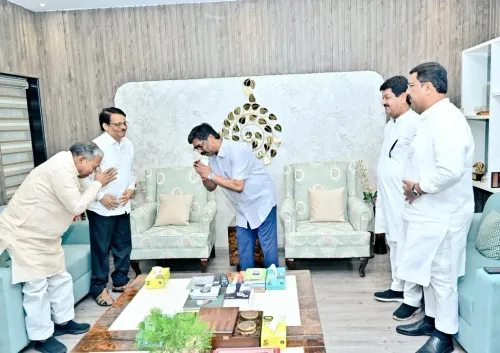
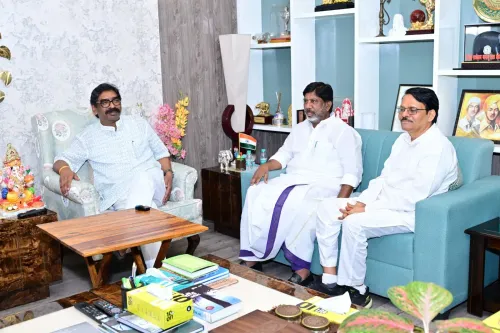
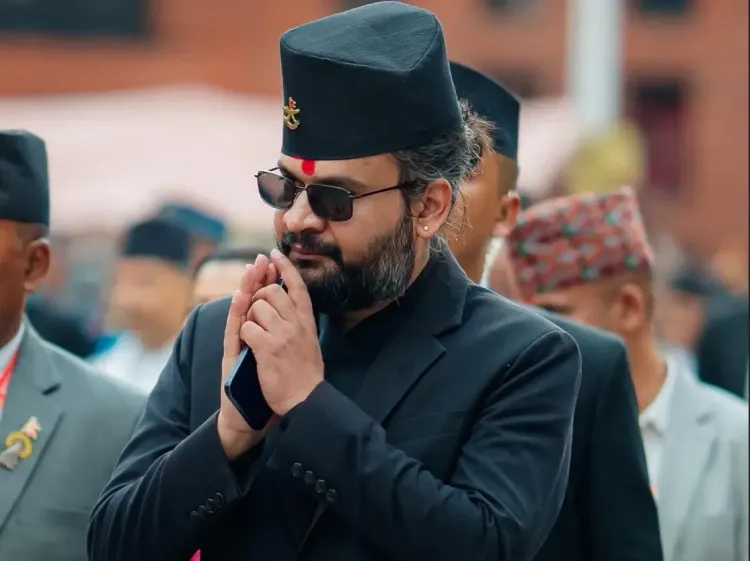
Kathmandu, Dec 25 (NationPress) Kathmandu Metropolitan City Mayor Balen Shah was engaged throughout Thursday, meeting with various political figures—primarily from newly established parties and Gen Z movements—as part of his strategy to consolidate support against traditional political entities ahead of the upcoming parliamentary elections slated for March next year.
The typically private mayor, who seldom participates in media interviews, has garnered a significant following, especially among the youth, due to his commitment to enhancing the city's public infrastructure and his vocal opposition to what he labels the “corrupt” leadership of long-standing political parties.
As a professional architect and rapper, Shah was viewed as a pivotal figure in the creation of the current government led by Prime Minister Sushila Karki, which followed the Gen Z movement earlier in September.
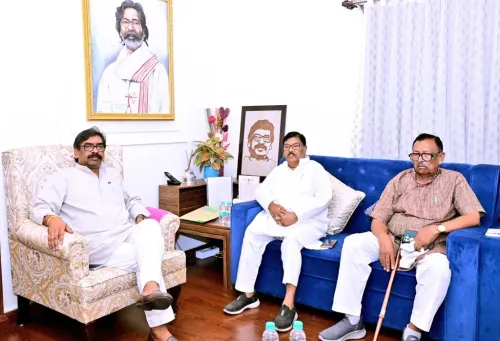
On Thursday, Shah met with several political leaders, but his encounter with Rastriya Swatantra Party (RSP) President Rabi Lamichhane was especially significant, considering the increasing momentum among Gen Z leaders to collaborate prior to the House of Representatives elections on March 5.
Lamichhane, whose party emerged as the fourth-largest entity in the dissolved House of Representatives, is a former media figure with a substantial youth following. Despite facing fraud allegations in cooperative sectors before entering politics, he was recently released on bail and has since been striving to unite Gen Z leaders and innovative political forces to fortify his party ahead of the elections.
Thursday’s meeting with Lamichhane marked their second engagement in just four days. It was a personal meeting, and Lamichhane appeared visibly joyful when addressing the media afterward. When inquired about the meeting, he grinned and commented, “What do you think by looking at my face?”
Previously, RSP leaders indicated that Lamichhane had even suggested Shah as a contender for the next prime minister. Additionally, Lamichhane and Shah also conferred with Kulman Ghising, the Minister for Energy, Physical Infrastructure, and Urban Development, whose supporters have recently launched a new political entity called the Ujyalo Nepal Party.
Ghising is a well-regarded figure in Nepal, noted for eliminating up to 18-hour-long load-shedding during his leadership at the Nepal Electricity Authority, the state-owned power utility. The trio has been meeting regularly over the past few weeks, fueling speculation about a potential alliance for the upcoming elections.
On Thursday, former Prime Minister Baburam Bhattarai and several Gen Z leaders also met Shah in Kathmandu, emphasizing the necessity of collaboration among new political forces to counter established parties in the forthcoming elections.
“I underscored the significance of collaboration among new political forces during our discussion,” Bhattarai informed the media.
An RSP leader disclosed to IANS that dialogues have occurred between Lamichhane and Shah regarding a joint approach ahead of the elections aimed at challenging conventional political parties.
Political analysts suggest that Shah’s apparent efforts to mobilize newer political forces could reshape the political landscape in Nepal prior to the elections.
Over the last twenty years, three political parties—the Nepali Congress led by former Prime Minister Sher Bahadur Deuba; the Communist Party of Nepal (Unified Marxist-Leninist), or CPN-UML, headed by former Prime Minister KP Sharma Oli; and the Nepali Communist Party formed from the merger of the previous CPN (Maoist Centre) and CPN (Unified Socialist), among others, led by former Prime Minister Pushpa Kamal Dahal—have alternately governed the nation.
As the populace's circumstances have seen little improvement under these parties and leaders since the civil war's conclusion in 2006, discontent among young individuals—many of whom face employment challenges—culminated in the recent Gen Z movement that displaced the coalition government led by former Prime Minister Oli.
Now, Gen Z leaders, who wish to prevent the return of outdated political parties and leadership, are searching for a unifying figure, with Shah and Lamichhane emerging as such leaders in their perspective.
“If Shah and Lamichhane collaborate to contest the upcoming elections, they could become formidable political forces,” stated political analyst Arun Subedi. “This could disrupt the existing power dynamics in Nepal’s political arena by undermining the influence of established parties.”
However, Subedi cautioned that the two have yet to articulate a clear vision for the nation’s economy and foreign policy, leaving ambiguity regarding their governance approach should they gain power.
“They are more likely to garner protest votes against established parties rather than support for a clearly defined vision,” he remarked.
It didn’t take long for Lamichhane’s party to rise as the fourth-largest entity in the last parliamentary elections.
“With traditional political parties and leaders losing popularity, collaboration among new political forces—especially Shah, Lamichhane, and Ghising—could facilitate their emergence as a significant political force in the forthcoming parliamentary elections,” Subedi concluded.
Point of View
Balen Shah's strategic engagements indicate a significant shift in Nepal's political dynamics. His ability to unite new political forces may challenge the long-standing dominance of established parties. As the elections approach, the nation watches closely to see if this coalition can bring about meaningful change.
NationPress
24 Jul 2026
Frequently Asked Questions
What is the significance of Balen Shah's meetings with political leaders?
Balen Shah's meetings are crucial as they signal a potential alliance of new political forces aimed at challenging established parties ahead of the upcoming elections.
Who is Rabi Lamichhane?
Rabi Lamichhane is the President of the Rastriya Swatantra Party and a significant political figure among the youth, noted for his media background and efforts to unite Gen Z leaders.
What challenges do young people face in Nepal's current political climate?
Young people in Nepal are grappling with high unemployment rates and dissatisfaction with traditional political leadership, leading to movements like Gen Z seeking change.
How might a collaboration between Shah and Lamichhane impact the elections?
A collaboration could disrupt the traditional political balance, potentially leading to a stronger challenge against established parties in the elections.
What is the role of Kulman Ghising in this political landscape?
Kulman Ghising, a popular political figure, is involved in discussions that may lead to a coalition aimed at enhancing new political influences in the upcoming elections.