India's space sector crosses 440 startups: ISRO chief at National Space Day
Synopsis
India's private space ecosystem has hit 440 startups — a number that would have been unthinkable a decade ago when ISRO was the only player. ISRO chief Dr V. Narayanan used National Space Day to connect this surge directly to sector reforms, while signalling that Gaganyaan and a 2035 space station are the next frontiers. The private boom and state ambition are now running in parallel.
Key Takeaways
Narayanan confirmed around 440 startups are now active in India's space sector, up sharply after sector reforms.
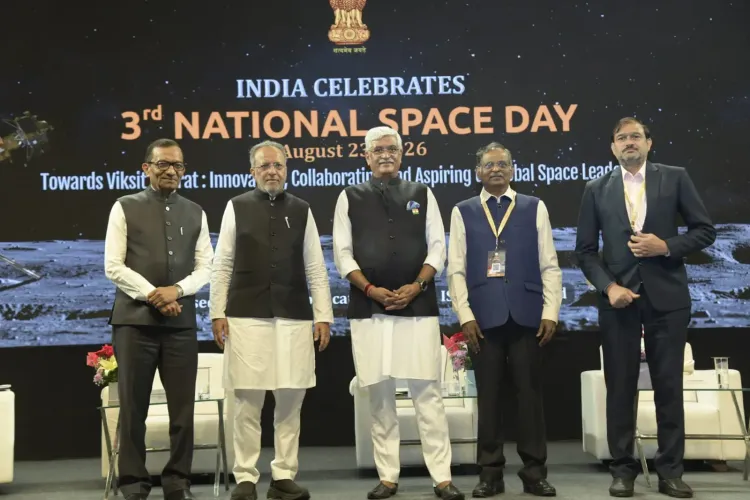
The announcement was made at the third National Space Day in Ahmedabad on 23 August 2025 , marking two years since the Chandrayaan-3 lunar south pole landing.
India is actively developing the Gaganyaan human spaceflight programme alongside a proposed Bharatiya Antariksha Station , with the first module approved and a 2035 establishment target.
The event was organised by ISRO's Space Applications Centre under the theme 'Towards Viksit Bharat: Innovating, Collaborating and Aspiring to Global Space Leadership'.
Awards were presented to winners of the ISRO Robotics Challenge , Indian Space Hackathon , and Dr Vikram Sarabhai Space Quiz .
India's space sector now has around 440 startups, ISRO Chairman and Department of Space Secretary Dr V. Narayanan announced on 23 August 2025 at the third National Space Day celebrations in Ahmedabad. The figure underscores a sweeping shift in an industry that was, until recently, almost entirely the preserve of government institutions.
Reforms Behind the Startup Surge
Narayanan attributed the expansion directly to structural reforms that unlocked the space sector for private players. 'After the reforms in the space sector, there has been a significant increase in the number of startups in the country, and today around 440 startups are operating in the space sector,' he said. The reforms, which progressively dismantled entry barriers for entrepreneurs, have positioned India's private space ecosystem as one of the fastest-growing in Asia.
Milestones That Built the Foundation
India's space programme, which traces its origins to 1962, has evolved from a science-first initiative into one with direct civilian applications. Narayanan highlighted three landmark achievements: Chandrayaan-1's discovery of water molecules on the Moon, the advanced imaging technology deployed on Chandrayaan-2, and the historic soft landing of Chandrayaan-3 near the lunar south pole on 23 August 2023 — the event National Space Day now commemorates annually.
Gaganyaan and a Space Station by 2035
The private sector expansion is unfolding alongside India's most ambitious missions to date. 'The country is working on the Gaganyaan human spaceflight programme and the proposed Bharatiya Antariksha Station. The first module of the space station has been approved, with the target of establishing the station by 2035,' Narayanan said. These programmes are expected to generate significant downstream demand for private vendors and startups.
What the National Space Day Event Covered
The event was organised by ISRO's Space Applications Centre in Ahmedabad under the theme 'Towards Viksit Bharat: Innovating, Collaborating and Aspiring to Global Space Leadership'. Discussions spanned workforce development for space science careers, deepening India's new-space ecosystem, and expanding international partnerships. Representatives from academic institutions, research bodies, private space firms, and startups participated. The event also saw awards presented to winning teams of the ISRO Robotics Challenge, the Indian Space Hackathon, and the Dr Vikram Sarabhai Space Quiz.
Why This Matters for India's Global Ambitions
India's target of capturing a larger share of the global space economy — estimated at over $600 billion by the end of this decade — hinges on private sector scale. With 440 startups now active, the ecosystem is building depth across launch services, satellite manufacturing, earth observation, and space applications. Notably, this growth is happening in parallel with state-led mega-missions, a combination few space-faring nations have managed simultaneously. The next milestone to watch is the first crewed Gaganyaan mission, with all eyes on India's readiness to join the exclusive club of nations that have independently sent humans to space.
Point of View
But the more important question is what stage these companies are at — seed-funded hopefuls or revenue-generating ventures with launch contracts. India's space reforms opened the door, but the global new-space market is brutally competitive, and domestic demand alone will not sustain 440 players. The real test arrives when Gaganyaan and the Bharatiya Antariksha Station move from approval to procurement: whether Indian startups win those supply chains, or whether foreign primes do, will determine if this ecosystem has genuine depth or is simply a policy-era count.
NationPress
8 Oct 2026
Frequently Asked Questions
How many startups are operating in India's space sector?
Around 440 startups are currently operating in India's space sector, according to ISRO Chairman Dr V. Narayanan. He attributed this growth to reforms that opened the sector to private companies and entrepreneurs.
What is National Space Day and why is it celebrated on 23 August?
National Space Day is observed on 23 August to commemorate the successful soft landing of Chandrayaan-3 near the lunar south pole on 23 August 2023. The 2025 event in Ahmedabad marked the third edition of the annual celebration.
What is the Bharatiya Antariksha Station and when will it be ready?
The Bharatiya Antariksha Station is India's proposed national space station. The first module has been approved, with a target of establishing the full station by 2035, according to ISRO Chairman Dr V. Narayanan.
What is the Gaganyaan programme?
Gaganyaan is India's human spaceflight programme, aimed at sending Indian astronauts to space aboard an indigenously developed spacecraft. It is currently under active development by ISRO alongside the Bharatiya Antariksha Station initiative.
What were the key highlights of India's space achievements mentioned at National Space Day 2025?
ISRO Chairman Dr V. Narayanan highlighted three milestones: Chandrayaan-1's discovery of water molecules on the Moon, the advanced camera technology on Chandrayaan-2, and the Chandrayaan-3 soft landing near the lunar south pole on 23 August 2023.