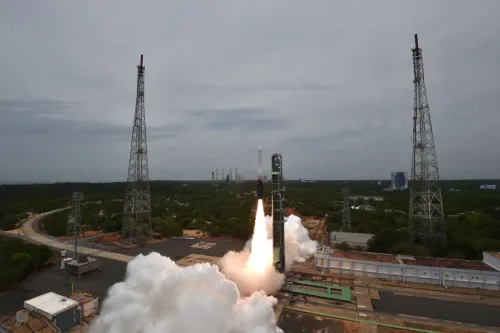
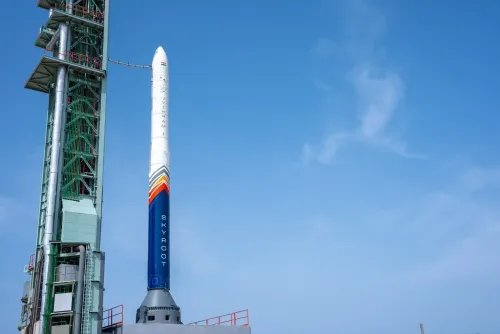
Vikram-1 launch: ISRO chief calls private space success a historic milestone

Synopsis
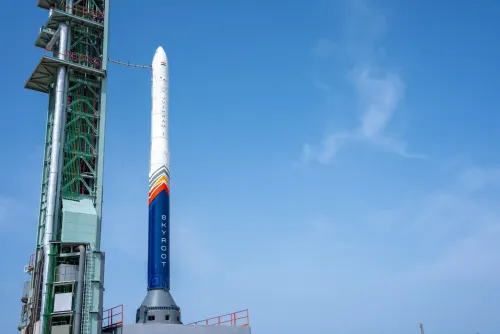
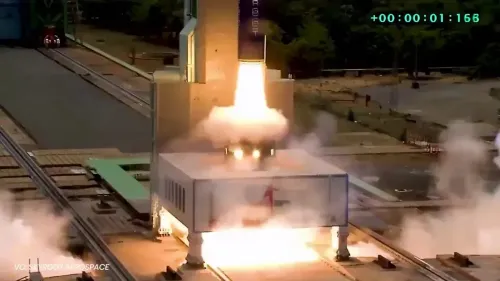
A startup founded in 2018 just pulled off what even ISRO could not have imagined a decade ago — a successful orbital launch on the very first attempt. ISRO Chairman Dr V. Narayanan calls Vikram-1's flight test a 'historic milestone,' pointing to 400 private space firms now reshaping India's space economy and employment landscape.
Key Takeaways
Narayanan called the Vikram-1 orbital flight test a 'historic milestone' on 18 July .
The startup behind Vikram-1 was founded in 2018 and succeeded on its very first orbital attempt .
The company employs around 1,000 people — a scale unimaginable in India's space sector a decade ago.
India now has approximately 400 space startups , up from near-zero before the 2020 sector liberalisation.
Chandrayaan-4 , Chandrayaan-5 , and India's space station programme are all reported to be progressing on schedule.
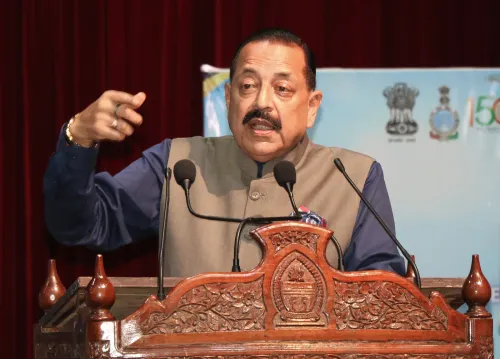
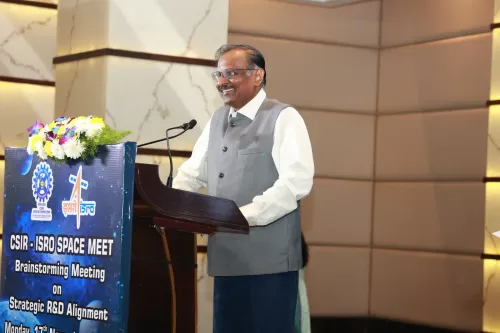
ISRO Chairman Dr V. Narayanan on Saturday, 18 July described the successful orbital flight test of Vikram-1 as a 'historic milestone' for India's space ecosystem, underscoring how the country's private space sector is accelerating job creation and economic growth. Speaking after the mission's success, Narayanan said the achievement was a direct result of India's space reforms opening the sector to private enterprise.
What the Vikram-1 Success Means
'Now, this is a very, very important moment for India's space ecosystem. A startup that was founded in 2018 has succeeded on its very first attempt. This is a very, very historic milestone,' Dr Narayanan said. He noted that developing an orbital launch vehicle and achieving mission success on the first attempt within just eight years of a company's inception was an extraordinary accomplishment by any global standard.
Jobs, Startups and the Growing Space Economy
The ISRO chief highlighted the scale of transformation underway in India's space sector. The company behind Vikram-1 currently employs around 1,000 people — a figure that, as Narayanan observed, would have been unimaginable a decade ago when only the government operated in this domain.
'Earlier, only the government was involved in the space sector. But today, there are around 400 startup companies, creating numerous job opportunities and driving substantial growth in the space industry,' he said. The broader implication, according to Narayanan, is that each successful private mission creates a multiplier effect — attracting investment, building supply chains, and generating skilled employment across engineering and manufacturing.
ISRO's Own Mission Pipeline
Beyond the private sector milestone, Narayanan confirmed that ISRO's flagship national missions remain on track. 'Chandrayaan-4, Chandrayaan-5, and activities related to India's space station programme are all progressing well,' he said, adding that a large number of satellites are currently under construction and development. The growing private sector ecosystem, he indicated, is expected to complement rather than compete with ISRO's own ambitious agenda.
India's Space Reforms Bear Fruit
The Vikram-1 mission is widely seen as a proof point for India's 2020 space sector liberalisation, which opened launch, satellite, and ground-segment activities to private players. Notably, India now hosts one of the fastest-growing private space ecosystems in Asia, with the government targeting a fivefold increase in its share of the global space economy over the next decade. The success of a home-grown startup on its very first orbital attempt puts India in a select group of nations where private launch capability has been demonstrated end-to-end.
Point of View
And it passed. But one successful launch does not a launch industry make. The real measure will be cadence: whether Indian private launch vehicles can achieve the turnaround rates and price points that make them commercially competitive against SpaceX's Falcon 9 and emerging Chinese rivals. With 400 startups in the ecosystem but only a handful near orbital capability, India's space economy narrative still needs to move from milestone headlines to sustained launch manifests.
NationPress
17 Oct 2026
Frequently Asked Questions
What is Vikram-1 and why is its launch significant?
Vikram-1 is an orbital launch vehicle developed by an Indian private space startup founded in 2018. Its significance lies in achieving mission success on the very first orbital attempt — a rare feat globally — and in demonstrating that India's space sector liberalisation is producing commercially viable private launch capability.
What did ISRO Chairman Dr V. Narayanan say about the Vikram-1 flight test?
Dr Narayanan called it a 'very, very historic milestone,' noting that a startup founded just seven years ago had succeeded on its first orbital attempt. He said the achievement showed how India's space reforms are generating innovation, employment, and economic growth.
How many private space startups are currently operating in India?
According to Dr Narayanan, there are approximately 400 private space startups in India today. This marks a dramatic shift from the earlier model where only the government — primarily ISRO — operated in the space sector.
What is the status of ISRO's upcoming missions like Chandrayaan-4 and Chandrayaan-5?
ISRO Chairman Dr V. Narayanan confirmed that Chandrayaan-4, Chandrayaan-5, and India's space station programme are all progressing well, with a large number of satellites currently under construction and development.
How does private sector growth benefit India's space economy?
According to Dr Narayanan, private sector success creates a multiplier effect — generating jobs, attracting investment, and building supply chains. The company behind Vikram-1 alone employs around 1,000 people, illustrating the employment potential of a thriving private space industry.