India's private space startups cross 400 as reforms drive $40B growth target
Synopsis
India's private space sector has gone from one startup in 2014 to over 400 today — and Skyroot Aerospace's Vikram-1 is about to make history as the country's first privately developed orbital rocket. With a $100 billion economy targeted by 2040 and IN-SPACe channelling $150 million into startups in a single year, India's commercial space race is no longer a promise on paper.
Key Takeaways
India's private space startups have grown from 1 in 2014 to more than 400 as of July 2025 .
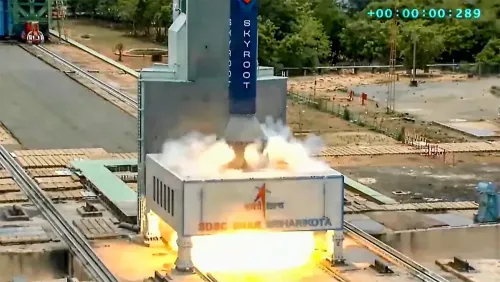
Skyroot Aerospace's Vikram-1 will become India's first privately developed orbital launch vehicle, scheduled under Mission Aagaman between 12 July and 4 August .
India's space economy, currently valued at $8.4 billion , is projected to reach $40–45 billion by 2030 and $100 billion by 2040 .
IN-SPACe had registered over 4,500 organisations , issued 133 authorisations , and facilitated USD 150 million in investments in 2025 alone.
Vikram-1 can carry up to 350 kg into LEO and will deploy payloads from four commercial customers into a 450-km orbit .
India's private space sector has expanded from a single startup in 2014 to more than 400 space startups today, the government said on Saturday, 18 July, crediting a wave of policy reforms that have systematically opened the space ecosystem to non-government players. The milestone underscores the accelerating pace of India's commercial space ambitions, anchored by the Indian Space Policy 2023.
Vikram-1: A Historic First for Private Launch
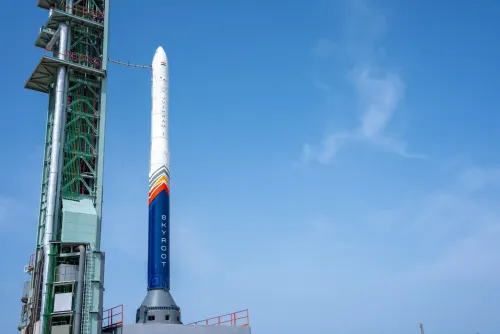
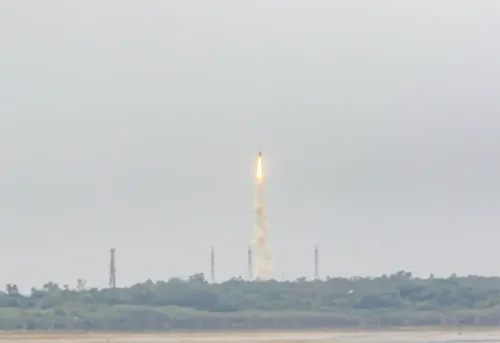
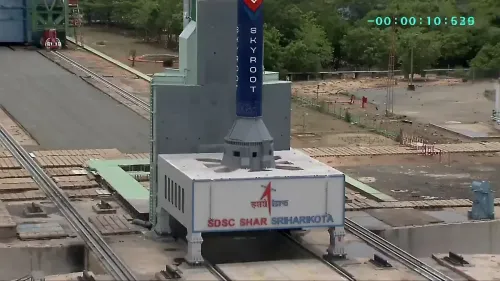
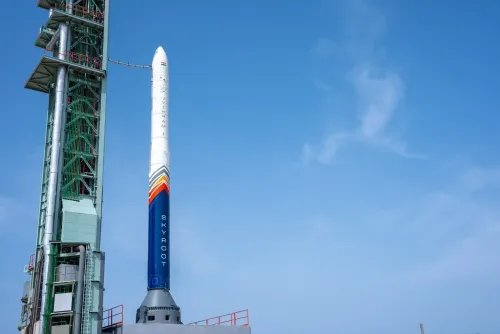
Skyroot Aerospace's upcoming Vikram-1 rocket is set to become India's first privately developed orbital launch vehicle. Scheduled under Mission Aagaman between 12 July and 4 August, the mission is expected to validate indigenous commercial launch capabilities and serve as a live demonstration of the Indian Space Policy 2023 in action.
Vikram-1 is capable of placing payloads of up to 350 kilograms into Low Earth Orbit (LEO). The vehicle is built using an all-carbon composite structure, solid-fuel boosters, and a 3D-printed liquid engine — a combination that reflects the depth of indigenous engineering now emerging from India's private sector.
The maiden mission will deploy multiple customer payloads into a 450-kilometre orbit, including Skyroot's own SCOPE satellite, DCUBED's technology demonstration payload, Grahaa Space's SOLARAS S3 satellite, and Cosmoserve Space's Embrace robotic arm — designed to capture orbital debris. The flight will also carry symbolic payloads: a floral-shaped artwork called 'Cosmic Bloom' and an 18-karat gold micro-rocket featuring microscopic sculptures of scientists C.V. Raman, Vikram Sarabhai, and A.P.J. Abdul Kalam.
Policy Architecture Behind the Boom
The Indian Space Policy 2023 has opened the entire space value chain to Non-Government Entities (NGEs), enabling private companies to participate in satellite manufacturing, launch services, space applications, and downstream services. The policy is designed to promote innovation, attract investment, and encourage international collaboration for the peaceful exploration and commercial use of outer space.
The Indian National Space Promotion and Authorisation Centre (IN-SPACe), functioning as an autonomous single-window agency, has been central to this transformation. As of June 2026, IN-SPACe had registered more than 4,500 organisations, issued 133 authorisations, and signed 106 Memoranda of Understanding. It facilitated USD 150 million in investments into Indian space startups during calendar year 2025, with the top 10 startups securing confirmed order books worth the same amount.
India's Space Economy: A $100 Billion Horizon
India's space economy is currently valued at around $8.4 billion and is projected to grow nearly five-fold to $40–45 billion by 2030, according to government projections. The trajectory is expected to extend further, reaching $100 billion by 2040, supported by sustained policy backing, enabling regulations, and deeper public-private partnerships.
Notably, this is not merely a volume story — the government's framework is also pushing for quality of participation, with IN-SPACe providing startups access to ISRO facilities and expertise, lowering the barrier to entry for deep-tech ventures that would otherwise struggle to find test infrastructure.
What This Means for India's Space Ambitions
The shift from a state-monopoly model to a pluralistic ecosystem marks a structural turning point. India now competes in a global commercial launch market where players like SpaceX have redefined cost benchmarks. With Vikram-1's launch imminent, the country is set to enter the orbital launch services market as a credible private player for the first time. How the mission performs will be closely watched by international satellite operators and investors alike.
Point of View
But the real test begins with Vikram-1's launch. A successful orbital mission would move India from policy narrative to market reality — and give international satellite operators a credible alternative to established launch providers. The $150 million channelled through IN-SPACe in 2025 is meaningful seed capital, but order books and investment figures alone do not guarantee mission success. If Vikram-1 underperforms, the momentum risk is real: private space is an unforgiving market where a single high-profile failure can reset investor confidence for years.
NationPress
16 Oct 2026
Frequently Asked Questions
How many private space startups does India have in 2025?
India has more than 400 private space startups operating as of 2025, up from just one in 2014. The growth is attributed to policy reforms under the Indian Space Policy 2023 and the enabling role of IN-SPACe.
What is Skyroot Aerospace's Vikram-1 mission?
Vikram-1 is India's first privately developed orbital launch vehicle, built by Skyroot Aerospace. It is scheduled to launch under Mission Aagaman between 12 July and 4 August, deploying multiple commercial payloads into a 450-kilometre Low Earth Orbit.
What is India's space economy projected to be worth?
India's space economy is currently valued at approximately $8.4 billion and is projected to grow to $40–45 billion by 2030 and $100 billion by 2040, according to government projections, driven by policy support and public-private partnerships.
What is IN-SPACe and what role does it play?
IN-SPACe, the Indian National Space Promotion and Authorisation Centre, is an autonomous single-window agency that regulates and enables private participation in India's space sector. As of June 2026, it had registered over 4,500 organisations, issued 133 authorisations, and facilitated USD 150 million in startup investments in 2025.
What does the Indian Space Policy 2023 allow private companies to do?
The Indian Space Policy 2023 opens the entire space value chain to Non-Government Entities, allowing private companies to participate in satellite manufacturing, launch services, space applications, and downstream services. It also aims to attract investment and encourage international collaboration.