Rajnath Singh Speaks at Forces First Conclave in Delhi
Synopsis
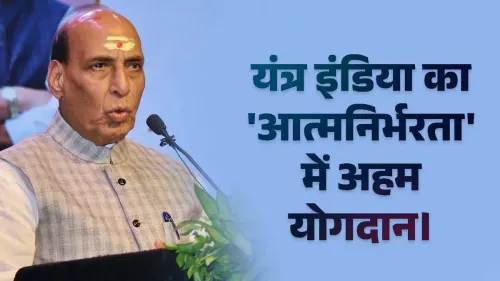
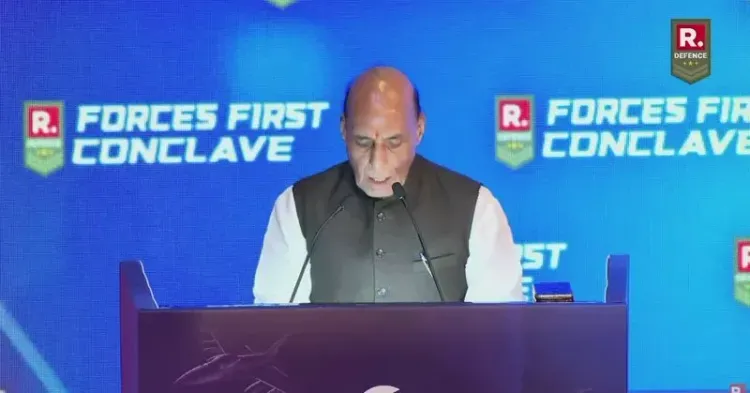
Union Defence Minister Rajnath Singh addressed the Forces First Conclave in New Delhi on 18 July 2026, signalling the government's continued focus on armed forces welfare, recruitment reform, and indigenisation under the Atmanirbhar Bharat framework.
Key Takeaways
Rajnath Singh spoke at the Forces First Conclave in New Delhi on 18 July 2026 .
The conclave focuses on the priorities of India's Army , Navy , and Air Force .
Singh has served as Union Defence Minister since 2019 , previously holding the roles of Union Home Minister and Uttar Pradesh Chief Minister.
The government launched the Agnipath short-service recruitment scheme in 2022 , a major structural reform for the services.
Defence budgets since 2014 have emphasised Atmanirbhar Bharat indigenisation targets to reduce reliance on foreign arms imports.
Theatreisation of the armed forces into integrated commands remains an ongoing reform priority for the ministry.
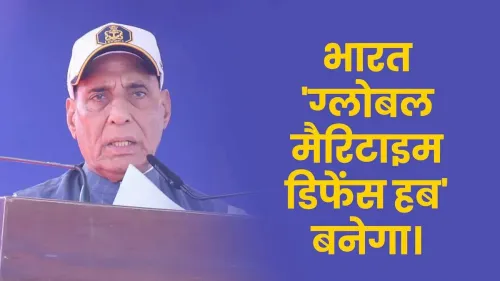
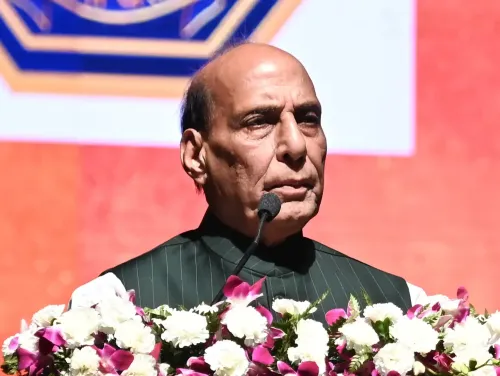
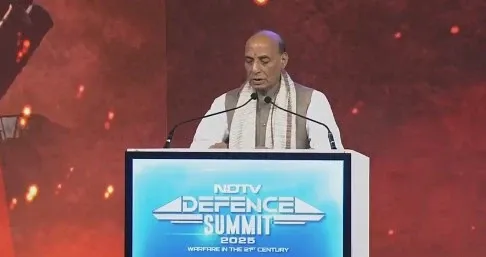
Union Defence Minister Rajnath Singh addressed the Forces First Conclave in New Delhi on Saturday, 18 July 2026, lending the weight of his office to a gathering centred on the priorities of India's armed forces.
Context
The Forces First Conclave brought together stakeholders focused on the welfare, recruitment, and modernisation of the Indian Armed Forces — comprising the Army, Navy, and Air Force — under the Ministry of Defence. Singh's presence as the keynote voice underscored the government's stated commitment to placing the armed forces at the centre of national policy discourse. The event was held in the capital, where the ministry is headquartered.
Singh has helmed the Ministry of Defence since 2019, making him one of the longest-serving defence ministers in recent Indian history. Before that he served as Union Home Minister and, earlier, as Chief Minister of Uttar Pradesh, giving him a broad security-policy footprint across his career.
Policy Backdrop
The conclave arrives against a backdrop of significant structural reform in the defence establishment. The government launched the Agnipath short-service recruitment scheme in 2022, overhauling how soldiers, sailors, and airmen are inducted into the services — a move that generated both support and controversy across the country.
Simultaneously, successive defence budgets since 2014 have pushed Atmanirbhar Bharat indigenisation targets, seeking to reduce India's dependence on foreign arms imports and grow a domestic defence-industrial base. Theatreisation — the restructuring of the three services into integrated theatre commands — has also been a long-running reform agenda that the ministry has been advancing.
Stakeholders and Impact
The primary stakeholders at a 'Forces First' platform are serving personnel, veterans, and their families, alongside defence-sector industry and policymakers. For veterans especially, any signals from the Defence Minister on welfare schemes, pension structures, or re-employment pathways carry immediate practical significance.
The broader defence-industrial ecosystem — from public-sector undertakings to private manufacturers seeking defence contracts — also watches such conclaves closely for procurement-policy signals. Singh's address, by virtue of his seniority within the BJP and the cabinet, carries both policy and political weight.
What's Next
Observers will watch for follow-up announcements stemming from the conclave, particularly on veterans' welfare schemes or recruitment policy. The next parliamentary debate on the defence budget will be a key moment to see whether themes raised at the conclave translate into legislative or budgetary commitments. Singh's continued high-profile engagement with armed forces platforms signals that defence modernisation and soldier welfare will remain central to the government's strategic messaging ahead of any electoral cycle.
Point of View
The minister reinforces a political identity built around national security — one that has proved electorally durable. The timing, amid ongoing debates over Agnipath and theatreisation, suggests the government is keen to project confidence and ownership over defence reforms rather than cede the narrative. Whether the conclave produces concrete policy outputs or remains largely symbolic will determine its lasting significance.
NationPress
18 Jul 2026
Frequently Asked Questions
What is the Forces First Conclave?
The Forces First Conclave is a New Delhi-based gathering focused on the priorities of India's armed forces, including welfare, recruitment, and modernisation. Union Defence Minister Rajnath Singh addressed the conclave on 18 July 2026.
What did Rajnath Singh say at the Forces First Conclave?
Rajnath Singh addressed the Forces First Conclave in New Delhi on 18 July 2026. The full details of his remarks were shared via a live broadcast linked from his official X account.
What is the Agnipath scheme?
The Agnipath scheme, launched in 2022, is a short-service recruitment programme for the Indian Army, Navy, and Air Force. It replaced the earlier permanent recruitment model and has been a significant and debated structural reform under the Ministry of Defence.
How long has Rajnath Singh been Defence Minister?
Rajnath Singh has served as Union Defence Minister since 2019. Before that he was Union Home Minister and, earlier, Chief Minister of Uttar Pradesh.
What is Atmanirbhar Bharat in defence?
Atmanirbhar Bharat, meaning 'self-reliant India', is the government's policy framework to boost domestic defence manufacturing and reduce dependence on foreign arms imports. It has been a central plank of defence budgets since 2014.