CM Bhajan Lal Hails Vikram-1 Launch as Space Milestone
Synopsis
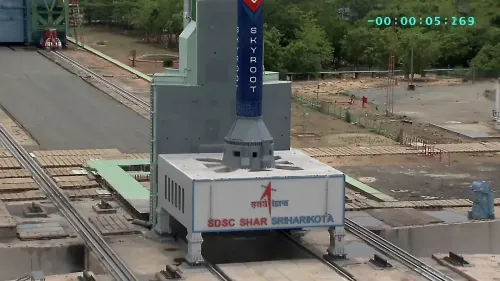
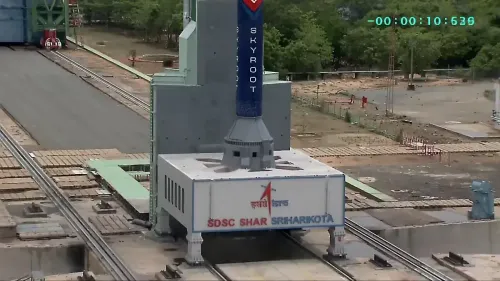
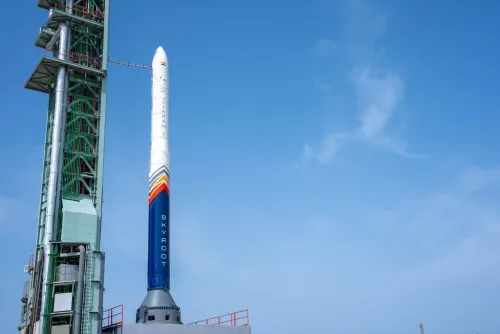
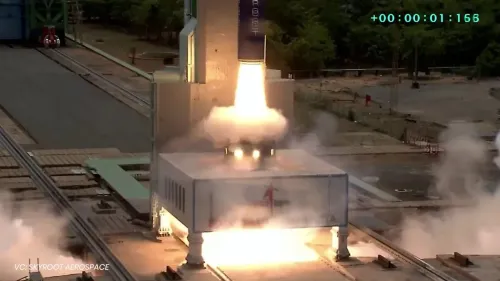
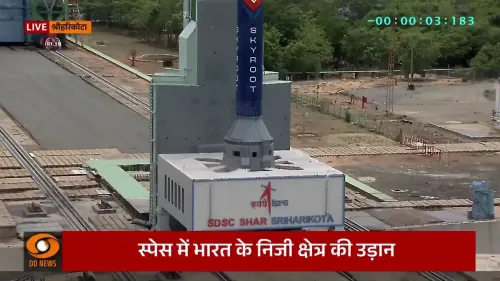
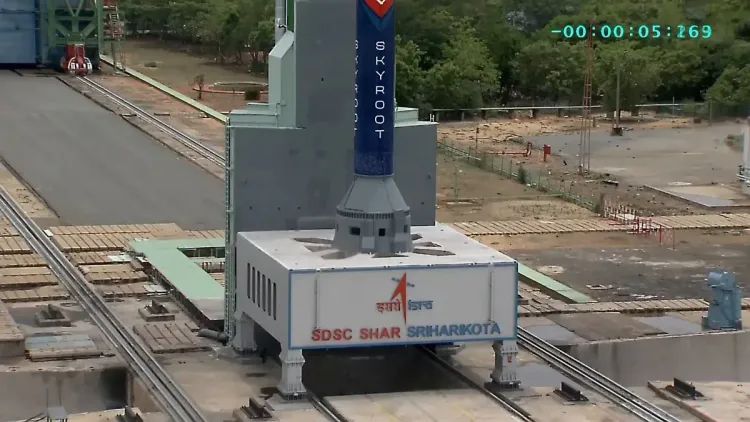
Rajasthan Chief Minister Bhajan Lal Sharma hailed the successful launch of Vikram-1 — India's first privately developed orbital rocket by Skyroot Aerospace — as a golden chapter in space history, attributing the milestone to PM Modi's 2020 space-sector reforms and praising the team's scientific resolve.
Key Takeaways
Rajasthan CM Bhajan Lal Sharma congratulated Skyroot Aerospace on 18 July 2026 over the successful launch of Vikram-1 .
Vikram-1 is described as India's first privately developed orbital launch vehicle.
CM Sharma credited PM Narendra Modi 's space reforms, initiated in June 2020 , for enabling private-sector participation in space.
Skyroot Aerospace previously completed India's first private sub-orbital rocket flight with Vikram-S in November 2022 .
The launch is seen as advancing India's goal of self-reliance in critical technology under the Atmanirbhar Bharat framework.
India's private space ecosystem now positions the country as a competitive player in the global small-satellite launch market.
Rajasthan Chief Minister Bhajan Lal Sharma on Saturday, 18 July 2026 congratulated Skyroot Aerospace on the successful launch of Vikram-1, describing it as a 'golden chapter' in India's space history and crediting the achievement to Prime Minister Narendra Modi's space-sector reforms.
Context
Posting in Hindi on X, CM Sharma called the launch 'भारत के अंतरिक्ष इतिहास में एक स्वर्णिम अध्याय' ('a golden chapter in India's space history'). He described Vikram-1 as the country's first privately developed orbital launch vehicle, calling it a symbol of 'scientific progress, technological self-reliance and the power of innovation.' He extended heartfelt congratulations to the entire Skyroot Aerospace team and wished them a bright future.
The Chief Minister specifically credited PM Modi's 'visionary leadership' for opening 'unlimited opportunities for private-sector talent' in space, a reference to the landmark reforms that began in June 2020.
Policy Backdrop
In June 2020, the Government of India announced sweeping reforms permitting private companies to build satellites and rockets under the oversight of IN-SPACe (Indian National Space Promotion and Authorisation Centre), ending decades of exclusive government control over launch services.
Skyroot Aerospace, a Hyderabad-based startup, was the first to demonstrate the results of that policy when it conducted the sub-orbital flight of Vikram-S in November 2022 — the first-ever launch by an Indian private entity from Indian soil. Vikram-1 represents the next step: a full orbital-class vehicle designed to carry commercial payloads into orbit.
The broader strategy mirrors liberalisation seen in the United States and Europe, where governments anchor demand while private startups supply the vehicles, with the explicit goal of capturing a larger share of the global small-satellite launch market under the Atmanirbhar Bharat framework.
Stakeholders and Impact
The successful orbital launch, if confirmed, would mark a defining moment for India's private space ecosystem, which includes rival startups such as Agnikul Cosmos alongside Skyroot. It validates the risk taken by private investors and signals to the global launch market that India's commercial capacity has moved beyond sub-orbital demonstration flights.
ISRO engineers and scientists, whose foundational work underpins the regulatory and technical environment, also stand as key stakeholders. CM Sharma's post specifically praised 'Indian scientists, engineers and young innovators' for their 'talent, relentless hard work and firm resolve.'
For the broader Indian economy, a credible private orbital launch capability could attract foreign satellite manufacturers seeking cost-competitive rideshare options, supporting the government's goal of growing India's share of the global space economy.
What's Next
The orbital qualification of Vikram-1 is expected to pave the way for commercial launch contracts for Skyroot Aerospace, with subsequent flights needed to establish cadence and reliability. Rival startup Agnikul Cosmos is also progressing with its own vehicle, and the coming months may see multiple Indian private rockets compete for small-satellite payloads.
Observers will also watch for new policy announcements under the forthcoming National Space Policy and any additional IN-SPACe funding or regulatory clarifications that could further accelerate private participation. India's growing track record in commercial space positions it as an increasingly credible alternative in a market dominated by a handful of established players.
Point of View
Reinforcing the party's Atmanirbhar Bharat narrative ahead of what could be a high-visibility moment in India's technology diplomacy. The choice to highlight PM Modi's 2020 reforms — rather than ISRO's institutional legacy — signals a deliberate framing of private-sector space as a BJP policy dividend. If Vikram-1's orbital success holds up to scrutiny, it hands the ruling party a rare, tangible proof point in deep technology self-reliance. More broadly, it accelerates the shift in India's space identity: from a government-run programme celebrated for frugal engineering to a regulated commercial ecosystem competing for global launch contracts.
NationPress
16 Oct 2026
Frequently Asked Questions
What is Vikram-1 and who made it?
Vikram-1 is India's first privately developed orbital launch vehicle, built by Skyroot Aerospace , a Hyderabad-based space startup. It follows the sub-orbital Vikram-S , which completed India's first private rocket flight in November 2022.
What did Rajasthan CM Bhajan Lal Sharma say about Vikram-1?
CM Bhajan Lal Sharma called the launch 'a golden chapter in India's space history' and praised it as a symbol of scientific progress and technological self-reliance, while congratulating the entire Skyroot Aerospace team.
How did PM Modi's reforms help India's private space sector?
In June 2020 , the government opened space activities to private companies under the oversight of IN-SPACe , allowing startups to build rockets and satellites and compete for commercial launches — a policy that directly enabled Skyroot Aerospace's development of Vikram-1.
What is Skyroot Aerospace's history?
Skyroot Aerospace is a Hyderabad-based startup that in November 2022 became the first Indian private company to launch a rocket from Indian soil, completing the sub-orbital flight of Vikram-S . Vikram-1 is its first orbital-class vehicle.
What does Vikram-1's launch mean for India's space ambitions?
A successful orbital launch by a private Indian company validates the country's post-2020 space liberalisation policy, positions India as a competitive player in the global small-satellite market, and strengthens the Atmanirbhar Bharat goal of self-reliance in critical technology.