Sitharaman in Madurai: India beyond self-doubt, urges bold entrepreneurship
Synopsis
Union Finance Minister Nirmala Sitharaman addressed young entrepreneurs in Madurai on 18 July 2026, invoking India's roles in ITER fusion research, polar science, and the Chandrayaan-3 Moon South Pole landing to argue the nation has shed its self-doubt and must now build boldly for future generations.
Key Takeaways
Union Finance Minister Nirmala Sitharaman spoke in Madurai, Tamil Nadu on 18 July 2026 , calling on young entrepreneurs to build boldly and responsibly.
She cited India's participation in the ITER nuclear fusion programme — a 35-nation collaboration joined by India in 2005 — as a marker of frontier scientific contribution.
India's Arctic and Antarctic research presence, anchored by the Dakshin Gangotri station established in 1983 , was highlighted as evidence of long-standing polar engagement.
Chandrayaan-3 's August 2023 landing made India the first nation to place a spacecraft near the Moon's South Pole , a milestone Sitharaman invoked as proof of India's transformed global stature.
The address connects to the broader Atmanirbhar Bharat framework, framing scientific self-reliance as a foundation for entrepreneurial ambition.
Policy watchers will track whether the speech is followed by deep-tech incentives in the next Union Budget or updates to the Startup India programme.
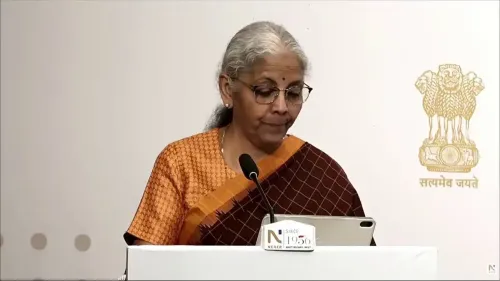
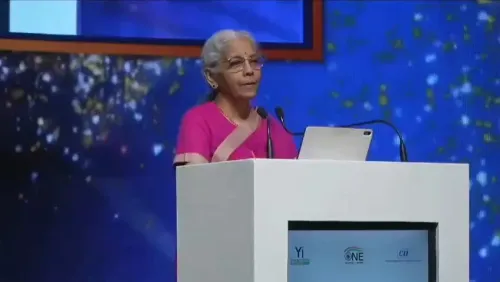
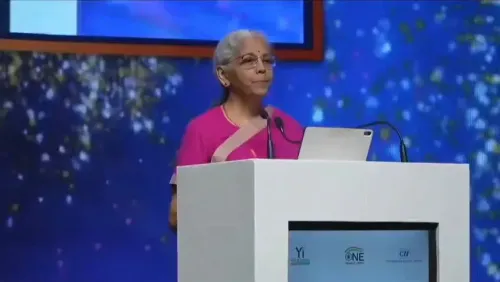
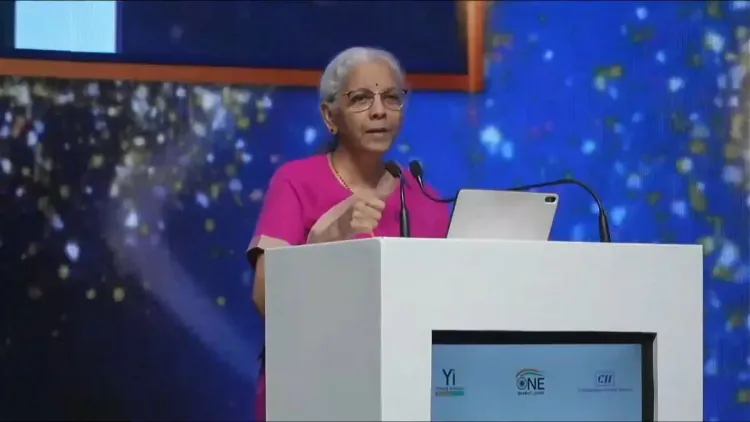
Union Finance Minister Nirmala Sitharaman on Saturday, 18 July 2026, called on young Indian entrepreneurs to build ambitiously and responsibly, declaring that India has moved past a mindset of self-doubt and now stands at the frontier of global science and technology. Speaking in Madurai, Tamil Nadu, she pointed to India's participation in the ITER nuclear fusion programme, its Arctic and Antarctic research presence, and Chandrayaan-3's historic landing near the Moon's South Pole as evidence of the nation's transformed stature.
Context
Sitharaman's address framed India's scientific achievements as a call to action for the next generation of builders. Quoting her directly: 'India has moved beyond the mindset of self-doubt and today stands at a defining moment, contributing to some of the world's most advanced scientific and technological frontiers.' She urged young entrepreneurs to 'build boldly, build responsibly, build for India, build for the world and above all, build for generations yet to come.'
The speech drew a direct line between frontier science — nuclear fusion, polar exploration, lunar missions — and the entrepreneurial ambition she wants India's youth to channel. The setting of Madurai, a major city in Tamil Nadu with a growing startup and engineering ecosystem, underscored the message's regional reach beyond the capital.
Policy Backdrop
India's credentials in the domains Sitharaman cited are well-established. India joined ITER — the International Thermonuclear Experimental Reactor, a 35-nation fusion collaboration — as a full partner in 2005, committing to supply key components including superconducting magnets and cryostat structures. India's polar research programme dates to 1983, when the first Antarctic station Dakshin Gangotri was established, and the country now maintains active stations on both poles.
On the lunar front, ISRO's Chandrayaan-3 mission made India the first nation to successfully land a spacecraft near the Moon's South Pole in August 2023 — a milestone that drew global attention and positioned India as a serious spacefaring power. These achievements sit within a decades-long arc of technological self-reliance that accelerated under the Atmanirbhar Bharat framework after 2014, shifting India's identity from technology importer to active contributor in frontier domains.
Stakeholders and Impact
The Finance Minister's remarks are directly aimed at young entrepreneurs and the deep-tech startup community. India's startup ecosystem, now one of the world's largest by count of funded ventures, has increasingly moved into space-tech, defence technology, and clean energy — sectors where national scientific programmes create both infrastructure and market opportunity.
The scientific community, including researchers at ISRO, the Institute for Plasma Research (India's nodal agency for ITER), and polar research institutions, also stands as a key stakeholder. Sitharaman's public endorsement of these programmes signals continued political will for their funding and expansion at a time when global competition in space and fusion energy is intensifying.
What's Next
Observers will watch for concrete policy follow-through: whether the speech presages new deep-tech incentives in the next Union Budget, updates to the Startup India framework, or announcements tied to Gaganyaan, India's human spaceflight programme. Sitharaman's dual role as Finance Minister and a senior BJP leader means her public framing of India's scientific ambition carries both policy and political weight ahead of any budget cycle. The Madurai address reinforces a broader government narrative that positions India's global scientific contributions as validation of its development model.
Point of View
Polar research, Chandrayaan-3 — to a market-facing entrepreneurial narrative, essentially asking the private sector to inherit the ambition of public science. Coming from the Finance Minister, the framing carries budget-signalling weight: it hints at continued or expanded support for deep-tech and space-tech startups in upcoming policy cycles. The choice of Madurai, outside the usual Delhi-Mumbai-Bengaluru startup circuit, also suggests an effort to broaden the geographic appeal of India's innovation story. Taken together, the speech reinforces the government's consistent positioning of India as a net contributor — rather than a recipient — in the global technology order.
NationPress
16 Oct 2026
Frequently Asked Questions
What did Nirmala Sitharaman say in Madurai on 18 July 2026?
Sitharaman declared that India has moved beyond a mindset of self-doubt and urged young entrepreneurs to build boldly, responsibly, and for future generations, citing India's roles in the ITER fusion programme, polar research, and the Chandrayaan-3 Moon South Pole landing.
What is ITER and what is India's role in it?
ITER — the International Thermonuclear Experimental Reactor — is a 35-nation nuclear fusion project. India joined as a full partner in 2005 and contributes key components including superconducting magnets and cryostat structures through the Institute for Plasma Research.
Why is Chandrayaan-3 significant?
Chandrayaan-3, launched by ISRO, achieved the first successful spacecraft landing near the Moon's South Pole in August 2023, making India the first nation to accomplish this feat and cementing its status as a leading spacefaring power.
When did India start its Antarctic research programme?
India established its first Antarctic research station, Dakshin Gangotri, in 1983. The country now maintains active research stations on both the Arctic and Antarctic, reflecting decades of polar scientific engagement.
What does Sitharaman's speech mean for Indian startups?
The Finance Minister's address signals political support for deep-tech entrepreneurship, and observers expect it may foreshadow new startup incentives or deep-tech funding provisions in the next Union Budget or Startup India policy review.