CM Majhi Hails Vikram-1 as Milestone in India's Space Story
Synopsis
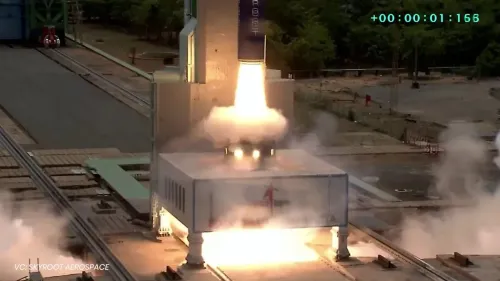
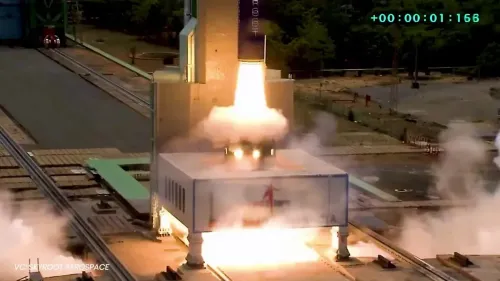
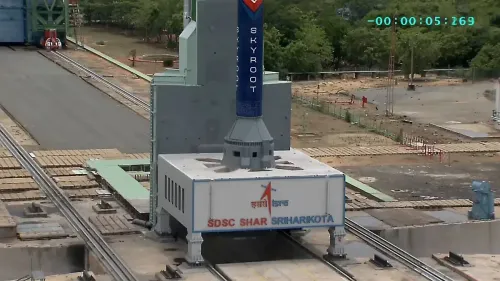
Odisha Chief Minister Mohan Charan Majhi hailed the launch of Vikram-1, India's first privately developed orbital rocket by Skyroot Aerospace, as a defining space milestone arriving 46 years after SLV-3, crediting PM Modi's space-sector reforms for enabling the breakthrough.
Key Takeaways
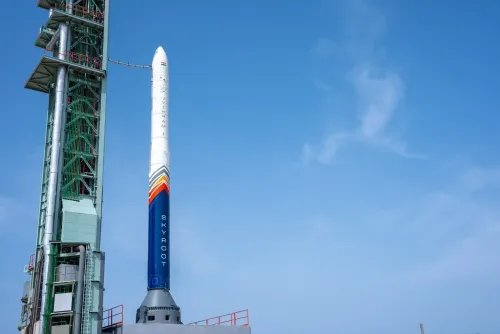
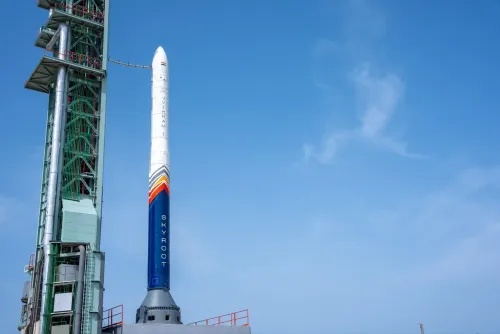
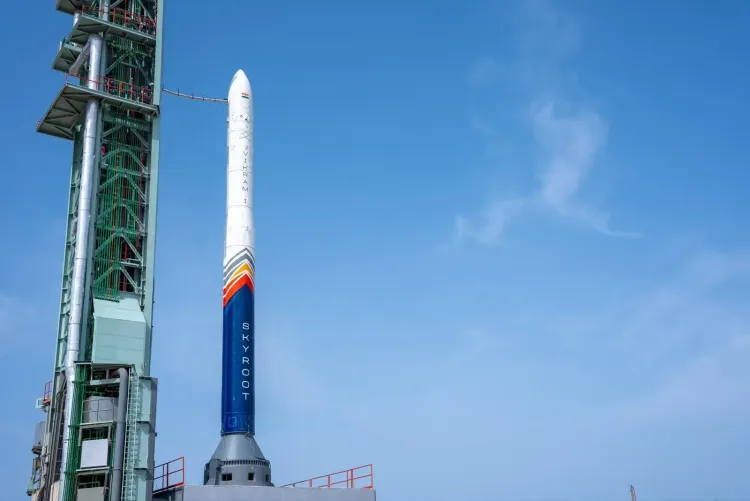
Vikram-1 is India's first privately developed orbital launch vehicle, built by Skyroot Aerospace of Hyderabad .
Odisha CM Mohan Charan Majhi congratulated the Skyroot team on 18 July 2026 , calling it 'a defining milestone in India's space journey.' The mission comes 46 years after ISRO's SLV-3 , India's first indigenous satellite launch vehicle, which flew in 1980 .
India's space sector was opened to private players from 2020 via IN-SPACe and revised FDI rules, ending ISRO's near-monopoly.
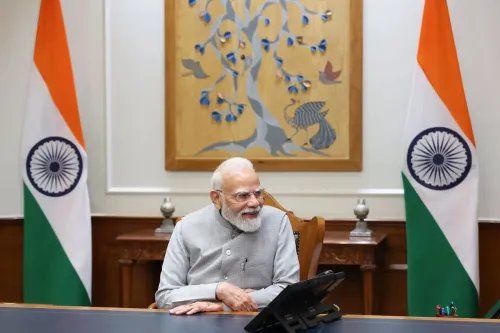
CM Majhi credited PM Narendra Modi's leadership and space-sector reforms as the enabling force behind the achievement.
Subsequent commercial contracts and further flights of the Vikram series will determine the pace of India's private launch market growth.
Odisha Chief Minister Mohan Charan Majhi on Saturday, 18 July 2026, congratulated Skyroot Aerospace on the launch of Vikram-1, calling it 'a defining milestone in India's space journey' and a testament to the country's growing private innovation ecosystem.
Context
Vikram-1 is India's first privately developed orbital launch vehicle, built by Hyderabad-based Skyroot Aerospace. In his post, CM Majhi noted that the mission arrives 46 years after the launch of SLV-3, ISRO's first indigenous satellite launch vehicle that flew successfully in 1980, describing Vikram-1 as 'a fitting tribute to India's pioneering space legacy.'
The Chief Minister extended 'heartfelt congratulations and best wishes to the entire Skyroot team,' crediting the achievement to 'the extraordinary capabilities of our scientists, engineers and entrepreneurs.'
Policy Backdrop
The launch is a direct product of sweeping space-sector reforms initiated from 2019 onwards under the Department of Space, which authorised private entities to build and operate launch vehicles and satellites for commercial missions. The establishment of IN-SPACe — the Indian National Space Promotion and Authorisation Centre — in 2020 formally ended ISRO's near-monopoly on launch services and opened the sector to foreign direct investment.
CM Majhi attributed the breakthrough to 'the visionary leadership of Prime Minister Narendra Modi and transformative space sector reforms,' aligning the state's voice with the Centre's broader Atmanirbhar Bharat (self-reliant India) narrative in strategic technology sectors.
The liberalisation mirrors parallel policy shifts in defence manufacturing and civil aviation, all aimed at positioning India as a competitive supplier in the global small-satellite launch market.
Stakeholders and Impact
Skyroot Aerospace, founded in Hyderabad, represents the first wave of deep-tech startups to move from sub-orbital demonstrations to a full orbital mission under the new regulatory framework. A successful Vikram-1 mission would validate India's public-private model for space access and open a commercial pipeline for domestic and international satellite operators seeking cost-effective launch options.
For the broader startup ecosystem, the milestone signals that private capital and engineering talent can now compete in a domain previously reserved for government agencies. CM Majhi's statement, posted under the hashtag #IndiaWithVikram1, reflects how state governments are increasingly amplifying central technology narratives to project alignment with national development goals.
What's Next
Attention will now turn to subsequent test flights and commercial contracts for the Vikram series, as Skyroot seeks to build a reliable launch cadence. Analysts will also watch for state-level incentives — including potential moves by Odisha — to attract space-related manufacturing and R&D investment, as states compete to host the next generation of aerospace industry clusters.
If Vikram-1 demonstrates consistent orbital capability, it could accelerate investor confidence in India's private space sector and prompt further regulatory refinements to support heavier-lift vehicles and deeper commercial missions in the years ahead.
Point of View
Majhi frames Vikram-1 not merely as a startup success but as a civilisational continuity, lending it the weight of ISRO's legacy. The congratulatory post also reinforces the Centre-state alignment that defines BJP-governed states on marquee policy themes, from defence to digital infrastructure. If Skyroot converts this milestone into a commercial launch cadence, it will validate the IN-SPACe reform model and likely intensify competition among states — including Odisha — to host aerospace industry investments.
NationPress
18 Jul 2026
Frequently Asked Questions
What is Vikram-1 and who built it?
Vikram-1 is India's first privately developed orbital launch vehicle, built by Hyderabad-based startup Skyroot Aerospace under India's liberalised space sector framework.
Why did Odisha CM Mohan Majhi comment on Vikram-1?
CM Mohan Charan Majhi posted congratulations to Skyroot Aerospace on 18 July 2026, aligning with the national narrative of private innovation in space and crediting PM Modi's space reforms.
What is the connection between Vikram-1 and SLV-3?
SLV-3 was ISRO's first indigenous satellite launch vehicle, successfully flown in 1980. Vikram-1 arrives 46 years later as India's first privately built orbital rocket, marking the next chapter in the country's launch heritage.
What reforms allowed private companies to build rockets in India?
From 2019 onwards, the Department of Space authorised private entities to build and operate launch vehicles. In 2020, the government established IN-SPACe and revised FDI rules, formally opening the sector to private participation.
What comes next for Skyroot Aerospace after Vikram-1?
The focus shifts to subsequent test flights and commercial contracts for the Vikram series, as Skyroot aims to build a reliable orbital launch cadence and attract domestic and international satellite customers.