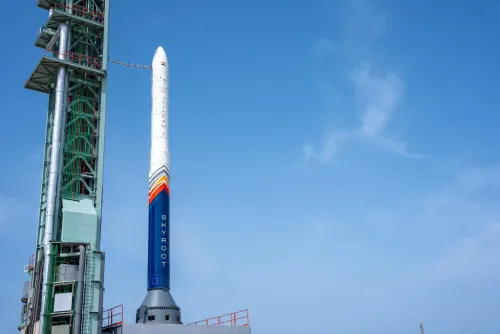
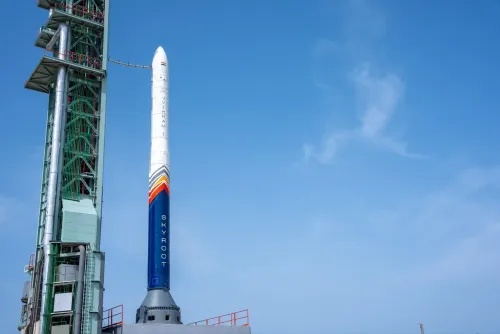
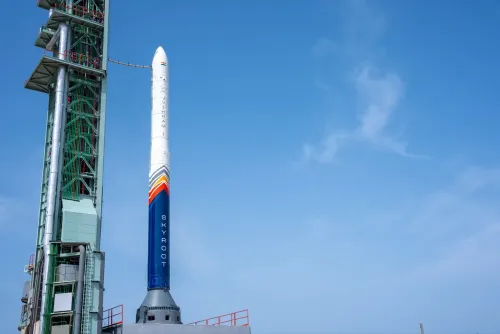
Vikram-1 launch: PM Modi hails Skyroot Aerospace's historic orbital mission
Synopsis
India's private space sector crossed a landmark threshold on 18 July as Skyroot Aerospace's Vikram-1 — entirely designed and built in India — successfully delivered six payloads, including two satellites, into a 450-km orbit. PM Modi called it a defining moment and personally rang up the founders, signalling strong political backing for the country's fast-maturing commercial space ecosystem.
Key Takeaways
Vikram-1 by Skyroot Aerospace became India's first privately-developed orbital launch vehicle to successfully reach orbit on 18 July .
The rocket carried six payloads , including two satellites , into a 450-km low-Earth orbit .
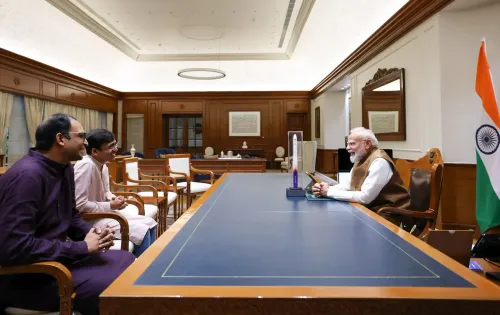
PM Modi personally called CEO Pawan Kumar Chandana and co-founder Bharat Daka to congratulate the team.
Modi noted the team appeared to be 25–30 years of age , highlighting the youth-driven nature of the achievement.
The rocket was completely designed and manufactured in India , according to Chandana.
The mission, named 'Mission Aagaman' , is seen as a milestone for India's Atmanirbhar Bharat push in deep-tech sectors.
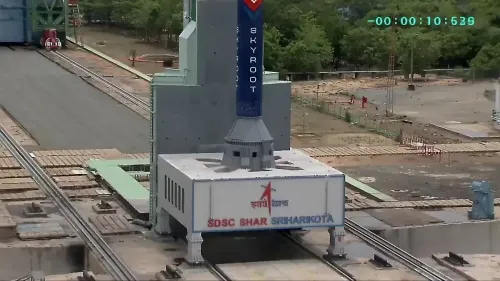
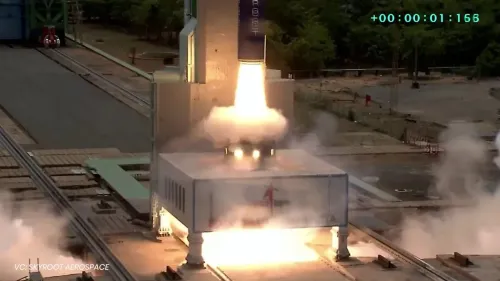
Prime Minister Narendra Modi on Saturday, 18 July congratulated Skyroot Aerospace on the successful launch of Vikram-1, describing the mission as a defining moment in India's space journey and a powerful signal of the private sector's growing role in the country's space ambitions. The achievement makes Vikram-1 India's first privately-developed orbital launch vehicle to successfully carry payloads to orbit.
What the Mission Achieved
The Vikram-1 rocket carried six payloads, including two satellites, into a 450-km low-Earth orbit. According to Skyroot Aerospace CEO Pawan Kumar Chandana, the rocket was completely designed and manufactured in India — an outcome that underscores the Atmanirbhar Bharat vision in one of the world's most capital-intensive technology sectors.
What PM Modi Said
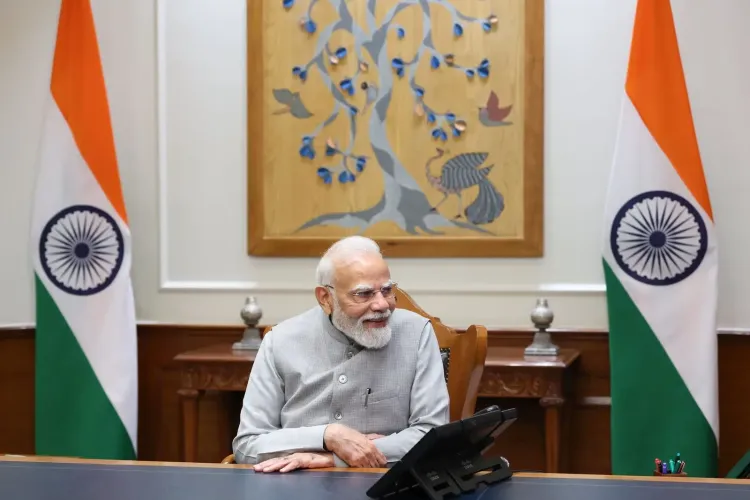
In a post on social media platform X, Prime Minister Modi said the mission opens new frontiers for Indian innovation. 'This is a defining moment in India's space journey. The growing participation of our private sector is opening new frontiers and accelerating innovation. This achievement will encourage countless youngsters to dream bigger and innovate fearlessly,' Modi wrote.
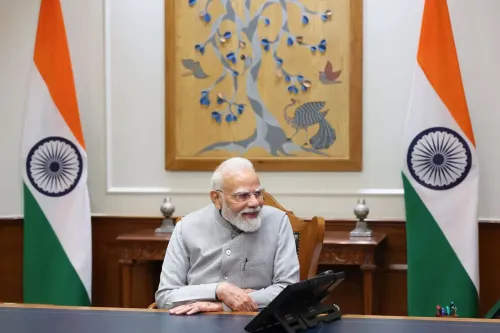
During a telephonic conversation with Chandana and co-founder Bharat Daka, the Prime Minister praised the youthful character of the Skyroot team. 'Congratulations to Pawan, Bharat and the rest of the team. Your feat will inspire youngsters to come forward. I was watching the entire launch programme today. Your entire Skyroot Aerospace team looks like they are 25-30 years of age,' he said.
Mission Aagaman and the Atmanirbhar Push
Modi also conveyed his 'grand greetings' to the team and expressed hope that 'Mission Aagaman' — the name given to this launch — would continue to achieve greater milestones. He described the successful launch as proof of India's capability to reach major technological benchmarks under the self-reliance framework. Notably, this is the first time a privately-built Indian rocket has successfully delivered payloads to a defined orbital altitude, a threshold that separates sub-orbital demonstrations from operational launch capability.
Why This Matters for India's Space Sector
The Indian Space Research Organisation (ISRO) opened the space sector to private players following policy reforms in 2020, creating IN-SPACe as the regulatory body. Skyroot Aerospace, founded in 2018 by former ISRO scientists, has been among the most closely watched startups in this emerging ecosystem. The Vikram-1 success arrives as global demand for small-satellite launch services grows rapidly, and positions India as a competitive destination for commercial orbital launches. This comes amid a broader push by the Centre to attract private investment into deep-tech sectors, with space identified as a priority domain.
What Comes Next
With the orbital milestone cleared, Skyroot Aerospace is expected to move toward commercial launch contracts. Industry observers note that the successful mission significantly de-risks the company's technology stack and could accelerate fundraising and international partnerships. The Centre's continued support through IN-SPACe will be critical in translating this milestone into a sustained commercial pipeline.
Point of View
And it has passed. What mainstream coverage underplays is the orbital distinction: dozens of private rockets globally have reached sub-orbital altitudes, but achieving a defined 450-km orbit with six payloads is an entirely different engineering threshold. The real question now is whether IN-SPACe can convert this momentum into a durable commercial launch market, or whether Skyroot remains a celebrated proof-of-concept while international rivals capture the small-satellite manifest. India has the talent and, apparently, the rockets — the bottleneck is now policy speed and launch-pad infrastructure.
NationPress
17 Oct 2026
Frequently Asked Questions
What is Vikram-1 and who built it?
Vikram-1 is India's first privately-developed orbital launch vehicle, built by Hyderabad-based startup Skyroot Aerospace. The rocket was completely designed and manufactured in India, according to CEO Pawan Kumar Chandana.
What did the Vikram-1 mission carry into orbit?
Vikram-1 successfully carried six payloads, including two satellites, into a 450-km low-Earth orbit during its launch on 18 July.
What is Mission Aagaman?
Mission Aagaman is the name given to Vikram-1's orbital launch mission. PM Modi expressed hope that the mission would continue to achieve greater milestones, calling it a testament to India's self-reliance in space technology.
Why is the Vikram-1 launch significant for India?
It marks the first time a privately built Indian rocket has delivered payloads to a defined orbital altitude, a major step beyond sub-orbital tests. It validates the policy reforms that opened India's space sector to private players in 2020 and positions India as a competitive destination for commercial small-satellite launches.
What did PM Modi say about the Skyroot Aerospace team?
PM Modi said the achievement would encourage youngsters to dream bigger and innovate fearlessly. He also noted during his phone call with the founders that the Skyroot team appeared to be 25–30 years of age, praising the youth-driven nature of the accomplishment.