CM Dhami Hails Vikram-1 Launch as Space Milestone
Synopsis
Uttarakhand Chief Minister Pushkar Singh Dhami celebrated the launch of Vikram-1, India's first privately developed orbital-class rocket by Skyroot Aerospace, from Sriharikota on 18 July 2026, calling it a historic milestone for India's self-reliant space ambitions under PM Modi's leadership.
Key Takeaways
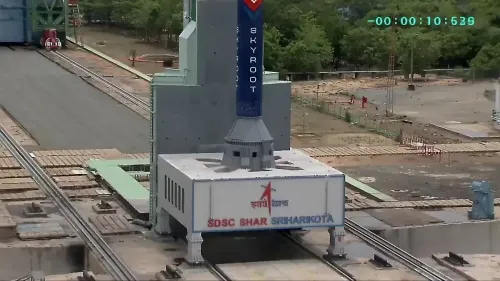
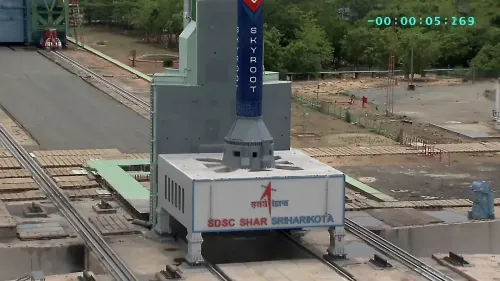
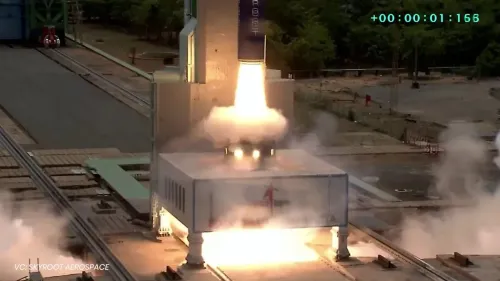
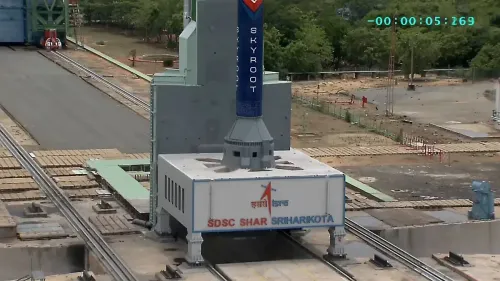
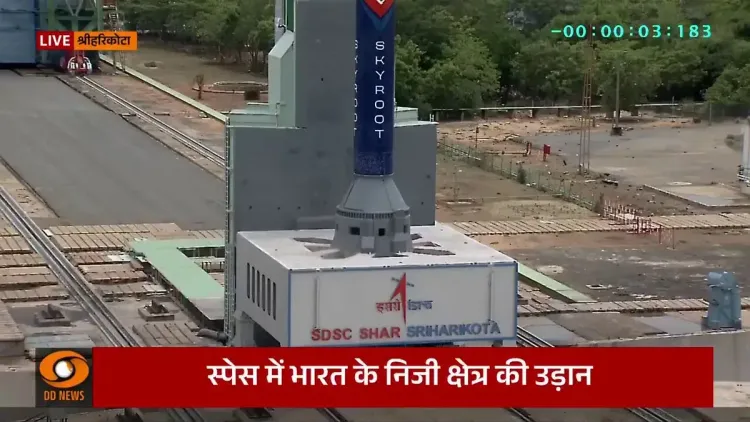
Vikram-1 , India's first privately developed orbital-class rocket, was launched from Satish Dhawan Space Centre, Sriharikota on 18 July 2026 .
Skyroot Aerospace , a Hyderabad -based startup, is the developer of the Vikram series of launch vehicles.
Uttarakhand CM Pushkar Singh Dhami publicly congratulated the Skyroot team and all scientists involved in the mission.
The launch is a product of IN-SPACe reforms initiated in 2020 and the Indian Space Policy of 2023 , which opened the sector to private players.
The mission advances India's Atmanirbhar Bharat agenda in high-technology and positions the country among nations with private orbital launch capability.
Orbital insertion confirmation and progress on the Space Activities Bill are the key developments to watch next.
Uttarakhand Chief Minister Pushkar Singh Dhami on Saturday, 18 July 2026, took to X to celebrate the launch of Vikram-1, India's first privately developed orbital-class rocket, from the Satish Dhawan Space Centre in Sriharikota, Andhra Pradesh, calling it a new chapter in the country's space history.
Posting in Hindi, CM Dhami declared, 'अंतरिक्ष में भारत ने रचा नया इतिहास!' ('India has created new history in space!'), congratulating all scientists and the mission team behind the achievement. He described the milestone as a moment of 'pride and inspiration for every Indian.'
Context
Vikram-1 is the flagship orbital launch vehicle developed by Skyroot Aerospace, a Hyderabad-based private space startup. The rocket lifted off from ISRO's primary launch complex at Sriharikota, marking the first time a privately built orbital-class vehicle has been launched from Indian soil. The achievement is seen as a landmark for the country's emerging commercial space sector.
CM Dhami credited Prime Minister Narendra Modi's leadership for enabling this progress, stating that 'New India is continuously touching new heights in the field of space science and technology' under his guidance. He tagged both PM Modi and @SkyrootA in his post, directly acknowledging the startup behind the mission.
Policy Backdrop
The Vikram-1 launch is the direct product of policy reforms initiated since 2020, when the Government of India established IN-SPACe (Indian National Space Promotion and Authorisation Centre) to regulate and facilitate private-sector space activities alongside ISRO. The body was designed to act as a single-window agency for non-governmental entities seeking to build and launch rockets or satellites.
The Indian Space Policy of 2023 further codified this framework, explicitly opening launch vehicle development and satellite services to domestic industry. These reforms are positioned under the broader Atmanirbhar Bharat (self-reliant India) umbrella, mirroring the public-private model pioneered globally by commercial spaceflight firms. ISRO continues to provide infrastructure and oversight, while startups like Skyroot Aerospace drive innovation and cost efficiency.
Stakeholders and Impact
Skyroot Aerospace becomes the first Indian private company to successfully attempt an orbital-class launch, a feat that positions India alongside a small group of nations with privately operated orbital launch capability. The mission is expected to open pathways for small satellite deployments by domestic and international customers at competitive costs.
For the broader ecosystem of IN-SPACe-authorised startups, the launch sets a precedent and raises investor confidence in Indian commercial space ventures. ISRO scientists and the Skyroot team were specifically acknowledged by CM Dhami, reflecting the collaborative public-private nature of the mission. The event also carries symbolic weight for the Atmanirbhar Bharat narrative in high-technology sectors.
What's Next
Attention will now turn to whether Vikram-1 successfully achieved orbital insertion and deployed its intended payloads — the critical final measure of the mission's success. Skyroot Aerospace is also developing subsequent variants in the Vikram series, aimed at progressively heavier payload capacities for commercial small-satellite markets.
At the policy level, lawmakers and industry watchers will monitor any updates to the pending Space Activities Bill, which is expected to provide a comprehensive legislative framework for India's growing private space economy. Further orbital attempts by other IN-SPACe-authorised firms are anticipated as the sector matures.
Point of View
The post connects a startup's engineering milestone to the ruling party's Atmanirbhar Bharat narrative ahead of what remains a competitive political environment. The speed and uniformity with which BJP leaders across states amplify such moments reflects a deliberate strategy to claim ownership of India's technology story. Whether Vikram-1 achieves verified orbital insertion will determine how durable this political dividend proves to be.
NationPress
17 Oct 2026
Frequently Asked Questions
What is Vikram-1 and who made it?
Vikram-1 is India's first privately developed orbital-class rocket, built by Skyroot Aerospace , a Hyderabad-based space startup. It is designed to carry small satellites into orbit and represents a major step for India's commercial space industry.
From where was Vikram-1 launched?
Vikram-1 was launched from the Satish Dhawan Space Centre in Sriharikota, Andhra Pradesh , which is ISRO's primary orbital launch facility.
What is IN-SPACe and what role did it play in the Vikram-1 launch?
IN-SPACe (Indian National Space Promotion and Authorisation Centre) is a government body established in 2020 to regulate and enable private-sector space activities in India. It authorised Skyroot Aerospace to develop and launch Vikram-1 using ISRO infrastructure.
Why did CM Pushkar Singh Dhami comment on the Vikram-1 launch?
Uttarakhand CM Pushkar Singh Dhami posted on X to celebrate the launch as a national achievement under PM Modi's leadership, framing it as a milestone for India's self-reliance and innovation in space technology.
What is the significance of Vikram-1 for India's space programme?
Vikram-1's launch marks the first time a privately built orbital-class rocket has lifted off from Indian soil, placing India among a select group of countries with a private orbital launch capability and validating the government's policy of opening the space sector to domestic industry.