White House Touts Trump Tax Cuts, Hits Democrats
Synopsis
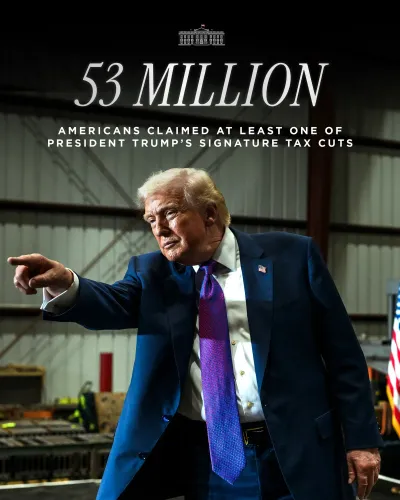
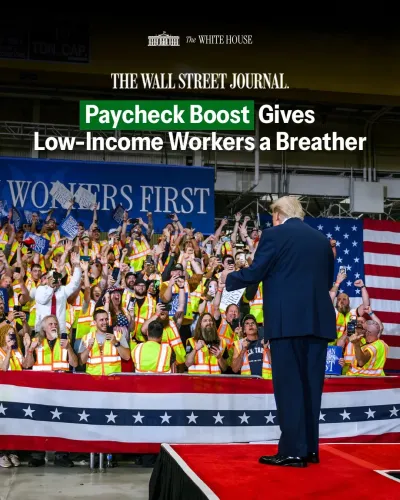
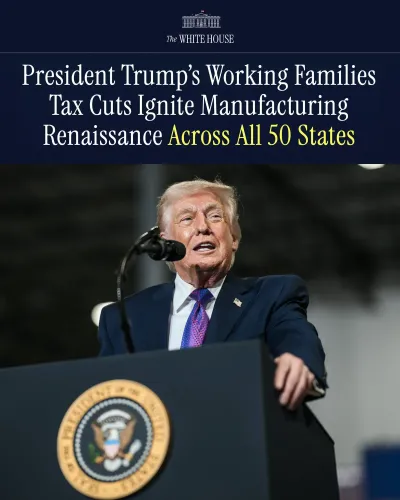
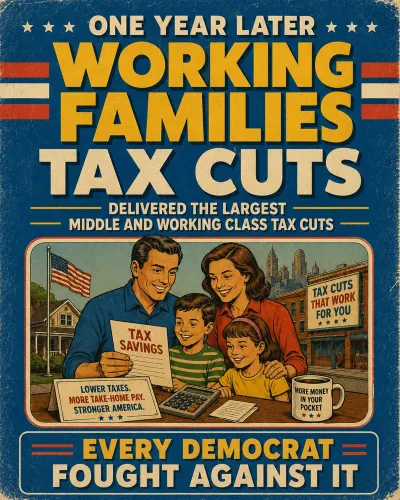
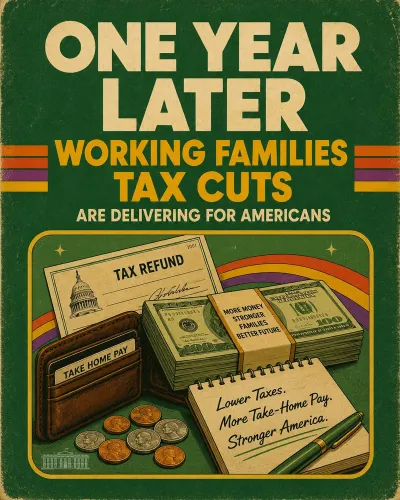
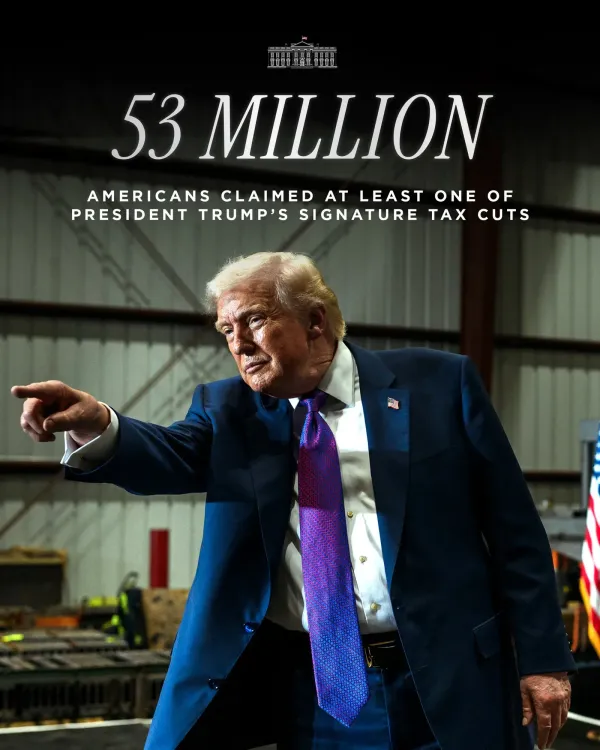
The White House posted on X asserting President Trump's historic tax cuts are benefitting millions of American families, while highlighting that every congressional Democrat opposed the landmark 2017 Tax Cuts and Jobs Act when it passed.
Key Takeaways
The White House posted on X on October 17, 2026 defending President Trump's tax legacy.
The claim centres on the Tax Cuts and Jobs Act , signed in December 2017 — the largest US tax code overhaul in over 30 years.
Not a single Democratic lawmaker voted for the bill in either the House or the Senate.
Several TCJA individual-rate provisions were set to expire after 2025 , keeping the legislation at the centre of congressional debate.
The partisan divide over tax cuts mirrors patterns seen under Reagan (1981) and George W.
A decade-old legislative battle is being relitigated from the most powerful address in the world. The White House posted on X on Saturday, October 17, 2026, asserting that President Trump's tax cuts are 'benefitting millions of American families' — and delivering a pointed reminder that 'every single Democrat voted against them.'
The 2017 Tax Law at the Centre of the Claim
The post points to the Tax Cuts and Jobs Act (TCJA), signed into law in December 2017 — the largest overhaul of the United States tax code in more than three decades. The legislation slashed individual and corporate tax rates across the board, and it passed through Congress without a single Democratic vote in either the House or the Senate.
That unanimous opposition is the rhetorical sharpshooter's target here. The White House is framing the Democratic 'no' vote not merely as a policy disagreement but as a political miscalculation — one that families are now, in the administration's telling, paying a dividend from regardless.
Why Democrats Said No — and Why the Fight Never Ended
Congressional Democrats at the time argued the TCJA disproportionately benefitted corporations and wealthy households while adding trillions to the national deficit. Those distributional concerns were not unique to 2017: similar fault lines split Washington during the Reagan tax cuts of 1981 and the George W. Bush cuts of 2001 and 2003.
The pattern is as old as modern American fiscal politics — Republicans cut rates and point to growth; Democrats invoke inequality and debt. The TCJA simply became the sharpest version of that argument in a generation.
The 2025 Expiry Cliff That Keeps the Debate Alive
The post's timing carries an undercurrent of legislative urgency. Several key individual-rate provisions of the TCJA were written to expire after 2025, meaning Congress has been under pressure to extend, modify, or let them lapse — a decision with direct consequences for American household budgets. Any move to extend the cuts would almost certainly replay the same party-line dynamic the White House is now flagging.
Point of View
The administration converts a seven-year-old vote into a live political liability for the opposition. The timing — with key TCJA provisions having recently crossed their post-2025 expiry threshold — suggests the messaging is calibrated to build public pressure ahead of any congressional fight over extension. For Indian observers, the post illustrates how US domestic tax politics carry global spillover effects, given that corporate-rate cuts under the TCJA influenced capital-flow decisions in emerging markets including India. The durability of this partisan framing signals that American fiscal policy will remain deeply contested well into the next legislative cycle.
NationPress
17 Oct 2026
Frequently Asked Questions
What is the Tax Cuts and Jobs Act that the White House is referring to?
The Tax Cuts and Jobs Act (TCJA), signed by President Trump in December 2017, was the largest overhaul of the US tax code in over three decades, cutting individual and corporate tax rates significantly.
Did any Democrats vote for Trump's 2017 tax cuts?
No. The TCJA passed along strictly party lines — zero Democratic lawmakers voted in favour of the bill in either the House of Representatives or the Senate.
Are Trump's tax cuts still in effect in 2026?
Several corporate provisions of the TCJA were made permanent, but key individual-rate reductions were written to expire after 2025, making the law's future subject to ongoing congressional action.
Why did Democrats oppose the 2017 Tax Cuts and Jobs Act?
Congressional Democrats argued the TCJA disproportionately benefitted large corporations and wealthy households while significantly adding to the national deficit.
How do Trump's tax cuts affect India or global markets?
The TCJA's corporate tax reductions affected global capital flows, including investment decisions in emerging markets like India, by making the United States a more competitive destination for corporate profits.