Sitharaman: Tech Has Erased Market Boundaries
Synopsis
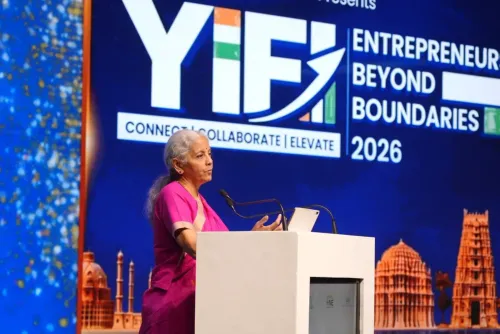
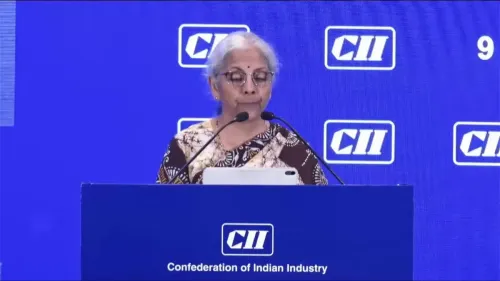
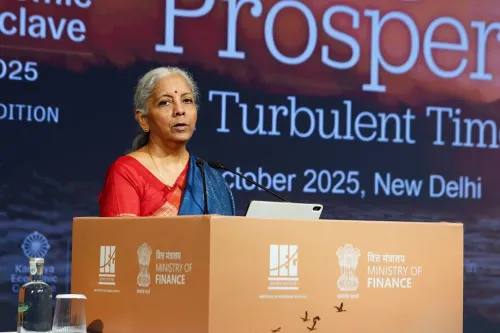
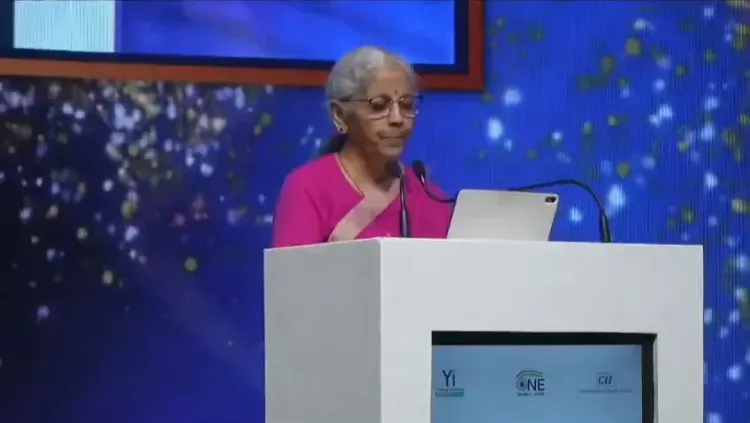
Union Finance Minister Nirmala Sitharaman, speaking in Madurai on 18 July 2026, declared that technology, freely flowing capital, and widely available knowledge have made geographical boundaries the least significant constraint on market access in today's economy.
Key Takeaways
Union Finance Minister Nirmala Sitharaman made the remarks at an event in Madurai, Tamil Nadu on 18 July 2026 .
She stated that 'the most significant boundaries today are no longer geographical.' She identified three forces dissolving those boundaries: technology enabling market access, capital flowing across borders for good ideas, and knowledge becoming widely available.
The remarks align with India's post- 1991 liberalisation trajectory and successive rounds of FDI reform.
The statement carries particular relevance for tech startups and global investors considering India as a destination.
Further policy elaboration is expected in the next Economic Survey or Union Budget speech.
Union Finance Minister Nirmala Sitharaman on Saturday, 18 July 2026, declared that geography is no longer the defining boundary for markets, capital, or knowledge, making the remarks at an event in Madurai, Tamil Nadu.
Context
Speaking in Madurai, Sitharaman articulated a vision of a borderless economic order: 'The most significant boundaries today are no longer geographical. Technology has made markets accessible from almost anywhere, capital is willing to flow across borders in search of good ideas and knowledge is more widely available than ever before.' The statement frames technology and capital mobility as the new coordinates of economic opportunity, displacing physical location as the primary determinant of market access.
Madurai, a major commercial and cultural hub in Tamil Nadu, has periodically served as a venue for government economic outreach in southern India, underscoring the Centre's effort to carry policy messaging beyond New Delhi.
Policy Backdrop
Sitharaman's remarks sit squarely within the arc of India's post-1991 liberalisation, which dismantled industrial licensing and opened the economy to foreign investment and technology imports. Successive finance ministers have built on that foundation, pursuing rounds of foreign direct investment liberalisation and expanding digital public infrastructure to reduce friction for cross-border commerce.
The current minister has, since her first Budget in 2019, consistently positioned India as a destination for global capital chasing high-growth ideas. Her Madurai statement extends that narrative into the language of the knowledge economy, where intellectual capital and digital connectivity matter more than proximity to a port or a factory.
Stakeholders and Impact
The remarks carry direct resonance for tech startups and global investors eyeing India's market. For founders outside metro clusters — including those in tier-2 and tier-3 cities — the Finance Minister's framing offers an implicit policy signal: location need not be a barrier to attracting capital or reaching customers.
For international investors, the statement reinforces India's positioning as an economy where regulatory and digital reforms are intended to lower the cost of cross-border capital deployment. The emphasis on knowledge availability also points toward India's expanding pool of skilled talent as a competitive asset in global supply chains.
What's Next
Analysts will watch whether these remarks translate into concrete regulatory action — particularly on digital trade, cross-border data flows, and startup-friendly FDI norms — in the forthcoming Economic Survey or the next Union Budget. The Madurai speech may signal the thematic framing the Finance Ministry intends to carry into the next budget cycle, centring technology and capital mobility as the twin engines of India's growth story.
Point of View
Away from the Delhi policy circuit, suggests an effort to broaden the constituency for reform beyond traditional business lobbies. The language mirrors the rhetoric Finance Ministers have deployed at inflection points before major budget cycles, making the speech worth reading as a preview of the ideological scaffolding the next Union Budget may carry. The absence of specific regulatory commitments, however, means the statement remains aspirational until backed by measurable policy action.
NationPress
16 Oct 2026
Frequently Asked Questions
What did Nirmala Sitharaman say in Madurai on 18 July 2026?
She said that the most significant boundaries today are no longer geographical, arguing that technology has made markets accessible from almost anywhere, capital flows across borders in search of good ideas, and knowledge is more widely available than ever before.
Where did Nirmala Sitharaman give this speech?
She spoke at an event in Madurai, a major city in Tamil Nadu, southern India.
What is the significance of Sitharaman's statement on technology and markets?
The statement signals that the Finance Ministry views technology, capital mobility, and knowledge access — rather than physical location — as the primary drivers of economic opportunity, a framing that could influence upcoming budget and regulatory priorities.
How does this relate to India's economic liberalisation history?
India's 1991 liberalisation dismantled industrial licensing and opened the economy to foreign investment; Sitharaman's remarks extend that logic into the digital age, where connectivity and intellectual capital replace geography as the key competitive variable.
Who benefits from the policy direction Sitharaman described?
Tech startups, especially those outside major metro areas, and global investors looking to deploy capital in India stand to benefit most if the government translates these remarks into concrete reforms on FDI norms, digital trade, and cross-border data flows.