Skyroot Aerospace becomes India's first space-tech unicorn with $60 million raise
Synopsis
Skyroot Aerospace has crossed the billion-dollar mark, becoming India's first space-tech unicorn after raising $60 million from a marquee investor lineup including BlackRock and Singapore's GIC. With Vikram-1's orbital launch just weeks away, the company is poised to test whether India's private space ambitions can move from funding milestones to launch records.
Key Takeaways
Skyroot Aerospace raised $60 million in a fresh funding round on 7 May 2025 , becoming India's first space-tech unicorn .
Valuation has surged to $1.1 billion , more than doubling from $519 million in 2023.
Round led by Sherpalo Ventures and Singapore's GIC , with new investors Playbook Partners and Shanghvi Family Office joining.
Total funding now exceeds $160 million (approximately ₹1,500 crore ).
Capital will fund Vikram-1 launch frequency, manufacturing expansion, and development of Vikram-2 with one-tonne payload capacity.
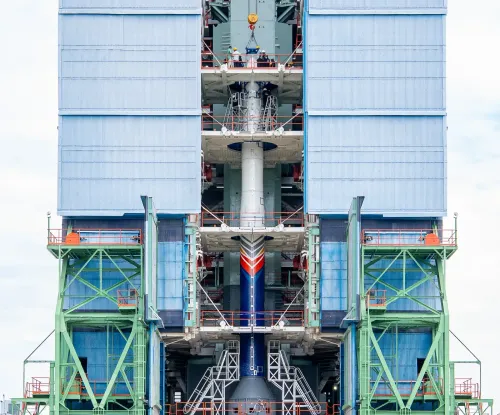
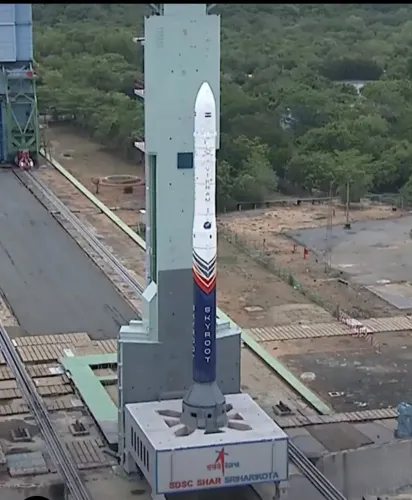
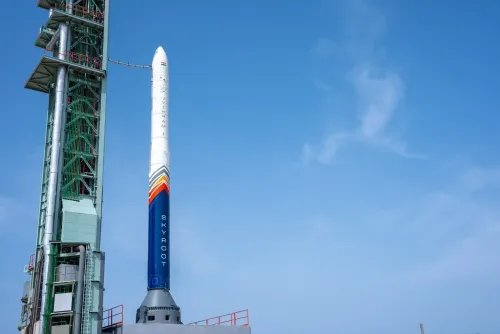
Vikram-1 , India's first privately developed orbital rocket, is set for launch in the coming weeks .
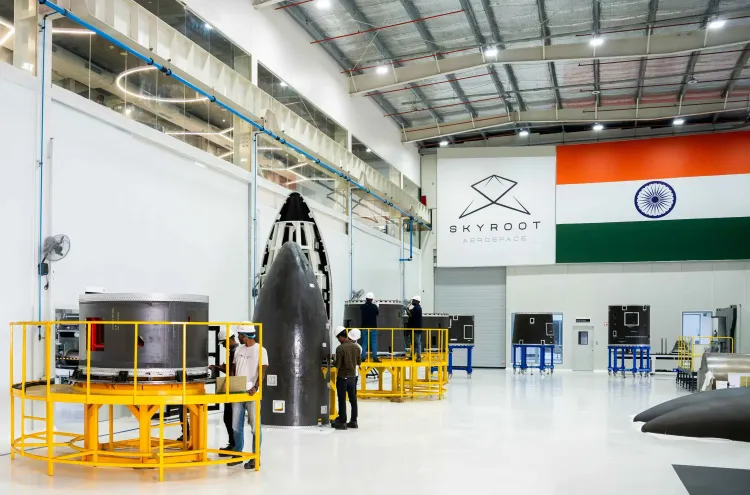
Hyderabad-based private space launch startup Skyroot Aerospace on Thursday, 7 May announced it has raised $60 million in a fresh funding round led by existing investors Sherpalo Ventures and Singapore's sovereign wealth fund GIC, crossing the $1 billion valuation threshold to become India's first space-tech unicorn. The milestone marks a significant leap for the country's nascent private space sector, which has seen rapid growth following policy liberalisation in recent years.
Funding Round Details
The latest investment round drew participation from BlackRock, the founders of Greenko Group, Arkam Ventures, Playbook Partners, Shanghvi Family Office, and several other investors. Playbook Partners and Shanghvi Family Office joined the company as new investors, while Sherpalo Ventures, GIC, BlackRock, Greenko Group, and Arkam Ventures were existing backers. The fresh capital infusion has taken Skyroot's total funding to more than $160 million, or approximately ₹1,500 crore.
Valuation Milestone
Skyroot Aerospace's valuation has climbed to $1.1 billion following this round, more than doubling from its previous valuation of nearly $519 million in 2023. The jump underscores accelerating investor appetite for Indian space ventures at a time when global private space markets are expanding rapidly. Sherpalo Ventures Founder and Managing Partner Ram Shriram said he has backed Skyroot since its early days and expressed confidence in the startup's progress towards the Vikram-1 mission.
What the Capital Will Be Used For
The company said the fresh funds will be deployed to increase launch frequency for Vikram-1 — India's first privately developed orbital rocket — expand manufacturing capabilities, and support the development of Vikram-2, a next-generation launch vehicle with a one-tonne payload capacity and an advanced cryogenic upper stage. Skyroot noted that its 2022 Vikram-S mission successfully demonstrated the company's core launch technology, with Vikram-1 now being prepared for an orbital attempt in the coming weeks, according to co-founder and Chief Executive Officer Pawan Kumar Chandana.
What Industry Leaders Said
Lieutenant General A.K. Bhatt (Retd.), Director General of the Indian Space Association (ISpA), described the development as a landmark moment for India's private space ecosystem. He said Skyroot's unicorn status reflects the growing technological and commercial capabilities of Indian space startups and signals rising global investor confidence in the country's space sector. According to him, the milestone could further strengthen India's ambitions of increasing its share in the global space economy by 2033.
Broader Significance for India's Space Sector
India's private space industry has been on an upward trajectory since the government opened the sector to private players through reforms spearheaded by IN-SPACe (Indian National Space Promotion and Authorisation Centre). Skyroot's unicorn status is widely seen as a validation of that policy shift, and is expected to catalyse further venture capital interest in domestic space startups. With Vikram-1's orbital launch imminent, all eyes will be on whether the company can convert investor confidence into a successful commercial launch record.
Point of View
But the real test comes at the launchpad. India has produced compelling space-tech narratives before, yet the gap between funding milestones and verified orbital capability remains wide. Vikram-1's imminent launch will be the first genuine stress test — not just for Skyroot, but for the IN-SPACe liberalisation thesis itself. Notably, the investor roster reads like a cross-border endorsement: BlackRock and GIC do not back speculative bets lightly. That said, a single successful launch does not a commercial launch business make; Skyroot will need consistent cadence and competitive pricing to carve out share from global smallsat launch providers.
NationPress
19 Sept 2026
Frequently Asked Questions
What is Skyroot Aerospace and why is it significant?
Skyroot Aerospace is a Hyderabad-based private space launch startup that has become India's first space-tech unicorn after its valuation crossed $1.1 billion. It is developing India's first privately built orbital rocket, Vikram-1, marking a milestone for the country's liberalised private space sector.
How much has Skyroot Aerospace raised in total?
Skyroot Aerospace has raised more than $160 million in total, or approximately ₹1,500 crore, including the latest $60 million round announced on 7 May 2025.
Who are the investors in Skyroot Aerospace's latest funding round?
The round was led by existing investors Sherpalo Ventures and Singapore's sovereign wealth fund GIC, with participation from BlackRock, Greenko Group founders, Arkam Ventures, and new investors Playbook Partners and Shanghvi Family Office.
What is the Vikram-1 rocket and when will it launch?
Vikram-1 is India's first privately developed orbital rocket, built by Skyroot Aerospace. Co-founder and CEO Pawan Kumar Chandana has said the launch is expected in the coming weeks, following the successful sub-orbital Vikram-S demonstration mission in 2022.
What is Vikram-2 and how does it differ from Vikram-1?
Vikram-2 is a next-generation launch vehicle under development by Skyroot, featuring a one-tonne payload capacity and an advanced cryogenic upper stage — a significant upgrade over Vikram-1, which is designed for lighter orbital payloads.