How Many Space Startups Does India Have and What is the Investment Amount?
Synopsis
With over 400 space startups and investments exceeding $500 million, India's space sector is on a remarkable trajectory. This rapid growth is driven by supportive government initiatives and innovative private companies, positioning India as a leader in the global space industry.
Key Takeaways
India is home to over 400 space startups.
Investment in these startups has surpassed $500 million.
Government initiatives like 'Startup India' are crucial for growth.
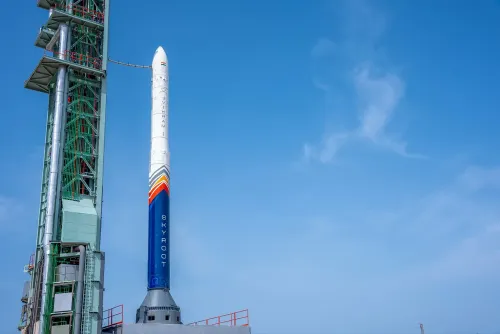
Notable startups include Pixxel and Skyroot Aerospace.
Innovative projects like Earth Observation satellites are underway.
New Delhi, Feb 11 (NationPress) The number of space startups in India has soared to over 400, with investments surpassing $500 million, as reported to the Parliament on Wednesday.
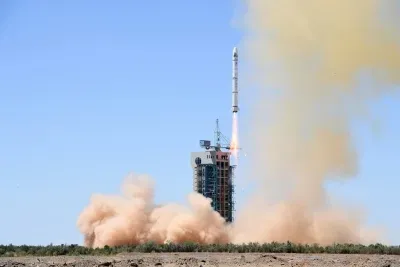
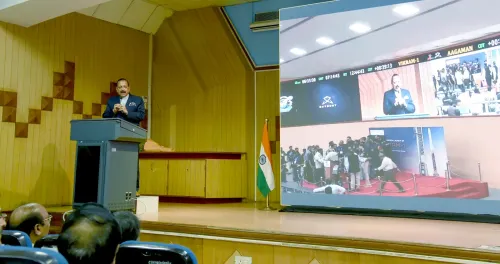
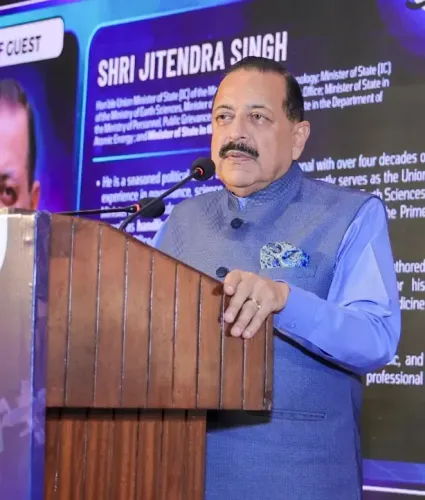
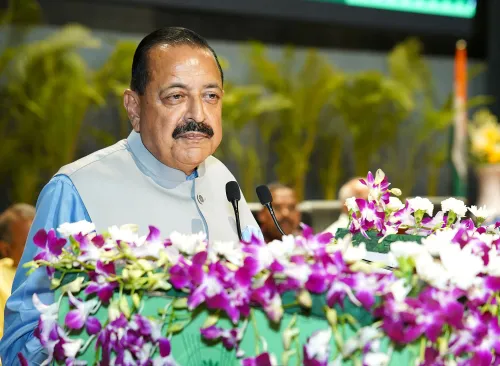
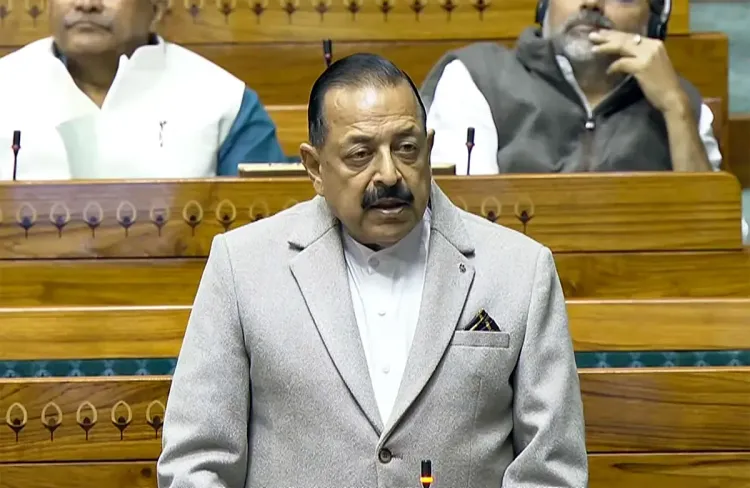
Minister of State Dr. Jitendra Singh revealed that two private sector firms successfully tested and launched their sub-orbital vehicles in November 2022 and May 2024, in a written response in the Lok Sabha.
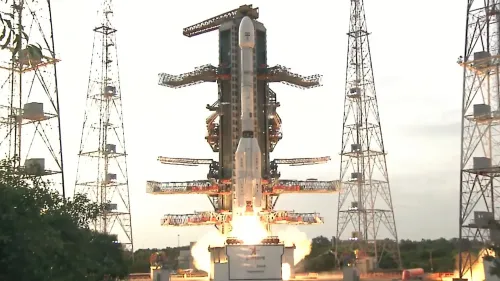
He noted, “A total of 25 payloads have been launched or are scheduled to be launched on the PSLV Orbital Experimental Module (POEM), which enables Non-Governmental Entities (NGEs) to verify the space flightworthiness of their payloads. Six Indian NGEs have successfully placed 18 satellites into orbit,” he added.
He further emphasized that the creation of an Earth Observation satellite constellation based on a Public-Private Partnership (PPP) model will drive innovation and enhance global confidence in India's space technology firms.
Currently, 25 companies are actively testing their satellites and subsystems in the actual space environment through platforms like 'POEM'.
The minister highlighted that state governments are increasingly recognizing space as a burgeoning sector, implementing proactive policies and incentive schemes to support companies in this field. Consequently, Indian space enterprises are progressively integrating into global aerospace and space supply chains.
Since the launch of the ‘Startup India’ initiative aimed at fostering innovation and establishing a strong startup ecosystem by offering support, funding, and streamlined regulations, there has been remarkable growth in space-related startups.
Some notable space startups that emerged post-2014 include Pixxel, Dhruva, Skyroot Aerospace, Agnikul Cosmos, and Bellatrix Aerospace.
The ‘Startup India’ program was inaugurated on January 16, 2016, by Prime Minister Narendra Modi to nurture innovation, promote entrepreneurship, and facilitate investment-driven growth, ultimately aiming to transform India into a nation of job creators instead of job seekers.
Today, the shift from being a global “back-office” to an “innovation architect” transcends mere sovereignty in defense or technology. It involves reshaping national institutions, decentralizing opportunities, and integrating innovation into the daily operations of India.
Currently, India’s space startups are fortifying the nation’s sovereign space intelligence. Bengaluru-based Pixxel has successfully launched the initial satellites of its Firefly constellation, marking the country’s first commercial satellite constellation that offers world-class hyperspectral imaging.
In a similar vein, the anticipated launch of GalaxEye’s Mission Drishti promises to equip the nation with “sovereign eyes” through the world’s first multi-sensor Earth-observation satellite.
Point of View
It's evident that India's space sector is not only flourishing but is also becoming a key player on the global stage. The government's proactive policies combined with the innovative spirit of startups create a promising landscape for technological advancements and economic growth. We stand firmly with our nation's journey towards becoming a leader in the space industry.
NationPress
13 Oct 2026
Frequently Asked Questions
How many space startups are there in India?
India currently has over 400 space startups.
What is the total investment in Indian space startups?
Investment in Indian space startups has crossed $500 million.
What role does the government play in supporting space startups?
The Indian government has launched initiatives like 'Startup India' to foster innovation and provide support to space startups through funding and regulatory frameworks.
Which notable space startups have emerged in India?
Prominent startups include Pixxel, Dhruva, Skyroot Aerospace, Agnikul Cosmos, and Bellatrix Aerospace.
What is the significance of the PSLV Orbital Experimental Module?
The PSLV Orbital Experimental Module (POEM) allows Non-Governmental Entities to test and validate the space flightworthiness of their payloads.