India's Private Space Investment Hits $600M in 5 Years: Dr. Jitendra Singh

Synopsis
India's private space sector has crossed $600 million in investment over five years, with startups surging from single digits in 2019 to over 400 by 2026. The government is deploying Rs 1,500 crore in targeted funds and launching university space labs — signalling India's most aggressive push yet to become a global commercial space power.
Key Takeaways
India's private space sector received over $600 million in investment in the last five years, as disclosed by Union Minister Dr.
Jitendra Singh on April 26, 2025 .
The number of Indian space startups grew from single digits in 2019 to over 400 by early 2026 , reflecting the impact of policy reforms and institutional support.
The government is operationalising a Rs 1,000 crore VC fund with SIDBI and a Rs 500 crore Technology Adoption Fund to support startups at different growth stages.
Seven university-based space laboratories are set to be launched in the first phase, offering students hands-on training in satellite systems, rocketry, and mission design.
17 specialised training programmes have been completed, certifying nearly 900 participants in satellite manufacturing, launch vehicle systems, and space cybersecurity.
New infrastructure initiatives include a privately-led Earth Observation satellite constellation , a shared satellite bus platform for startups, and expanded access to the IN-SPACe Technical Centre in Ahmedabad .
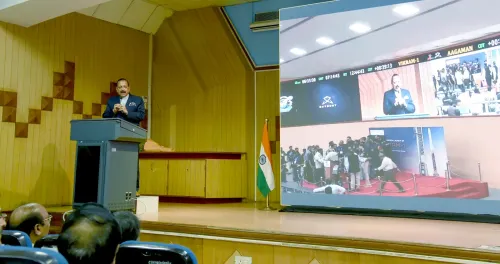
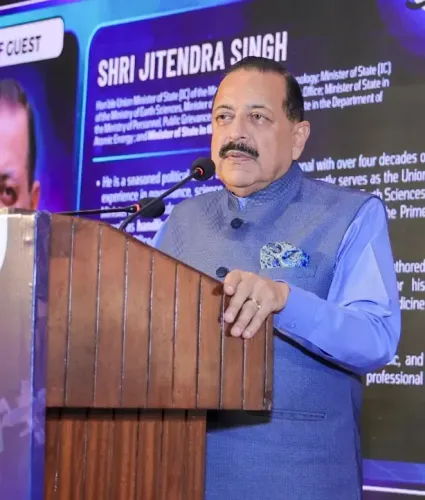
India's private space sector has attracted over $600 million in investment over the last five years, Union Minister of State Dr. Jitendra Singh announced on Sunday, April 26, during a high-level review of the country's rapidly expanding space ecosystem. The disclosure underscores a dramatic transformation in India's space ambitions, as the government accelerates efforts to build a globally competitive, privately-led space industry.
Space Labs in Universities: Building India's Next Generation
During the review, Dr. Jitendra Singh assessed plans to set up dedicated space laboratories in universities and colleges across India. In the first phase, seven such labs are slated for launch, offering students direct, hands-on exposure to satellite systems, rocketry, and mission design.
The initiative is designed to create a skilled talent pipeline capable of sustaining the sector's rapid growth. Experts argue that without a robust domestic workforce, India risks becoming dependent on foreign expertise even as its launch and satellite capabilities scale up.
IN-SPACe Chairman Outlines Reform Progress
The review followed a detailed presentation by Pawan Goenka, Chairman of IN-SPACe (Indian National Space Promotion and Authorisation Centre), who outlined the trajectory of India's space sector reforms and the deepening participation of private players across the value chain — from launch vehicles and satellite manufacturing to data analytics, ground infrastructure, and in-orbit technologies.
Notably, the number of space startups in India has surged from single digits in 2019 to over 400 by early 2026 — a growth curve that few emerging space economies globally can match. This comes amid a broader global space race, where countries like the United States, China, and the UAE are aggressively courting private capital into their space sectors.
Government Funding Mechanisms and Financial Support
To sustain this momentum, the Indian government has deployed a multi-tiered financial support structure. A Rs 1,000 crore venture capital fund is being operationalised in partnership with SIDBI (Small Industries Development Bank of India) to back growth-stage startups.
Complementing this, a Rs 500 crore Technology Adoption Fund is helping early-stage innovations transition into commercially viable products. For startups still in the ideation and prototype stages, a seed fund scheme offering grants of up to Rs 1 crore, along with mentoring support, provides critical early-stage capital that is often the hardest to secure.
This layered funding architecture — seed, growth, and technology adoption — mirrors models used successfully in Israel and the United States, where government-backed risk capital has historically catalysed private space ecosystems. India's approach, however, is notable for its scale relative to the maturity of the sector.
Workforce Development and Infrastructure Expansion
On the human capital front, 17 specialised training programmes have already been completed, with nearly 900 participants certified in areas including satellite manufacturing, launch vehicle systems, and space cybersecurity. The upcoming university-based space labs are expected to significantly amplify these efforts.
Infrastructure development is also accelerating. Key initiatives include a privately-led Earth Observation satellite constellation under a public-private partnership model, the development of a shared satellite bus platform for startups, and expanded access to facilities at the IN-SPACe Technical Centre in Ahmedabad.
The shared satellite bus platform is particularly significant — it lowers the barrier to entry for smaller startups that cannot afford to develop proprietary satellite architecture, effectively democratising access to space hardware development in India.
Why This Milestone Matters for India's Space Economy
The $600 million investment figure is more than a headline number. It signals that global and domestic investors are treating India's space sector as a serious commercial opportunity, not merely a government-led scientific enterprise. For context, India's space economy was valued at approximately $8.4 billion in 2023 and is projected to reach $44 billion by 2033, according to industry estimates.
The government's structural reforms — particularly the 2020 opening of the space sector to private players through the Space Activities Policy — laid the foundation for this investment surge. The creation of IN-SPACe as an independent regulatory and promotional body was a critical enabler, providing the institutional clarity that investors require before committing capital.
With the first phase of university space labs set to launch and the Rs 1,000 crore VC fund becoming operational, the next 12–18 months will be a critical test of whether India can convert startup momentum into globally competitive space enterprises capable of winning international contracts and launching payloads for foreign clients.
Point of View
But the more telling story is structural: India has built an institutional architecture — IN-SPACe, tiered government funds, and now university labs — that is designed to sustain, not just spark, a space economy. What most coverage misses is the strategic timing: as geopolitical tensions reshape global supply chains, India is positioning its space sector as a neutral, cost-competitive alternative to US and Chinese providers for satellite services and launch contracts. The real test, however, is whether India's 400-plus space startups can graduate from domestic subsidy dependence to winning international revenue — a transition that the next funding cycle will either accelerate or expose.
NationPress
16 Sept 2026
Frequently Asked Questions
How much private investment has India's space sector received in the last five years?
India's space sector has attracted over $600 million in private investment in the last five years, according to Union Minister of State Dr. Jitendra Singh . This figure was disclosed during a high-level review of the country's space ecosystem on April 26, 2025 .
How many space startups are there in India in 2026?
India had over 400 space startups by early 2026, up from single digits in 2019. This rapid growth has been driven by government policy reforms, including the opening of the space sector to private players in 2020 and the establishment of IN-SPACe.
What is the IN-SPACe university space lab initiative?
The government plans to set up space laboratories in universities and colleges across India, with seven labs to be launched in the first phase. These labs will give students practical exposure to satellite systems, rocketry, and mission design to build a skilled workforce for the sector.
What government funds are available for Indian space startups?
The government has established a Rs 1,000 crore venture capital fund with SIDBI for growth-stage startups, a Rs 500 crore Technology Adoption Fund for early-stage innovations, and a seed fund offering grants up to Rs 1 crore for startups in the ideation and prototype stages.
What is IN-SPACe and what role does it play in India's space sector?
IN-SPACe (Indian National Space Promotion and Authorisation Centre) is an independent body under the Department of Space that regulates and promotes private sector participation in India's space activities. Chaired by Pawan Goenka , it provides regulatory clearances, infrastructure access, and policy support to private space companies and startups.