Vikram-1: Skyroot Aerospace set for India's first private orbital rocket test on July 18
Synopsis
India's private space race reaches a defining moment on 18 July, when Skyroot Aerospace attempts the maiden flight of Vikram-1 — the country's first privately built orbital-class rocket. If it reaches its 450 km target orbit, it won't just validate Skyroot's technology; it could reshape the competitive landscape for small satellite launches out of India.
Key Takeaways
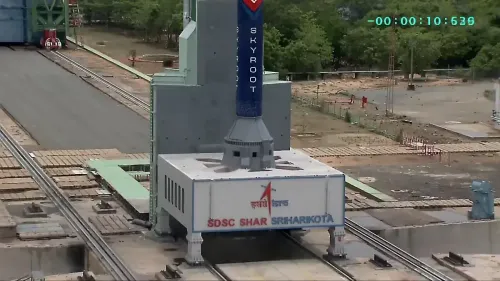
Skyroot Aerospace will attempt the maiden test flight of Vikram-1 on 18 July from SDSC-SHAR .
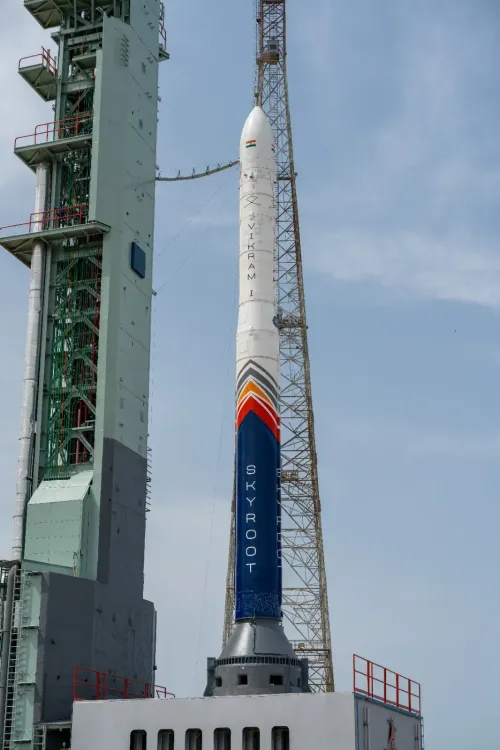
Vikram-1 is India's first orbital-class rocket fully designed and developed by a private company.
The rocket targets a 450 km orbit at 60-degree inclination and can carry up to 350 kg to LEO.
Payloads include technology demonstrators from Grahaa Space , Cosmoserve , DCubed , and Skyroot's SCOPE , plus Cosmos Diamonds' artwork 'Cosmic Bloom'.
The mission follows Skyroot's successful suborbital Vikram-S flight on 18 November 2022 .
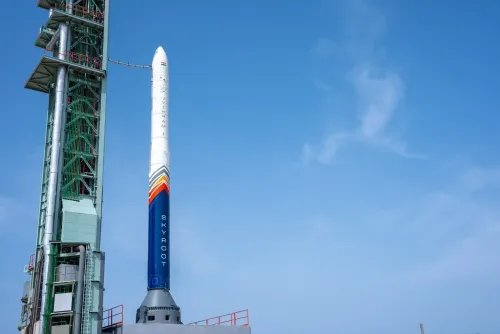
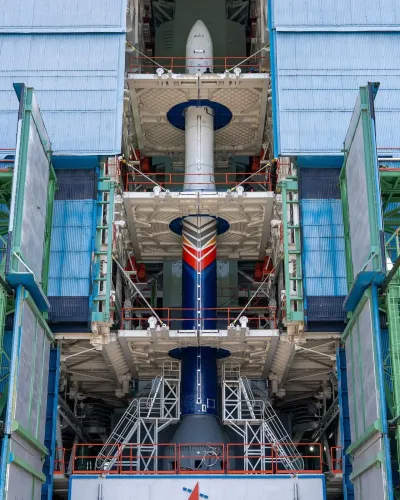
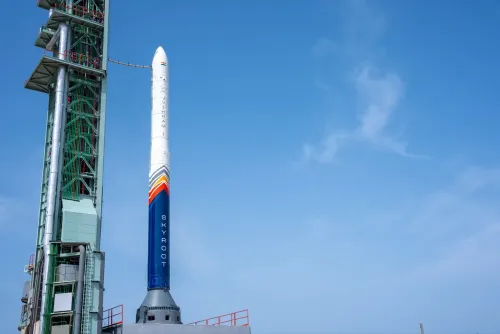
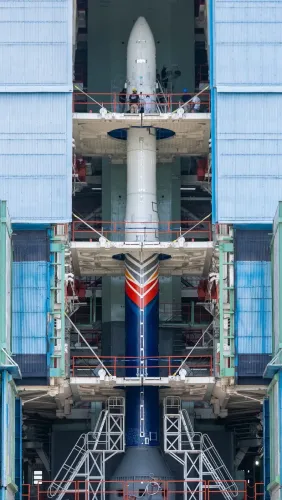
The seven-storey vehicle uses an all-carbon composite structure , 3D-printed engines , and solid-fuel boosters .
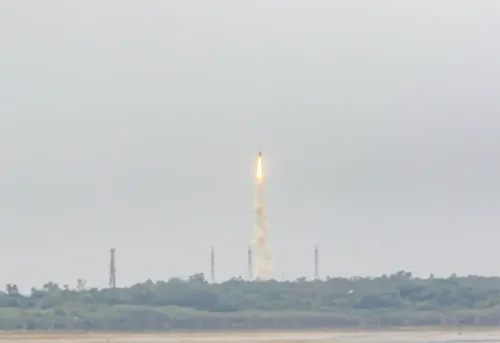
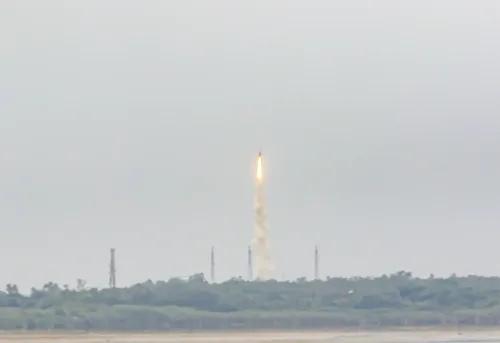
Skyroot Aerospace is set to attempt the maiden test flight of its Vikram-1 orbital rocket from the first launch pad at SDSC-SHAR on 18 July, the Hyderabad-based private space firm announced on Thursday, 16 July. The mission, dubbed 'Mission Aagaman' — meaning 'the arrival' — will mark the first time an orbital-class rocket fully designed and developed by an Indian private player attempts to lift off from Indian soil.
What Vikram-1 Is Carrying
The rocket will carry technology demonstration payloads from Grahaa Space, Cosmoserve, DCubed, and Skyroot's own SCOPE instrument. Also on board are Cosmos Diamonds' artwork titled 'Cosmic Bloom' and a micro-art piece, making this a mission that blends engineering ambition with cultural symbolism.
Airspace and maritime authorities have issued the necessary notices, formally designating restricted zones along Vikram-1's ascent and impact corridor for launch day, according to an official statement from the company.
The Rocket: Design and Capability
Vikram-1 is a seven-storey-tall, multi-stage vehicle built entirely with an all-carbon composite structure. It is powered by in-house propulsion systems, including 3D-printed engines and high-thrust solid-fuel boosters. The rocket is designed to carry small satellites weighing up to 350 kg to Low Earth Orbit (LEO). The maiden test flight is targeting a 450 km orbit at a 60-degree inclination.
What the CEO Said
Pawan Kumar Chandana, Co-founder and CEO of Skyroot Aerospace, said the company had exhausted all possible ground-based testing ahead of the flight. 'We have done everything that could be done to test Vikram-1 on ground. We are eager to see how Vikram-1 performs in a real flight environment for the first time. This is our first test flight, and we will be getting valuable data from it,' he said.
Chandana also pointed to the commercial opportunity underpinning the mission. 'The small satellite launch market is deeply constrained on the supply side. Meanwhile, the demand for services enabled by satellites in space will only continue to grow, creating opportunities for Skyroot,' he added.
Context: Building on Vikram-S
Mission Aagaman is Skyroot's second mission overall, following the successful suborbital flight of Vikram-S on 18 November 2022 — the first private rocket to reach space from Indian soil. The step up from suborbital to orbital is a significant leap in complexity, involving sustained velocity, stage separation, and precise orbital insertion — none of which were tested on the Vikram-S flight.
This comes amid a broader expansion of India's private space sector, accelerated by the government's liberalisation of the space industry in recent years. If successful, the Vikram-1 test flight could establish Skyroot as a credible commercial launch provider in the fast-growing small satellite market. All eyes now turn to the launch window on 18 July.
Point of View
And success rates for first flights industry-wide are far from guaranteed. What Skyroot has already achieved — ground-tested 3D-printed engines, an all-composite structure, and a cleared launch corridor — is substantial. But the leap from suborbital to orbital involves entirely new physics: sustained velocity, stage separation under live conditions, and precise insertion. The data from 18 July, whether the rocket reaches orbit or not, will be more valuable than any press release. India's small satellite launch market is real and growing; the question is whether Skyroot can build the launch cadence to capture it before global competitors entrench.
NationPress
15 Oct 2026
Frequently Asked Questions
What is the Vikram-1 rocket and who built it?
Vikram-1 is an orbital-class, multi-stage rocket built entirely by Skyroot Aerospace, a Hyderabad-based private space company. It is the first orbital rocket in India to be fully designed and developed by a private player, standing seven storeys tall and powered by 3D-printed engines and solid-fuel boosters.
When and where will Vikram-1 launch?
Vikram-1 is scheduled for its maiden test flight on 18 July from the first launch pad at SDSC-SHAR (Satish Dhawan Space Centre, Sriharikota). Airspace and maritime restricted zones along the ascent corridor have been formally designated for launch day.
What orbit is Vikram-1 targeting on its first test flight?
The maiden test flight is targeting a 450 km Low Earth Orbit (LEO) at a 60-degree inclination. The rocket is designed to carry payloads of up to 350 kg to LEO in its operational configuration.
What payloads is Vikram-1 carrying?
Vikram-1 will carry technology demonstration payloads from Grahaa Space, Cosmoserve, DCubed, and Skyroot's own SCOPE instrument. It will also carry Cosmos Diamonds' artwork 'Cosmic Bloom' and a micro-art piece.
How does Mission Aagaman relate to Skyroot's earlier Vikram-S flight?
Mission Aagaman is Skyroot's second mission, building on the successful suborbital flight of Vikram-S on 18 November 2022 — the first private rocket to reach space from Indian soil. Vikram-1 represents a major step up in complexity, attempting a full orbital insertion rather than a suborbital arc.