Pilot urges Wangchuk to end fast, demands justice for students

Synopsis
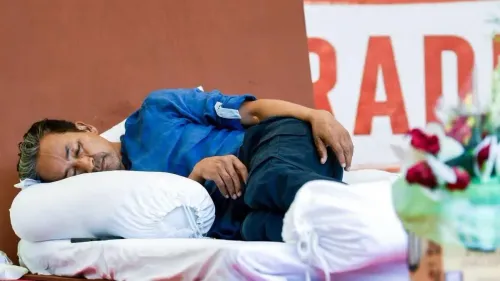
Congress general secretary Sachin Pilot has appealed to activist Sonam Wangchuk to end his 19-day hunger strike demanding the Education Minister's resignation, while backing the core demand for justice over paper leaks and examination irregularities that have shaken students and families nationwide.
Key Takeaways
Sonam Wangchuk has been on a hunger strike for 19 days demanding the resignation of the Union Education Minister over exam irregularities.
Congress leader Sachin Pilot has appealed to Wangchuk to end his fast due to adverse effects on his health.
Pilot simultaneously demanded that the BJP government answer for paper leaks and examination irregularities affecting students nationwide.
The statement invokes Rahul Gandhi and the Congress party's position that youth are the country's future and injustice against them is unacceptable.
Pilot framed the issue as a question of 'the credibility of the education system,' not merely an emotional matter.
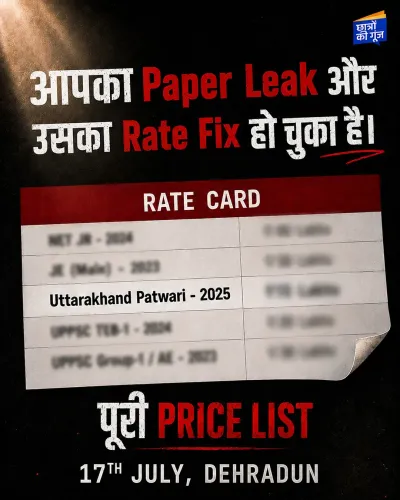
The controversy follows a pattern of alleged paper leaks in national exams including NEET and UGC-NET that triggered student protests in 2024 .
Congress leader and party general secretary Sachin Pilot on Thursday, July 16, 2026, appealed to Ladakhi activist Sonam Wangchuk to end his fast, which Pilot said had entered its 19th day, while simultaneously demanding accountability from the BJP government over paper leaks and examination irregularities that have upended the futures of lakhs of students across India.
Context
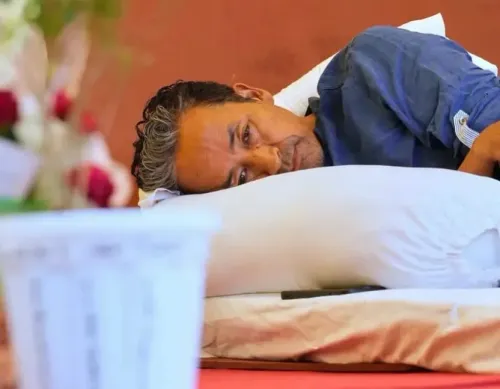
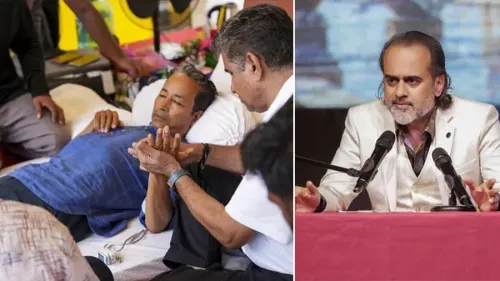
Sonam Wangchuk, the Ladakhi engineer and activist widely recognised for his educational innovations, has been on a hunger strike demanding the resignation of the Union Education Minister, according to Pilot's post. Pilot expressed concern that the prolonged fast — now in its third week — was visibly affecting Wangchuk's health. 'उनके स्वास्थ पर विपरीत प्रभाव पड़ रहा है' ('it is adversely affecting his health'), Pilot wrote, urging him to call off the agitation.
While appealing for the fast to end, Pilot was careful to separate the humanitarian concern from the political substance. He made clear that the underlying grievances — paper leaks and systemic irregularities in national examinations — were legitimate and demanded a government response.
Policy Backdrop
The trigger for renewed anger over examination integrity is a pattern of alleged paper leaks in high-stakes national tests. In 2024, alleged leaks in the NEET medical entrance examination and the UGC-NET triggered nationwide student protests, investigations, and opposition demands for structural reforms in how central examinations are conducted and monitored.
Pilot directly invoked Rahul Gandhi and the Congress party's position: 'युवा देश का भविष्य हैं' — 'the youth are the future of the country' — and stated that no injustice against them would be acceptable. The Congress has, through successive party resolutions since 2019, called for greater transparency and accountability in central education governance, and Pilot's statement is consistent with that long-standing party line.
Pilot framed the issue in terms that go beyond politics: 'यह सिर्फ भावनात्मक विषय नहीं है, बल्कि छात्रों के भविष्य और शिक्षा व्यवस्था की विश्वसनीयता का प्रश्न है' — 'this is not merely an emotional issue, but a question of students' futures and the credibility of the education system.'
Stakeholders and Impact
At the centre of the controversy are the millions of students and their families who prepare for years for competitive national examinations, only to face the prospect that the process may have been compromised. Pilot's post described the ordeal of students and families as something that had 'सभी को झकझोर दिया है' — 'shaken everyone.'
Sonam Wangchuk has a track record of using hunger strikes as instruments of public pressure on issues ranging from Ladakh's constitutional status to environmental concerns. His decision to fast over examination governance signals how far the credibility crisis in India's education administration has spread beyond conventional political opposition circles.
For the BJP government, the combination of a high-profile activist on a prolonged hunger strike and a major opposition party amplifying the demand for ministerial accountability creates compounding political pressure ahead of any examination cycle.
What's Next
All eyes are now on the Union Ministry of Education for an official response to both Wangchuk's demands and the broader calls for accountability. Parliamentary questions and debates on examination integrity remain a likely avenue for the opposition to press the issue in a formal legislative setting.
Whether Wangchuk heeds Pilot's appeal and ends his fast, or whether the government moves to address the grievances that prompted it, will shape the next phase of this standoff. The credibility of India's national examination infrastructure — and the trust of an entire generation of aspirants — hangs in the balance.
Point of View
Congress avoids appearing to exploit a health crisis, while simultaneously keeping the pressure on the BJP government over examination credibility. The invocation of Rahul Gandhi signals this is an officially sanctioned party position, not a solo intervention. Framing paper leaks as a question of 'the credibility of the education system' rather than a purely emotive issue is a deliberate attempt to sustain the narrative beyond a single news cycle. With national examinations remaining a recurring flashpoint, the opposition's ability to tie individual controversies to systemic governance failure will be central to its outreach among young voters.
NationPress
16 Jul 2026
Frequently Asked Questions
Why is Sonam Wangchuk on a hunger strike in 2026?
According to Sachin Pilot's post, Sonam Wangchuk has been on a hunger strike for 19 days demanding the resignation of the Union Education Minister over paper leaks and irregularities in national examinations.
What did Sachin Pilot say about Sonam Wangchuk's fast?
Pilot urged Wangchuk to end his fast, citing concern for his deteriorating health, while affirming that the Congress party stands with students demanding justice over examination irregularities.
What is the Congress party's stand on NEET and exam paper leaks?
The Congress party, as stated by Pilot and attributed to Rahul Gandhi, holds that youth are the country's future and that any injustice against students — including paper leaks — is unacceptable and demands a government response.
Who is Sonam Wangchuk and why is he significant?
Sonam Wangchuk is a Ladakhi engineer, innovator, and activist known for educational reforms and for using hunger strikes as a form of public protest on regional and national issues.
What are the paper leak controversies in Indian education?
In 2024, alleged leaks in the NEET medical entrance exam and UGC-NET triggered nationwide student protests and demands for systemic reform in how central examinations are conducted and overseen.