Acharya Prashant on NEET crisis: A system can't be honest if its builders aren't
Synopsis
Acharya Prashant’s take on the NEET crisis goes well beyond the leak itself: he traces the scandal to a value system built inside Indian homes and classrooms, argues that a corrupt society will always corrupt its own systems, and makes a rare personal appeal to Sonam Wangchuk — urging him to break an eighteen-day fast because ‘India needs you alive.’
Key Takeaways
Acharya Prashant described the NEET paper leak as a symptom of a deeper societal crisis, not merely an administrative failure.
He urged educationist Sonam Wangchuk to end his eighteen-day hunger strike and pressed the government to open dialogue.
He linked the leak to a market created by extreme competition: 22 lakh candidates chasing a few thousand seats.
More than a dozen student suicides in recent months were cited as evidence of a crisis in student mental health that goes unrecorded.
He called for ‘a mass education of the self’ alongside systemic reform, arguing that external changes alone will not prevent recurrence.
Acharya Prashant is an alumnus of IIT Delhi and IIM Ahmedabad , founder of PrashantAdvait Foundation , and ranked on the Watkins 2026 list of the world’s most influential living thinkers.
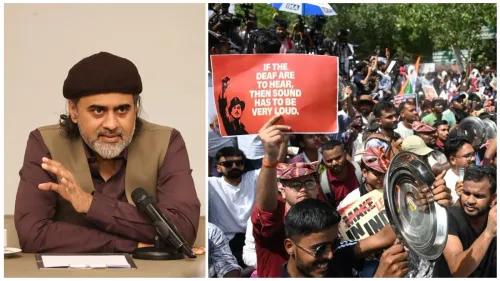
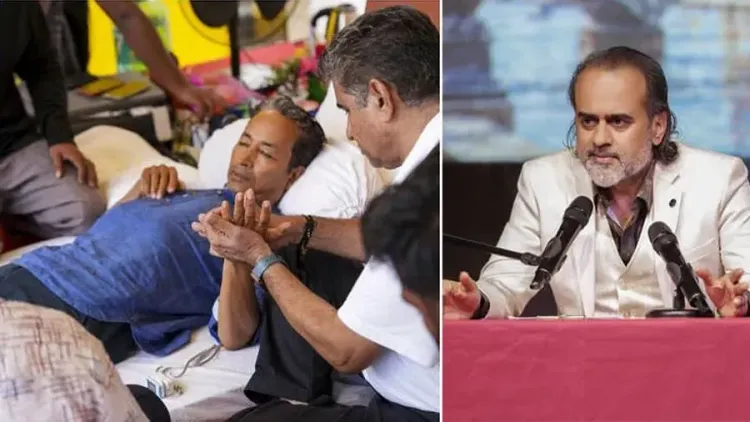
Philosopher and author Acharya Prashant has described the NEET paper leak crisis as far more than an administrative failure — calling it “a sign of a far deeper crisis in our education system and our society.” Speaking to the media in Goa on 16 July, he also urged educationist Sonam Wangchuk to end his eighteen-day hunger strike and appealed to the government to open a direct dialogue.
The Human Cost of the NEET Collapse
Acharya Prashant placed the scale of the crisis in stark human terms. “Twenty-two lakh applicants means twenty-two lakh families,” he said. “Among these students, some gave two years, some four, some five. They gave up playgrounds, gave up childhood, gave up festivals. And when they learn the paper has leaked, it is not just one examination that breaks, but their trust breaks.”
That fracture, he argued, leaves a permanent mark. Students carry forward the conclusion, he said, “that truth, honesty, knowledge and hard work count for nothing, and that the one who gets ahead is the one who is dishonest and has money.” Because entire families invest together in a single candidate’s preparation in India, the weight of this collapse is collective, not individual.
Referring to more than a dozen student suicides in recent months linked to the crisis, he observed that a person breaking from within is itself a profound form of self-destruction — one whose numbers, he noted, are rarely even formally recorded.
Appeal to Sonam Wangchuk: ‘India Needs You Alive’
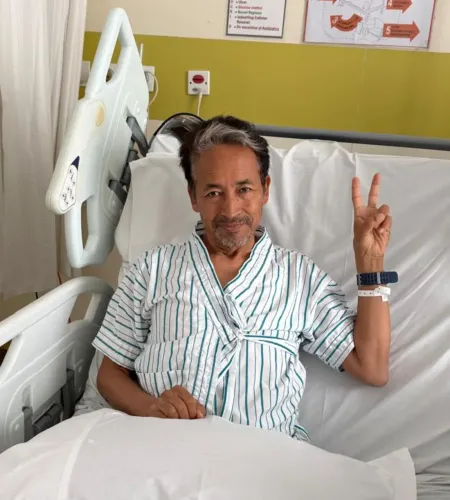
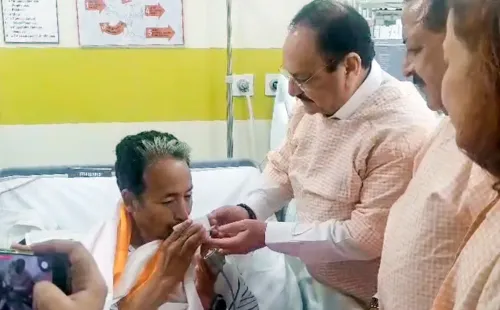
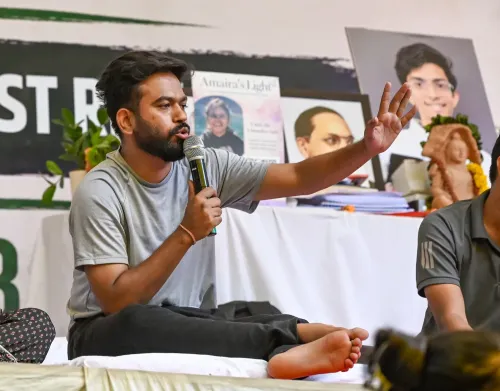
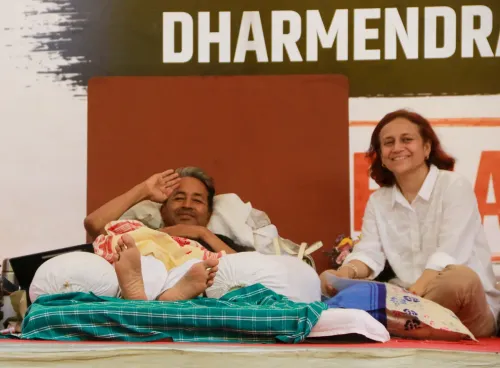
Acharya Prashant spoke at length about Sonam Wangchuk, whose fast entered its eighteenth day amid ongoing student protests at Jantar Mantar. “As far as his track record bears witness, he is a serious and truthful man,” he said. “In a dry, cold desert like Ladakh, where the formal system could not even deliver education, he brought children to school.”
His appeal was direct: “You can serve India far more by staying alive. Society, Ladakh, India, the environment and education all need you. Please break your fast.” He simultaneously pressed the government to engage. “Conversation is a mark of graciousness; dialogue is a sign of good character. It does not befit a democracy that a sensible and respected citizen must stake his life merely to be spoken to.”
The Market That Produced the Leak
Acharya Prashant argued that the leak was not a malfunction of the system but its logical output. “Papers leak only when someone is willing to sell and someone willing to pay heavily to buy,” he said. “With twenty-two lakh candidates and a few thousand seats, in such a stampede brokers are bound to appear. The leak is no accident that befell this market; it is a product of this market.”
He traced the origin of that market not to any ministry or broker but to the home. “This value system was built in the home, in the meetings of relatives, under the watch of parents.” To parents, he posed a pointed question: “An ordinary, beautiful child was born in your home. When did you turn that child into an entrance-exam project? If you truly loved the child, you would not tie its self-worth to the result of a single examination.”
What the Education System Got Wrong
Turning to teachers, Acharya Prashant distinguished between two kinds of education: “one that gives a livelihood and one that gives life.” He contended that educators had placed only the race for a livelihood before students, converting education into an instrument for suppressing the individual rather than developing one.
To students themselves, he acknowledged the legitimacy of their demand for justice but asked where the singular model of success they were chasing had come from. “If it were truly your own, ten thousand people would not be running behind a single seat in one and the same direction. This is an imported dream, an implanted desire,” he said.
He used a metaphor to crystallise the argument: contemporary society responds to every crisis the way a community would that builds better roads and faster ambulances rather than addressing the drunk driver. “We are ready to do everything except look at the driver’s condition. Man is that driver, and that is the one thing that needs to change.”
Inner Reform as the Missing Piece
Acharya Prashant accepted the necessity of systemic, external reform but called it insufficient on its own. Quoting a verse from the Indian saint tradition — “Maala pherat jug bhaya, phira na man ka pher” — he argued that turning things only on the outside carries one very little distance. “We are the ones who build the system. If we are corrupt within, we will build a good system by day and slip out through the very back doors of our own making by night.”
His conclusion was unambiguous: “A system cannot be honest if the people who build it are dishonest within.” He called for a “mass education of the self” alongside vocational and professional training, warning that without it, such tragedies would recur under different names and pretexts.
Acharya Prashant is an alumnus of IIT Delhi and IIM Ahmedabad and the founder of the PrashantAdvait Foundation. His work, drawing on Indian and global philosophy, reaches more than 110 million subscribers across social media. He was recently named to the Watkins 2026 list of the world’s most influential living thinkers and has held dialogues at Cambridge, Oxford, the London School of Economics, University College London, and the British Parliament.
Point of View
But about a competitive architecture that Indian families, teachers, and policymakers have collectively built and continue to defend. His appeal to Wangchuk is notable precisely because it sidesteps the political optics — he neither endorses nor attacks the protest, but redirects attention to the structural question. The harder challenge his remarks pose is this: if the demand for leaked papers is generated by the same households demanding reform, can any government intervention hold without a parallel shift in what families ask of their children?
NationPress
15 Oct 2026
Frequently Asked Questions
What did Acharya Prashant say about the NEET paper leak?
Acharya Prashant said the NEET paper leak is not merely an administrative lapse but a sign of a far deeper crisis in India’s education system and society. He argued that the leak is a product of an extreme competitive market — with 22 lakh candidates chasing a few thousand seats — and that the value system driving that market was built inside Indian homes, not by any ministry or broker.
Why did Acharya Prashant urge Sonam Wangchuk to break his fast?
Acharya Prashant appealed to Sonam Wangchuk to end his eighteen-day hunger strike, saying ‘You can serve India far more by staying alive.’ He praised Wangchuk’s track record in Ladakh, where Wangchuk brought children to school in a region the formal system had failed, and simultaneously called on the government to engage in dialogue rather than forcing a citizen to risk his life to be heard.
What is Acharya Prashant’s view on student suicides linked to NEET?
Acharya Prashant referred to more than a dozen student suicides in recent months and described a person breaking from within as a profound form of self-destruction whose numbers are rarely formally recorded. He connected this to the broken trust students carry after learning that honesty and hard work are no match for money and dishonesty.
What does Acharya Prashant mean by ‘a system cannot be honest if its builders are dishonest within’?
He argues that systemic reform — re-conducting exams, making arrests, changing regulations — is necessary but insufficient if the individuals who build and operate the system remain personally corrupt. Quoting a saint’s verse, he said that turning things only on the outside carries one very little distance; inner transformation through self-knowledge is the missing piece.
Who is Acharya Prashant?
Acharya Prashant is a philosopher, author, and the founder of the PrashantAdvait Foundation. An alumnus of IIT Delhi and IIM Ahmedabad, his work on consciousness, education, and inner transformation reaches more than 110 million social media subscribers. He was recently named to the Watkins 2026 list of the world’s most influential living thinkers and has spoken at Cambridge, Oxford, the London School of Economics, University College London, and the British Parliament.