Vikram-1 orbital launch: Gautam Adani hails Skyroot's historic mission
Synopsis
Skyroot Aerospace's Vikram-1 has done what no Indian private company had done before — reached orbit. With a team averaging just 28 years old, Mission Aagaman places India alongside the US and China in an exclusive club of nations with private orbital launch capability, and signals that India's commercial space economy is no longer a promise but a reality.
Key Takeaways
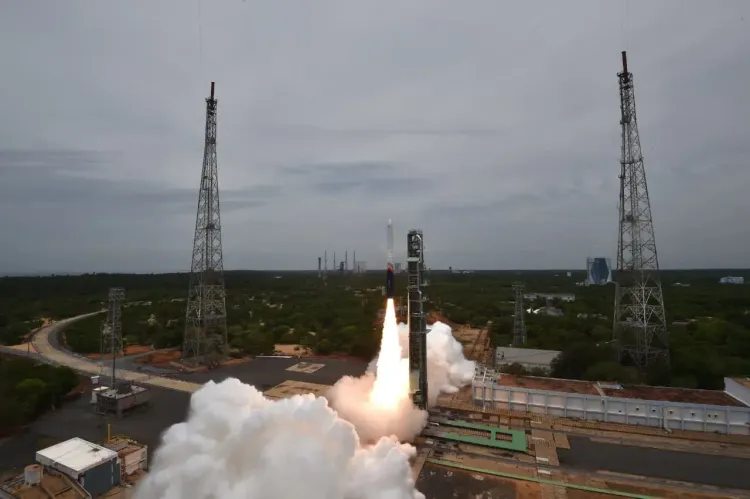
Skyroot Aerospace successfully launched Vikram-1 on 18 July under Mission Aagaman , completing all mission objectives on its maiden orbital flight.
India became the third country after the United States and China to have a private company achieve orbital launch capability.
The rocket is targeting a Low Earth Orbit (LEO) at approximately 450 km altitude.
Adani Group Chairman Gautam Adani praised the mission on X , highlighting the team's average age of just 28 years .
ISRO and IN-SPACe played enabling roles in the mission, reflecting India's shift toward a private-public space model.
Adani Group Chairman Gautam Adani on Saturday, 18 July congratulated Hyderabad-based Skyroot Aerospace on the successful orbital launch of Vikram-1 under Mission Aagaman, calling it a defining moment for India's private space industry and a living demonstration of Atmanirbhar Bharat. The four-stage rocket accomplished all its mission objectives on its maiden orbital flight, placing India in an exclusive group of nations where private enterprises have achieved orbital launch capability.
Adani's Reaction
In a post on social media platform X, Gautam Adani described the mission as a historic milestone for India's rapidly expanding private space ecosystem. 'Massive congratulations to Pawan Chandana, Bharat Daka, the brilliant Skyroot Aerospace team and the enablers at ISRO and IN-SPACe,' he said.
Adani highlighted the youth of the team behind the achievement. 'With the average age of the team just 28 years, this is proof for the world what young India can achieve. Jai Hind!' he stated.
What Vikram-1 Achieved
Named after Dr. Vikram Sarabhai, the father of India's space programme, the seven-storey Vikram-1 launch vehicle is designed to deliver rapid and on-demand launch services for small satellites. The rocket is headed for a Low Earth Orbit (LEO) at an altitude of approximately 450 km.
With this launch, India became the third country — after the United States and China — to have a private company capable of placing a rocket into orbit. The milestone is expected to strengthen India's standing in the global commercial launch market.
Significance for India's Private Space Sector
The success of Mission Aagaman is being seen as a watershed moment for India's nascent private space industry, which has grown significantly since the government opened the sector to private players through IN-SPACe. Skyroot Aerospace's achievement signals that India's commercial launch ecosystem is maturing beyond ground tests and sub-orbital flights.
Notably, ISRO and IN-SPACe played an enabling role in the mission, reflecting a broader policy shift under which the national space agency increasingly acts as a facilitator rather than the sole operator. This collaborative model mirrors approaches adopted in the US, where NASA enabled the rise of private launch providers.
What Comes Next
The successful orbital demonstration positions Skyroot Aerospace to compete for small-satellite launch contracts in a global market that analysts estimate will see hundreds of commercial launches over the next decade. Industry observers will now watch whether Mission Aagaman translates into commercial orders and whether India's regulatory framework can scale to support a growing private launch cadence.
Point of View
And Mission Aagaman is the first credible proof that the architecture works. The real question now is whether India's regulatory and commercial infrastructure can scale fast enough to convert this achievement into a competitive launch market, or whether Skyroot remains a celebrated outlier in a sector that struggles to attract the capital and contract pipeline needed for sustained growth.
NationPress
17 Oct 2026
Frequently Asked Questions
What is Vikram-1 and what did it achieve?
Vikram-1 is a four-stage rocket developed by Hyderabad-based Skyroot Aerospace, named after Dr. Vikram Sarabhai, the father of India's space programme. On 18 July, it successfully completed all mission objectives during its maiden orbital flight under Mission Aagaman, targeting a Low Earth Orbit at roughly 450 km altitude.
Why is the Vikram-1 launch historically significant?
The launch made India the third country after the United States and China to have a private company capable of placing a rocket into orbit. It marks a pivotal moment for India's commercial space ecosystem and validates the government's policy of opening the sector to private players through IN-SPACe.
What did Gautam Adani say about the Vikram-1 launch?
Adani Group Chairman Gautam Adani posted his congratulations on social media platform X, calling the mission 'true proof of what Atmanirbhar Bharat means.' He specifically praised co-founders Pawan Chandana and Bharat Daka, the Skyroot team, and the enabling roles of ISRO and IN-SPACe, and noted that the average age of the team was just 28 years.
What role did ISRO and IN-SPACe play in Mission Aagaman?
ISRO and IN-SPACe acted as enablers for the mission, providing regulatory and technical support to Skyroot Aerospace. Their facilitative role reflects India's broader policy shift, under which the national space agency increasingly supports private launch providers rather than operating as the sole launch authority.
What does the Vikram-1 success mean for India's commercial space market?
The successful orbital demonstration positions Skyroot Aerospace to compete for small-satellite launch contracts globally. The mission is expected to strengthen India's standing in the international commercial launch market, which is projected to see hundreds of launches over the next decade.