Khattar hails Skyroot Vikram-1 launch as space milestone

Synopsis
Union Power Minister Manohar Lal Khattar has congratulated Hyderabad-based Skyroot Aerospace on the successful launch of Vikram-1 under #MissionAagaman, calling it a historic milestone that validates India's space liberalisation reforms and the Atmanirbhar Bharat vision.
Key Takeaways
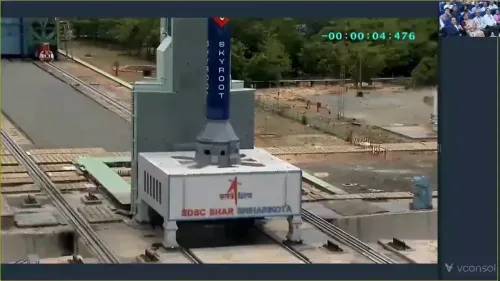
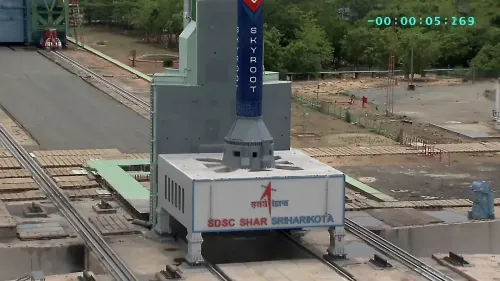
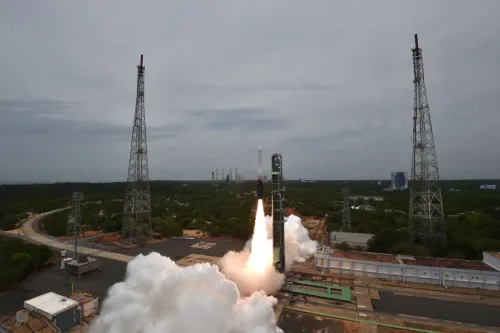
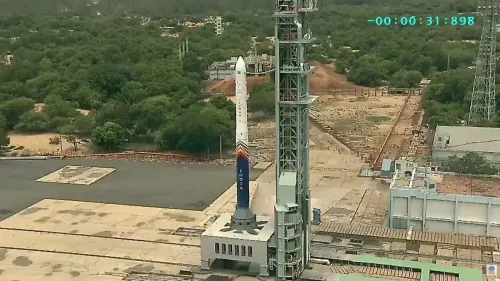
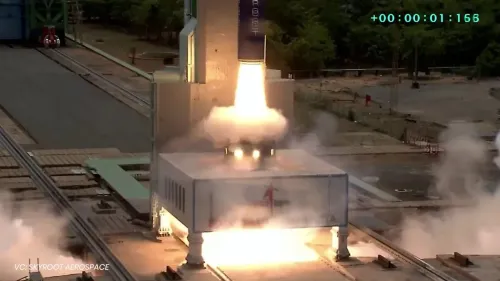
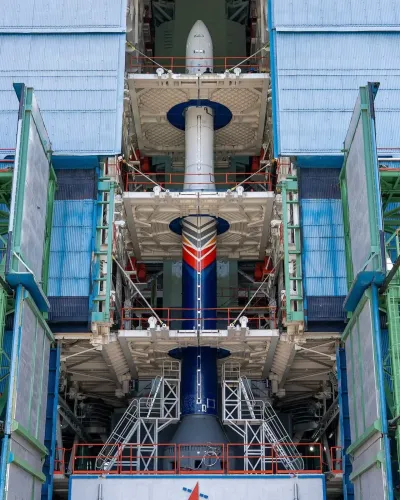
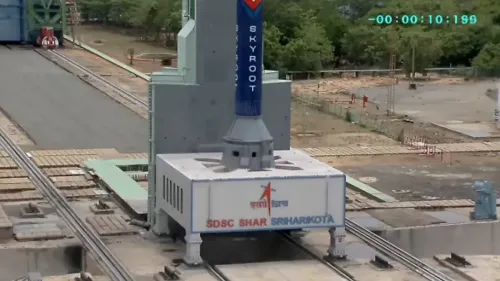
Vikram-1 , developed by Skyroot Aerospace , has been successfully launched under #MissionAagaman , marking India's first privately built rocket to reach this milestone.
Union Power Minister Manohar Lal Khattar publicly congratulated the Skyroot team on 18 July 2026 , framing the launch as a product of PM Modi 's space-sector reforms.
India's space liberalisation has been anchored by the creation of IN-SPACe in 2020 and the Atmanirbhar Bharat programme, which opened the sector to private players.
Skyroot Aerospace , headquartered in Hyderabad , is among the first wave of Indian startups to develop an operational launch vehicle under the liberalised policy framework.
The success strengthens India's position in the global small-satellite launch market and validates the Make in India push in deep-tech aerospace.
Future policy moves to watch include new FDI rules for the space sector and IN-SPACe licensing decisions for additional private launch vehicles.
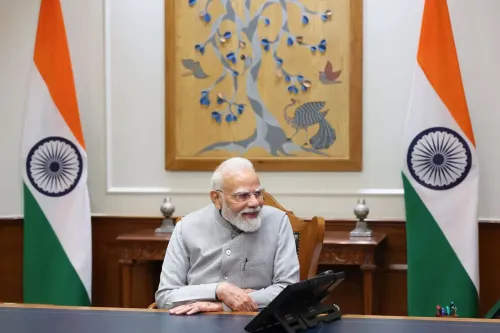
Union Power Minister Manohar Lal Khattar on Saturday, 18 July 2026, congratulated Skyroot Aerospace on the successful launch of Vikram-1, describing it as a historic milestone in India's space journey and crediting Prime Minister Narendra Modi's reforms for enabling private sector participation in the sector.
Context
Posting on X, Khattar called the launch 'भारत की अंतरिक्ष यात्रा की एक और ऐतिहासिक उपलब्धि' ('yet another historic achievement in India's space journey'). The launch was carried out under #MissionAagaman and marks the first time a privately developed launch vehicle has been successfully flown in India. Khattar extended congratulations to the 'entire team of Skyroot Aerospace' and expressed confidence that they would continue to take India's space mission to new heights.
The minister attributed the success to 'visionary reforms' undertaken under the Modi government that have 'given new momentum to innovation, startups and private participation' in the space sector.
Policy Backdrop
India's space liberalisation has been building since 2020, when the government established IN-SPACe (Indian National Space Promotion and Authorisation Centre) as a dedicated regulatory and promotional body for non-governmental entities in the space sector. The move was part of the broader Atmanirbhar Bharat programme, which explicitly set self-reliance targets for space, alongside defence and civil aviation.
The Make in India initiative, launched in 2014, provided the earlier policy scaffolding that encouraged domestic manufacturing across strategic sectors including aerospace. Skyroot Aerospace, headquartered in Hyderabad, is among the startups that emerged from this liberalised environment, developing the Vikram series of small satellite launch vehicles designed to serve the growing global demand for affordable orbital access.
The Vikram-1 launch represents a tangible output of this multi-year policy shift — moving India from a model where only ISRO conducted launches to one where private firms can independently design, build and operate rockets.
Stakeholders and Impact
The immediate beneficiaries of a successful private launch capability are small satellite operators — both domestic and international — who require affordable, dedicated rideshare or dedicated-launch options. A domestically available private launch vehicle reduces dependence on foreign providers and shortens the queue for satellite deployment.
For India's broader startup ecosystem, the Vikram-1 success is a proof-of-concept that deep-tech, capital-intensive ventures can reach operational milestones within the country's regulatory framework. Investors and aerospace manufacturers are expected to take note, potentially accelerating funding into the sector.
The achievement also carries diplomatic weight: India's growing launch cadence — now including private players — strengthens its positioning as a reliable partner for international satellite missions, particularly from nations in the Global South seeking alternatives to dominant Western and Chinese providers.
What's Next
Attention will now shift to IN-SPACe's licensing pipeline for additional private launch vehicles, and whether the government moves to update foreign direct investment (FDI) rules for the space sector to attract further capital. Skyroot Aerospace is expected to build on the Vikram-1 success by advancing higher-capacity variants in the Vikram series.
Khattar's public endorsement, coming from a senior cabinet minister outside the space portfolio, signals that the Vikram-1 launch is being positioned across the government as a flagship demonstration of the Atmanirbhar Bharat vision ahead of potential policy announcements.
Point of View
Not merely an ISRO or space-ministry achievement. By invoking both 'Make in India' and 'Atmanirbhar Bharat' in the same breath, the messaging ties a startup milestone to the BJP's decade-long economic sovereignty argument. The framing also pre-empts any opposition critique that the government has neglected deep-tech by pointing to a tangible, privately led outcome. For the space sector, ministerial amplification of this kind typically precedes follow-on policy action — whether on FDI thresholds, procurement preferences or launch-frequency targets.
NationPress
16 Oct 2026
Frequently Asked Questions
What is Vikram-1 and who made it?
Vikram-1 is a small satellite launch vehicle developed by Skyroot Aerospace, a Hyderabad-based private Indian startup. It is the first launch vehicle in India to be entirely designed and built by a private company rather than the government-run ISRO.
What is Mission Aagaman?
#MissionAagaman is the designation given to the mission under which Vikram-1 was launched. The name signals a new arrival or beginning, reflecting the milestone nature of India's first private orbital launch attempt.
Why did Manohar Lal Khattar comment on a space launch?
As a senior cabinet minister and former Chief Minister of Haryana, Khattar regularly amplifies government achievements across sectors. His post reflects the Modi government's broader effort to present the Vikram-1 success as a validation of its Atmanirbhar Bharat and Make in India policies.
What is IN-SPACe and what role does it play?
IN-SPACe, or the Indian National Space Promotion and Authorisation Centre, was established in 2020 to regulate and promote private participation in India's space sector. It issues licences to non-governmental entities like Skyroot Aerospace to build and launch rockets.
How does Vikram-1 fit into India's Atmanirbhar Bharat programme?
The Atmanirbhar Bharat programme, launched in 2020, set self-reliance goals for strategic sectors including space. Vikram-1's successful launch demonstrates that India can now produce and operate orbital launch vehicles through private enterprise, reducing dependence on foreign providers.