CM Sai: 70,000 Homes Get Solar Under PM Surya Ghar Yojana
Synopsis
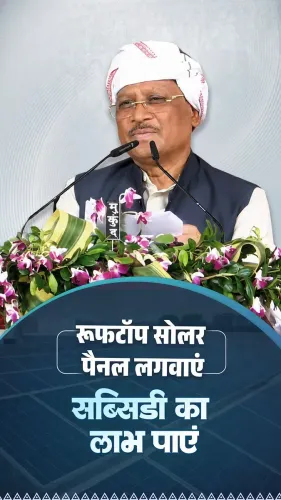
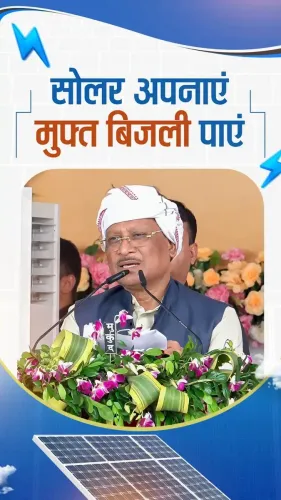
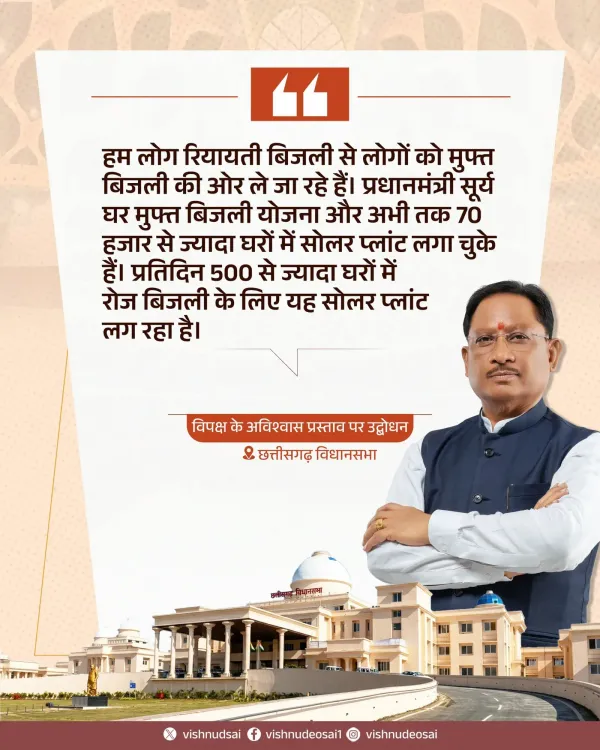
Chhattisgarh CM Vishnu Deo Sai told the state assembly on 18 July 2026 that over 70,000 homes have received rooftop solar plants under PM Surya Ghar Muft Bijli Yojana, with more than 500 installations happening daily, as he addressed the opposition's no-confidence motion.
Key Takeaways
CM Vishnu Deo Sai made the announcement during the opposition's no-confidence motion debate at the Chhattisgarh Vidhan Sabha on 18 July 2026 .
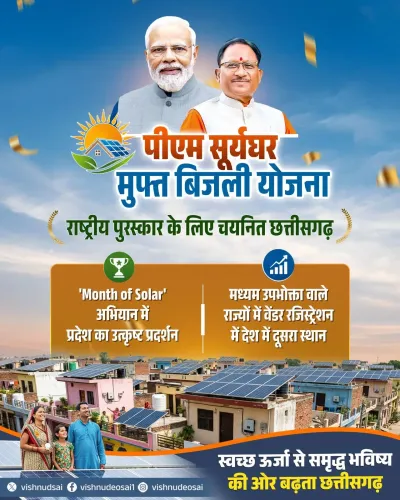
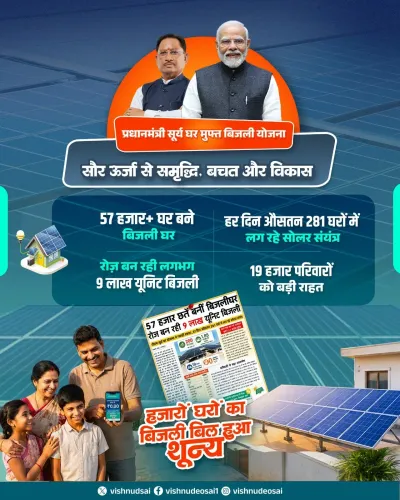
More than 70,000 homes in Chhattisgarh have received rooftop solar installations under the PM Surya Ghar Muft Bijli Yojana .
The Chief Minister stated that over 500 homes per day are currently receiving solar plant installations under the scheme.
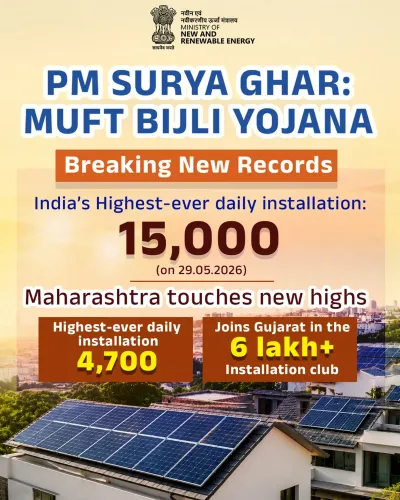
The PM Surya Ghar Muft Bijli Yojana was approved by the Union Cabinet in February 2024 and offers subsidies for up to 300 units of free electricity per month .
The government framed the scheme as a shift from subsidised grid electricity to decentralised free solar power for households.
Chhattisgarh Chief Minister Vishnu Deo Sai declared on Saturday, 18 July 2026 that the state is actively transitioning households from subsidised electricity to free solar power, citing the installation of rooftop solar plants in more than 70,000 homes under the PM Surya Ghar Muft Bijli Yojana. The Chief Minister made these remarks while addressing the state assembly during the opposition's no-confidence motion debate at the Chhattisgarh Vidhan Sabha.
Context
Speaking during a politically charged session, CM Sai used the no-confidence motion debate as a platform to highlight the state government's energy delivery record. He stated, 'hum log riyayati bijli se logon ko muft bijli ki or le ja rahe hain' — 'we are moving people from subsidised electricity toward free electricity.' The remarks were accompanied by specific installation figures, positioning the scheme as a measurable achievement of the BJP-led government in Chhattisgarh.
The Chief Minister added that solar plants are currently being installed in more than 500 homes every day across the state, underscoring what the government described as accelerating momentum under the central flagship scheme.
Policy Backdrop
The PM Surya Ghar Muft Bijli Yojana was approved by the Union Cabinet in February 2024 as a major rooftop solar initiative. The scheme offers central subsidies for household solar installations, with the stated goal of providing eligible beneficiaries up to 300 units of free electricity per month through decentralised renewable generation.
The initiative is part of a broader national strategy to shift households away from grid-dependent subsidised power, easing financial pressure on state electricity distribution companies (discoms) while contributing to India's renewable energy capacity targets. Several BJP-governed states have reported accelerated uptake of the scheme since its launch in 2024, and Chhattisgarh's figures, as cited by CM Sai, reflect that wider trend.
Stakeholders and Impact
The primary beneficiaries are domestic electricity consumers, particularly households that previously depended on subsidised grid power. For these families, a successful rooftop solar installation translates to a reduction — and potentially elimination — of monthly electricity bills, provided generation meets consumption needs.
For the state government, scaling solar adoption also offers fiscal relief. Electricity subsidies represent a recurring expenditure burden on state finances; shifting consumers to self-generated solar power reduces the volume of subsidised units that must be supplied through the grid. State discoms stand to benefit from reduced subsidy obligations over time if installations continue at the pace described by the Chief Minister.
What's Next
Attention will now turn to independent verification of state-level installation data and whether the daily rollout pace of 500-plus homes is sustained through the remainder of 2026. The opposition's no-confidence motion, which prompted CM Sai's address, is also likely to keep energy policy and welfare delivery under legislative scrutiny in the coming weeks. Any revision to Chhattisgarh's electricity subsidy framework in the next budget session will serve as a further indicator of how deeply the state intends to embed solar generation into its power delivery model.
Point of View
If borne out by independent data, would represent one of the faster state-level rollouts under the PM Surya Ghar scheme since its February 2024 launch. More broadly, the framing — 'from subsidised electricity to free electricity' — signals that BJP-governed states are increasingly positioning rooftop solar not merely as an energy policy but as a populist welfare instrument to rival direct cash-transfer and free-unit schemes used by rival parties. How the opposition responds, and whether it contests the figures on the assembly floor, will determine whether this narrative holds through the session.
NationPress
18 Jul 2026
Frequently Asked Questions
What is PM Surya Ghar Muft Bijli Yojana?
The PM Surya Ghar Muft Bijli Yojana is a central government rooftop solar scheme approved by the Union Cabinet in February 2024. It provides subsidies for household solar panel installations, enabling eligible beneficiaries to generate up to 300 units of free electricity per month.
How many homes in Chhattisgarh have got solar panels under the scheme?
According to Chief Minister Vishnu Deo Sai, more than 70,000 homes in Chhattisgarh have received rooftop solar plant installations under the PM Surya Ghar Muft Bijli Yojana as of July 2026.
Why did CM Sai speak about solar power in the Chhattisgarh assembly?
CM Sai made these remarks while addressing the Chhattisgarh Vidhan Sabha during the opposition's no-confidence motion debate on 18 July 2026, using the occasion to highlight the state government's energy welfare achievements.
What is the daily solar installation rate in Chhattisgarh?
CM Sai stated that more than 500 homes per day are receiving rooftop solar plant installations in Chhattisgarh under the PM Surya Ghar Muft Bijli Yojana.
How does the PM Surya Ghar scheme benefit electricity consumers?
The scheme subsidises rooftop solar installations so households can generate their own electricity, reducing or eliminating monthly power bills and shifting them away from dependence on subsidised grid electricity.