CM Sai urges Chhattisgarh citizens to adopt PM Surya Ghar solar scheme
Synopsis
Chhattisgarh Chief Minister Vishnu Dev Sai appealed to citizens at a Kisan Sammelan in Rajnandgaon on 22 June 2026 to install rooftop solar panels under the PM Surya Ghar Muft Bijli Yojana, which offers up to 300 units of free monthly electricity and savings on power bills.
Key Takeaways
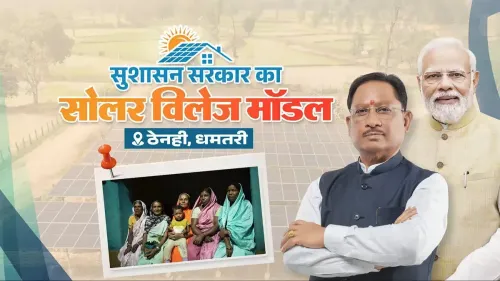
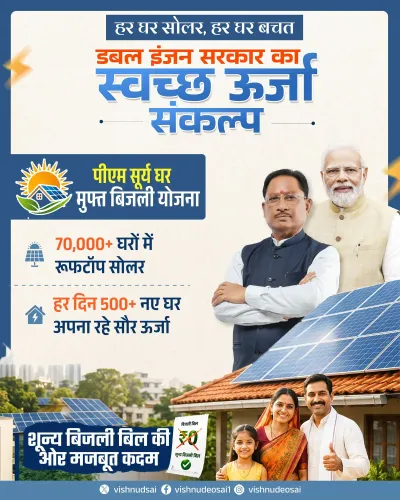
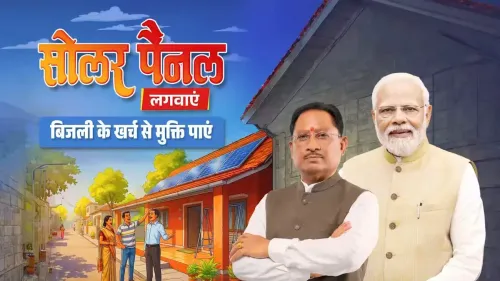
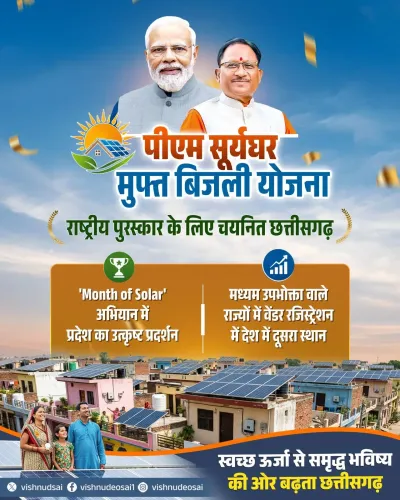
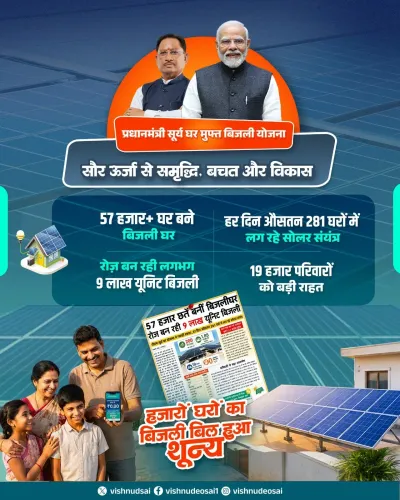
CM Vishnu Dev Sai made a public appeal on 22 June 2026 urging Chhattisgarh residents to adopt the PM Surya Ghar Muft Bijli Yojana .
The appeal was made at a Kisan Sammelan in Rajnandgaon district, targeting farmers and rural consumers.
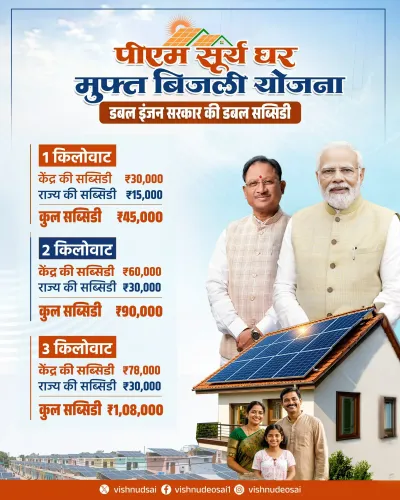
The scheme offers eligible households up to 300 units of free electricity per month through rooftop solar installations.
The PM Surya Ghar Muft Bijli Yojana was launched by the central government in February 2024 .
The push aligns with India's target of 500 GW of non-fossil fuel energy capacity by 2030 .
Higher adoption is expected to ease the fiscal burden on Chhattisgarh's electricity distribution companies.
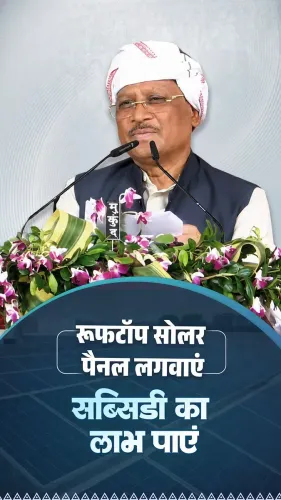
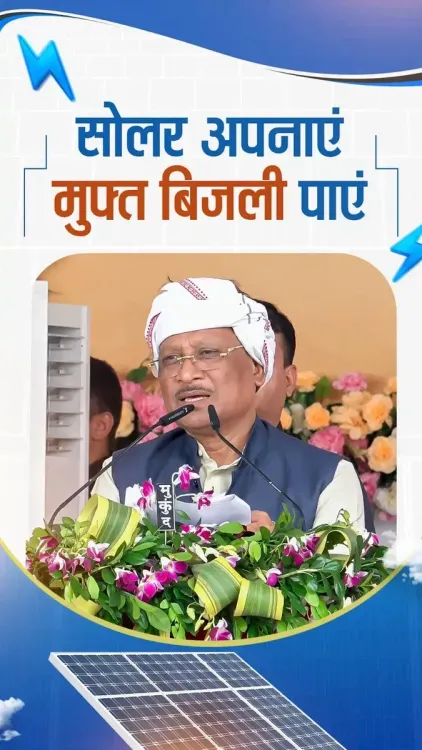
The Chief Minister's Office of Chhattisgarh, on behalf of Chief Minister Vishnu Dev Sai, issued a public appeal on Monday, 22 June 2026, urging all residents of the state to install rooftop solar panels under the PM Surya Ghar Muft Bijli Yojana, the central government's flagship free-electricity scheme. The statement was made in the context of a Kisan Sammelan held in Rajnandgaon district, underscoring the scheme's relevance for farmers and rural households.
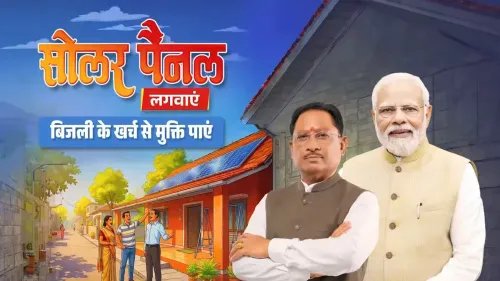
In his appeal, CM Sai described the scheme as 'aamjan ke liye ek mahatvapurna pahal' (an important initiative for the common people) and called on citizens to both install panels and benefit from savings on their electricity bills. 'Install solar panels on the rooftops of your homes and save on electricity bills along with free electricity,' the Chief Minister said.
Context
The PM Surya Ghar Muft Bijli Yojana was formally launched by the central government in February 2024. The scheme offers subsidies to households for rooftop solar installations, enabling eligible beneficiaries to receive up to 300 units of free electricity every month. It is part of India's broader push to expand household-level renewable energy access.
The Kisan Sammelan in Rajnandgaon served as the platform for this appeal, reflecting the state government's strategy of reaching farmers and rural consumers directly through such gatherings. Chhattisgarh, a state with a large rural and agrarian population, has been actively amplifying centrally sponsored energy schemes at the grassroots level.
Policy Backdrop
India's rooftop solar push has a long policy lineage. The National Solar Mission, launched in 2010, laid the groundwork for grid-connected and rooftop solar capacity at scale. The PM-KUSUM scheme, introduced in 2019, extended solar support specifically to farmers through decentralised solar plants and irrigation pumps.
The PM Surya Ghar scheme builds on this trajectory, targeting residential consumers and aiming to ease the fiscal burden on electricity distribution companies (discoms) by reducing subsidy dependence through self-generation. State governments have been encouraged to drive adoption through local outreach, exactly as CM Sai has done here.
Stakeholders and Impact
The primary beneficiaries are households — particularly farmers and rural consumers — who face high electricity costs or unreliable grid supply. For this demographic, the combination of free units and reduced bills addresses both energy access and household expenditure concerns.
For the state government, higher adoption rates translate into reduced pressure on the power subsidy budget and progress toward India's 500 GW non-fossil fuel target by 2030. Chhattisgarh's discoms also stand to benefit from a more distributed generation model that eases peak-load demand on the grid.
What's Next
The immediate focus will be on translating the Chief Minister's public appeal into measurable rooftop solar installations across Chhattisgarh. State agencies are expected to facilitate subsidy applications and technical support for households seeking to register under the scheme.
Observers will watch whether this Kisan Sammelan-level outreach converts into a surge in scheme registrations from Rajnandgaon and surrounding districts. Net-metering policy implementation and subsidy disbursement timelines under the central scheme will be key indicators of on-ground progress in the months ahead.
Point of View
Farmer-facing audience — a pattern that maximises political visibility while driving scheme adoption. By framing the PM Surya Ghar Yojana in terms of household savings rather than just energy policy, the state government is making renewable energy tangible for ordinary consumers. This also reflects a broader BJP governance strategy of using state-level events to amplify central schemes, reinforcing the party's 'double-engine government' narrative. The real test, however, will be in the subsidy disbursement speed and net-metering infrastructure that determine whether the appeal converts into actual rooftop installations.
NationPress
21 Sept 2026
Frequently Asked Questions
What is PM Surya Ghar Muft Bijli Yojana?
PM Surya Ghar Muft Bijli Yojana is a central government scheme launched in February 2024 that provides subsidies for rooftop solar panel installation and offers eligible households up to 300 units of free electricity every month.
How can Chhattisgarh residents apply for PM Surya Ghar Yojana?
Residents can apply through the official PM Surya Ghar portal by registering their household details and electricity connection information to access subsidies for rooftop solar installation.
What did CM Vishnu Dev Sai say about the solar scheme?
CM Vishnu Dev Sai urged all citizens to install solar panels on their rooftops, describing the scheme as an important initiative for the common people that offers both free electricity and savings on monthly power bills.
What is the Kisan Sammelan in Rajnandgaon?
The Kisan Sammelan in Rajnandgaon is a farmer-focused event in Chhattisgarh where government officials and the Chief Minister engage directly with agricultural communities on welfare and policy matters.
How does rooftop solar help farmers in Chhattisgarh?
Rooftop solar panels reduce monthly electricity bills and provide free units of power, easing the financial burden on farming households that depend heavily on electricity for irrigation and daily use.