CM Sai Pushes Rooftop Solar in Chhattisgarh
Synopsis
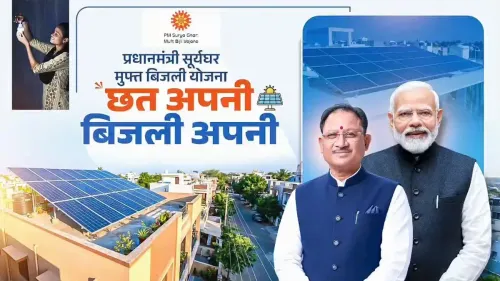
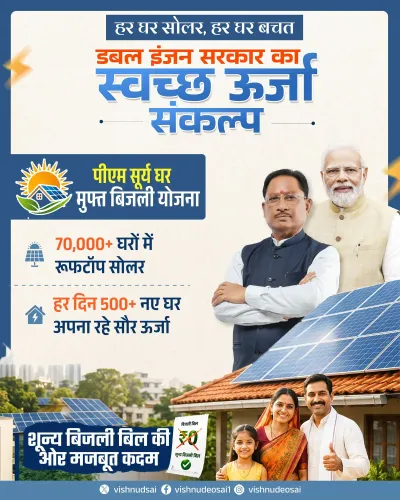
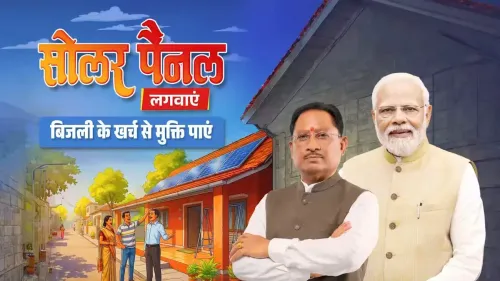
Chhattisgarh Chief Minister Vishnu Deo Sai on 20 July 2026 urged residents to install rooftop solar panels, citing combined central and state subsidies under PM Surya Ghar Muft Bijli Yojana. The appeal frames solar adoption as central to the state's 'Viksit Chhattisgarh' vision and its push away from coal-dependent power generation.
Key Takeaways
CM Vishnu Deo Sai on 20 July 2026 publicly called on Chhattisgarh residents to install rooftop solar panels using available government subsidies.
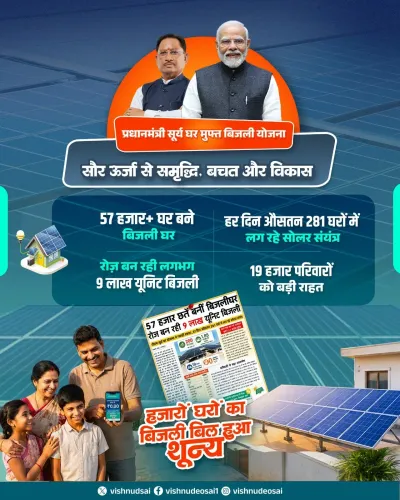
The PM Surya Ghar Muft Bijli Yojana (2024) offers central financial assistance of up to 60% for residential rooftop solar installations.
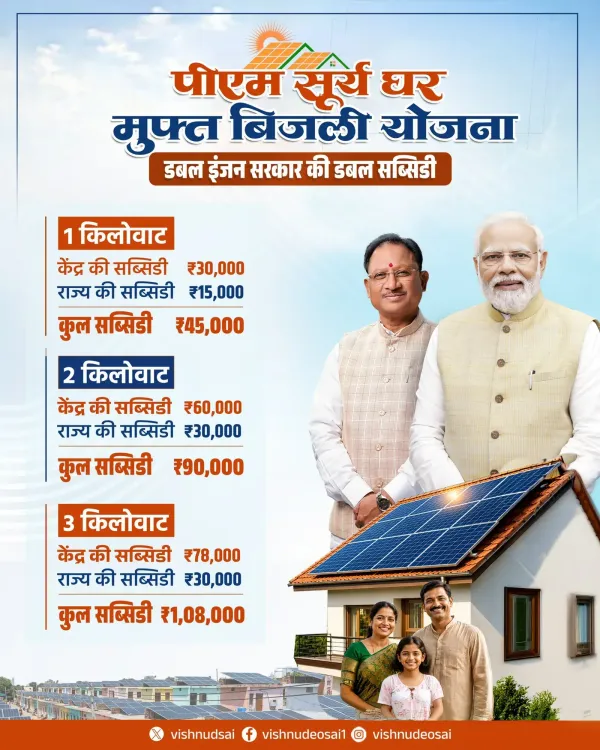
The state government is offering an additional subsidy on top of the central scheme, though the exact quantum has not been formally disclosed.
Chhattisgarh , historically coal-dependent, is aligning with India's 500 GW non-fossil fuel target by 2030 through distributed rooftop solar promotion.
The initiative targets household electricity consumers, framing solar adoption as a cost-saving measure as well as an environmental one.
Progress will be tracked through state-level disbursement data and quarterly rooftop solar capacity installation reports.
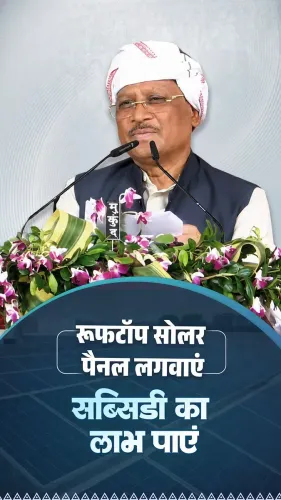
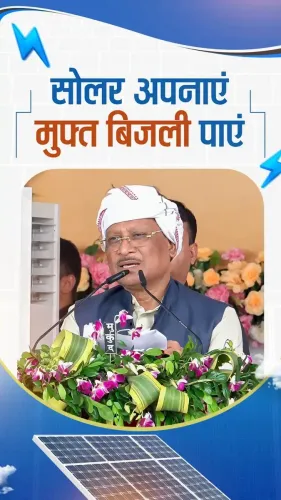
Chhattisgarh Chief Minister Vishnu Deo Sai on Monday, 20 July 2026, called on residents to adopt rooftop solar power, highlighting combined central and state government subsidies that he said have made household solar installations more accessible than ever before.
Context
In a post on X, CM Sai wrote: 'ऊर्जा आत्मनिर्भरता की ओर बढ़ता हर कदम विकसित छत्तीसगढ़ की मजबूत नींव है' ['Every step towards energy self-reliance is the strong foundation of a developed Chhattisgarh']. He urged citizens to install solar panels on their rooftops, save on electricity bills, and participate in building a 'green and self-reliant future' for the state.
The appeal comes as Chhattisgarh, a state historically dependent on coal-based power generation, accelerates its push toward distributed renewable energy under both central and state-level policy frameworks.
Policy Backdrop
The central government's PM Surya Ghar Muft Bijli Yojana, launched in 2024, provides central financial assistance of up to 60% for residential rooftop solar installations. CM Sai indicated that the state government has layered an additional subsidy on top of this central support, though the precise quantum and eligibility criteria of the combined package have not been formally detailed in public records.
India's broader renewable energy agenda targets 500 GW of non-fossil fuel capacity by 2030, with rooftop solar identified as a key pillar of distributed generation. Coal-rich states like Chhattisgarh are increasingly aligning their state schemes with central frameworks to promote energy diversification and reduce transmission losses.
The policy lineage traces back to the Jawaharlal Nehru National Solar Mission of 2010, which first set national grid-connected and rooftop solar targets, laying the groundwork for successive subsidy programmes over the following decade and a half.
Stakeholders and Impact
The primary beneficiaries of the combined subsidy scheme are residential electricity consumers across Chhattisgarh, who stand to reduce monthly electricity bills by generating their own solar power. For households in the state's smaller towns and rural areas, lower upfront installation costs — made possible by joint subsidies — could make rooftop solar a viable option for the first time.
Wider adoption of distributed rooftop generation would also reduce the load on Chhattisgarh's coal-heavy grid, contributing to lower carbon emissions and improved grid stability, particularly during peak summer demand periods.
What's Next
Observers will watch for formal state government notifications detailing the combined subsidy structure, including eligibility rules, per-kilowatt assistance amounts, and the empanelled vendors through which residents can access the scheme. Quarterly progress reports on installed rooftop solar capacity in Chhattisgarh will serve as a key metric for gauging on-ground uptake. CM Sai's public push signals that the state intends to make rooftop solar a visible plank of its 'Viksit Chhattisgarh' development narrative ahead of coming policy milestones.
Point of View
Allowing Chhattisgarh — long defined by its coal economy — to project a green-transition narrative without abandoning its industrial base. The post's emphasis on household savings rather than environmental targets reflects a politically pragmatic framing designed to resonate with middle-income voters facing rising electricity costs. Layering state subsidies on top of the central PM Surya Ghar scheme also signals competitive federalism in the renewable space, where BJP-governed states are racing to show implementation credentials. Whether disbursement machinery can match the rhetorical ambition will determine if the scheme translates into measurable rooftop capacity additions.
NationPress
20 Oct 2026
Frequently Asked Questions
What is the PM Surya Ghar Muft Bijli Yojana?
PM Surya Ghar Muft Bijli Yojana is a central government scheme launched in 2024 that provides financial assistance of up to 60% for residential rooftop solar installations, aiming to reduce household electricity bills and expand distributed solar generation across India.
How can Chhattisgarh residents apply for the rooftop solar subsidy?
Residents can access the combined central and state rooftop solar subsidy through the national PM Surya Ghar portal; the state government is expected to notify specific eligibility rules, empanelled vendors, and the additional state top-up amount through formal notifications.
What did Chhattisgarh CM Vishnu Deo Sai say about solar energy?
CM Vishnu Deo Sai said that every step towards energy self-reliance is the strong foundation of a developed Chhattisgarh, and urged citizens to adopt rooftop solar to save on electricity costs and contribute to a green, self-reliant future for the state.
Is Chhattisgarh adding its own subsidy on top of the central solar scheme?
CM Sai's post indicates that the state government is providing an additional subsidy on top of the central PM Surya Ghar assistance, though the exact amount and eligibility conditions of the combined package have not yet been formally announced.
Why is Chhattisgarh promoting solar energy despite being a coal-rich state?
Chhattisgarh is diversifying its energy mix to align with India's target of 500 GW non-fossil fuel capacity by 2030, reduce transmission losses, and lower household electricity costs, even as coal remains a significant part of its industrial economy.