CM Sai Pushes Solar Expansion Under PM Surya Ghar Scheme
Synopsis
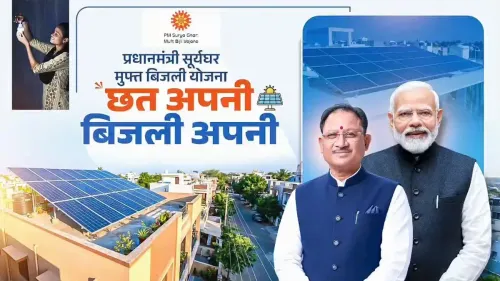
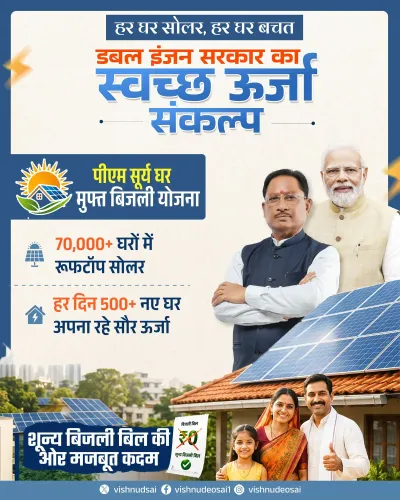
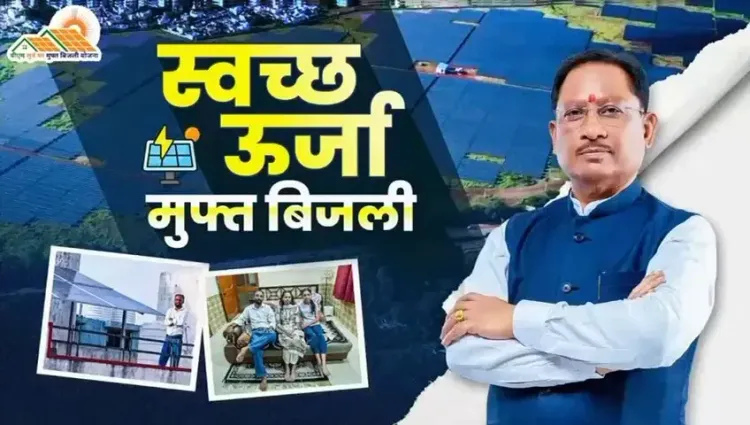
Chhattisgarh Chief Minister Vishnu Deo Sai on 28 May 2026 said the PM Surya Ghar Muft Bijli Yojana is driving a solar revolution in the state, with thousands of families cutting electricity bills and women's self-help groups gaining new livelihood opportunities through clean energy.
Key Takeaways
CM Vishnu Deo Sai credited the 'double engine' BJP government model for accelerating solar energy adoption in Chhattisgarh .
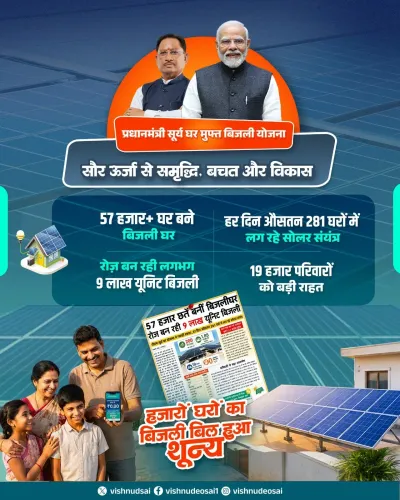
The PM Surya Ghar Muft Bijli Yojana , launched under PM Narendra Modi , targets rooftop solar in one crore households and offers up to 300 units of free electricity per month.
Beneficiary families are reportedly receiving both reduced electricity bills and additional income by feeding surplus power to the grid.
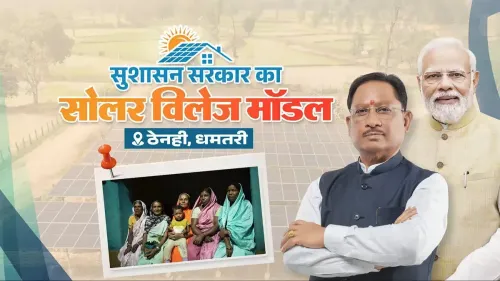
Women's self-help groups are being integrated into the solar programme to generate self-employment, skills, and economic independence.
Chhattisgarh updated its renewable energy targets after the 2023 assembly elections to align with central schemes.
India's national goal of 500 GW non-fossil capacity by 2030 underpins state-level solar expansion drives.
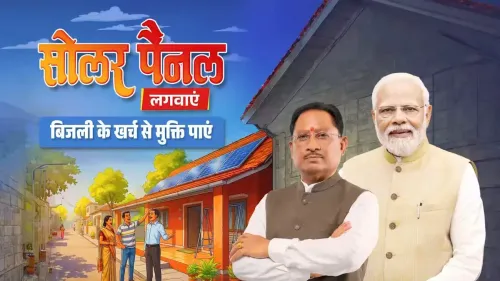
Chhattisgarh Chief Minister Vishnu Deo Sai on Thursday, 28 May 2026, credited the 'double engine' government model for accelerating a solar energy revolution in the state, highlighting that thousands of families are now benefiting from the PM Surya Ghar Muft Bijli Yojana through reduced electricity bills and additional income. The Chief Minister also underlined the growing role of women's self-help groups in creating self-employment and skill opportunities linked to clean energy.
Context
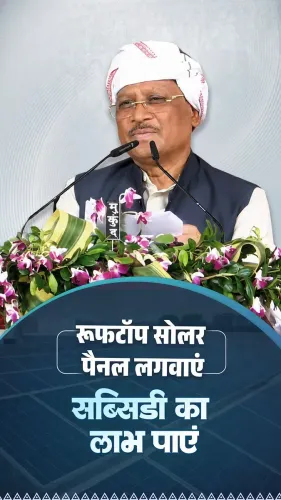
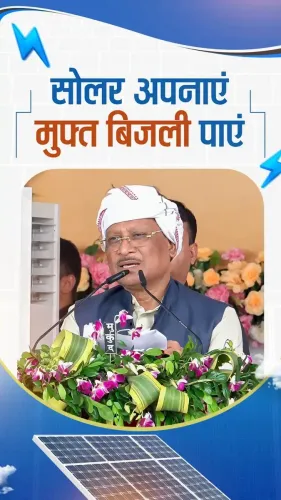
In his post, CM Sai stated: 'छत्तीसगढ़ में सौर ऊर्जा क्रांति को हमारी डबल इंजन सरकार नई रफ्तार दे रही है' ['Our double engine government is giving new momentum to the solar energy revolution in Chhattisgarh']. He attributed the scheme's genesis to the 'visionary thinking' of Prime Minister Narendra Modi, noting that families connected to solar energy are receiving relief on electricity bills alongside additional income. The post, accompanied by a video, also highlighted the creation of new opportunities for 'self-employment, skills, and self-reliance' through women's self-help group participation.
The reference to a 'double engine government' reflects the BJP's standard framing for states where both the state and central governments are BJP-led, implying aligned policy execution and faster scheme delivery.
Policy Backdrop
The PM Surya Ghar Muft Bijli Yojana was announced in the Union Budget 2024 with a target of installing rooftop solar systems in one crore households nationwide, providing up to 300 units of free electricity per month through central financial assistance. The scheme is implemented through state governments, making state-level political ownership a key driver of on-ground progress.
Chhattisgarh had adopted a State Solar Policy as far back as 2017 and revised its renewable energy targets following the 2023 assembly elections to better align with central schemes. The state sits in a region with high solar irradiance, giving it structural advantages for rooftop solar expansion. India's broader target of 500 GW of non-fossil fuel capacity by 2030 provides the national framework within which state-level pushes like this operate.
Stakeholders and Impact
Rural and peri-urban households are the primary beneficiaries of the scheme, gaining both a reduction in monthly electricity expenditure and, where surplus power is fed back to the grid, a supplementary income stream. The explicit mention of women's self-help groups signals a deliberate policy linkage between green energy access and women's economic empowerment — a pattern visible across multiple central and state schemes in recent years.
By involving self-help groups in installation, maintenance, and awareness activities, the state government aims to extend the scheme's reach into villages where formal contractors may have limited presence. This approach also aligns with the national thrust on linking livelihood programmes with the clean energy transition.
What's Next
Observers will watch for state-level data on actual rooftop solar installations and verified beneficiary counts under PM Surya Ghar in Chhattisgarh during the 2025-26 fiscal cycle. Any revision to the state's renewable purchase obligations or fresh budget allocations for solar subsidies in the next state budget will indicate how far political messaging translates into fiscal commitment. The integration of self-help groups into the solar supply chain could serve as a model for other BJP-governed states seeking to combine green energy targets with livelihood outcomes.
Point of View
He simultaneously addresses two political priorities: green energy optics and women's empowerment, both of which are central to BJP's governance messaging ahead of any electoral cycle. The post stops short of citing verified beneficiary numbers, which is consistent with the scheme still being in a scale-up phase in the state. Longer term, Chhattisgarh's ability to post auditable installation data will determine whether this messaging translates into a durable policy record or remains aspirational.
NationPress
11 Oct 2026
Frequently Asked Questions
What is the PM Surya Ghar Muft Bijli Yojana?
The PM Surya Ghar Muft Bijli Yojana is a central government scheme announced in the Union Budget 2024 that provides financial assistance for rooftop solar installations, offering eligible households up to 300 units of free electricity per month and allowing them to earn income by selling surplus power back to the grid.
How is Chhattisgarh implementing the PM Surya Ghar scheme?
Chhattisgarh is rolling out the scheme through state government machinery aligned with the central programme, with Chief Minister Vishnu Deo Sai highlighting the involvement of women's self-help groups to extend reach into rural areas and create local livelihood opportunities.
What is the 'double engine government' model CM Sai refers to?
The 'double engine government' is a BJP phrase describing states where both the state and central governments are BJP-led, implying that policy alignment between the two levels enables faster and more effective scheme implementation.
What role do women's self-help groups play in Chhattisgarh's solar programme?
Women's self-help groups in Chhattisgarh are being engaged in activities related to clean energy projects, creating opportunities for self-employment, skill development, and economic self-reliance as part of the state's solar expansion drive.
What is India's renewable energy target and how does Chhattisgarh fit in?
India has set a target of 500 GW of non-fossil fuel power capacity by 2030 as part of its net-zero commitments. Chhattisgarh, which updated its renewable energy targets after the 2023 assembly elections, is contributing to this national goal through rooftop solar expansion under schemes like PM Surya Ghar.