CM Chhattisgarh Pushes Solar Revolution Under PM Surya Ghar Scheme
Synopsis
The Chief Minister's Office of Chhattisgarh says thousands of families are now accessing free electricity and additional income under the PM Surya Ghar Muft Bijli Yojana, with women's self-help groups creating new self-employment pathways as the state accelerates its clean energy transition.
Key Takeaways
The Chhattisgarh CMO on 28 May 2026 announced accelerating progress under the PM Surya Ghar Muft Bijli Yojana .
The central scheme targets one crore households nationwide with up to 300 units of free electricity per month via rooftop solar.
Mahila Swasahayata Samuh (women's self-help groups) are being integrated into scheme implementation to generate self-employment.
Chhattisgarh , traditionally coal-dependent, is positioning itself as a clean energy transition state under the #SushasanSarkar banner.
The scheme builds on a policy lineage from the 2010 Jawaharlal Nehru National Solar Mission and the 2019 PM-KUSUM scheme .
India's overarching target is 500 GW of non-fossil energy capacity by 2030 .
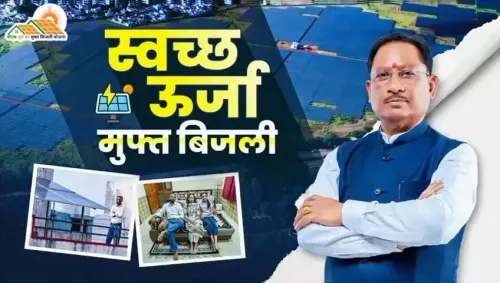
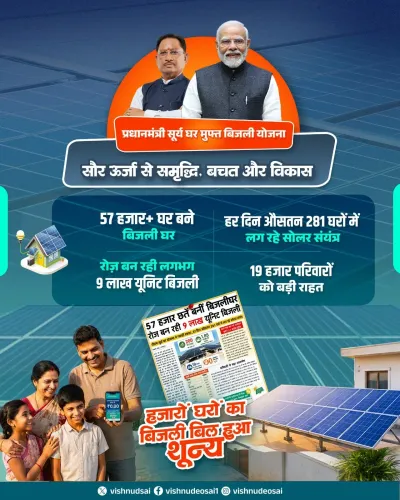
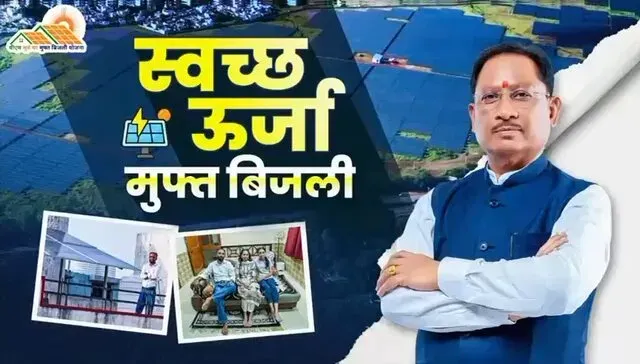
The Chief Minister's Office of Chhattisgarh on Thursday, 28 May 2026, highlighted accelerating momentum in the state's solar energy drive, stating that thousands of families are now receiving free electricity and additional income through the PM Surya Ghar Muft Bijli Yojana. The post also underscored the growing role of women's self-help groups in creating self-employment opportunities through the scheme.
The official post, shared in Hindi, declared: 'छत्तीसगढ़ में सौर ऊर्जा क्रांति को मिल रही नई रफ्तार' ('The solar energy revolution in Chhattisgarh is gaining new momentum'), adding that Mahila Swasahayata Samuh participation is generating new avenues for self-reliance and livelihood under the hashtag #SushasanSarkar (Good Governance Government).
Context
The PM Surya Ghar Muft Bijli Yojana is a central government initiative launched in 2024 aimed at installing rooftop solar systems across one crore households nationwide, targeting 10 GW of capacity. Enrolled households are eligible for up to 300 units of free electricity per month, with surplus generation offering an additional income stream. Chhattisgarh, a central Indian state with a large rural and tribal population historically dependent on coal-based power, is positioning itself as a beneficiary of this national push.Policy Backdrop
India's rooftop solar ambitions trace back to the Jawaharlal Nehru National Solar Mission of 2010, which set the first national targets for grid-connected and distributed solar capacity. The PM-KUSUM scheme, announced in 2019, extended decentralised solar access to agricultural feeders and pumps, establishing an implementation template that the PM Surya Ghar programme now builds upon for residential households. These successive schemes reflect India's broader goal of reaching 500 GW of non-fossil energy capacity by 2030, combining central financial incentives with state-level execution.Stakeholders and Impact
Beyond electricity access, the Chhattisgarh CMO's post draws attention to the participation of Mahila Swasahayata Samuh — women's self-help groups promoted under the National Rural Livelihood Mission — in rolling out the scheme. Their involvement is framed as generating self-employment and fostering economic independence at the community level. This approach mirrors similar efforts in other Indian states that have linked clean energy deployment with women's economic empowerment, using SHGs as last-mile implementation partners for subsidy processing, awareness, and micro-enterprise creation around solar infrastructure.What's Next
State-level progress reports on household installation counts and subsidy disbursements will be closely watched as indicators of how effectively Chhattisgarh is translating central scheme targets into on-ground outcomes. Any supplementary state solar policy updates or dedicated budget allocations in the 2026-27 fiscal cycle could further signal the pace of the state's clean energy transition. With the CMO framing this as a march toward 'clean energy, sustainable development, and a green future,' the political messaging around the scheme is expected to intensify ahead of any upcoming state-level reviews or audits of the programme's reach.Point of View
Using the #SushasanSarkar tag to align state delivery with the ruling dispensation's 'good governance' narrative ahead of potential performance reviews. By foregrounding women's SHG participation, the messaging bridges energy policy with social empowerment — a dual-dividend framing that has become standard in BJP-governed states seeking to demonstrate inclusive development. The emphasis on 'free electricity plus additional income' targets a rural voter base that is both a primary beneficiary and a key political constituency. Watched alongside similar announcements from other states, this signals that PM Surya Ghar is becoming a central plank in state-level political communication strategies for 2026.
NationPress
11 Oct 2026
Frequently Asked Questions
What is PM Surya Ghar Muft Bijli Yojana?
PM Surya Ghar Muft Bijli Yojana is a central government scheme launched in 2024 to install rooftop solar panels for one crore Indian households, providing up to 300 units of free electricity per month and enabling additional income from surplus power sold to the grid.
How is Chhattisgarh implementing PM Surya Ghar scheme?
Chhattisgarh is rolling out the scheme by connecting thousands of families to rooftop solar systems and involving Mahila Swasahayata Samuh (women's self-help groups) as community-level partners to expand reach and create self-employment opportunities.
What role do women's self-help groups play in solar schemes in India?
Women's self-help groups, promoted under the National Rural Livelihood Mission, act as last-mile partners in awareness, subsidy processing, and micro-enterprise creation around solar infrastructure, linking clean energy access with women's economic empowerment.
What is India's renewable energy target by 2030?
India aims to achieve 500 GW of non-fossil energy capacity by 2030, combining utility-scale projects with decentralised rooftop and rural solar schemes like PM Surya Ghar and PM-KUSUM.
What is #SushasanSarkar?
#SushasanSarkar translates to 'Good Governance Government' and is a hashtag used by the Chhattisgarh government's official accounts to brand its administrative initiatives and development programmes.