CM Chhattisgarh promotes PM Surya Ghar free power scheme
Synopsis
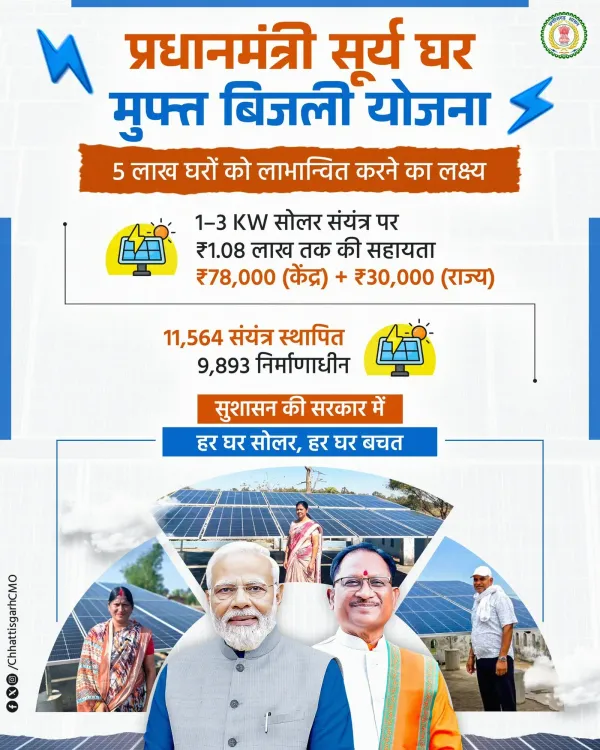
The Chhattisgarh CMO on 19 July 2026 promoted PM Surya Ghar Muft Bijli Yojana, promising households up to 300 units of free monthly electricity, income from surplus solar power, and 24x7 energy security under the Viksit Chhattisgarh vision.
Key Takeaways
The Chhattisgarh CMO promoted the PM Surya Ghar Muft Bijli Yojana on 19 July 2026 via an official post on X.
The scheme, launched on 29 February 2024 , offers eligible households up to 300 units of free electricity per month through rooftop solar panels.
Households can also earn income by selling surplus power back to the electricity distribution company.
The Ministry of New and Renewable Energy implements the scheme through state nodal agencies, with central financial assistance for installation.
Chhattisgarh is promoting the initiative under its Viksit Chhattisgarh vision, targeting both urban and rural households.
India aims to achieve 500 GW of non-fossil fuel capacity by 2030 , with rooftop solar a key component of that target.
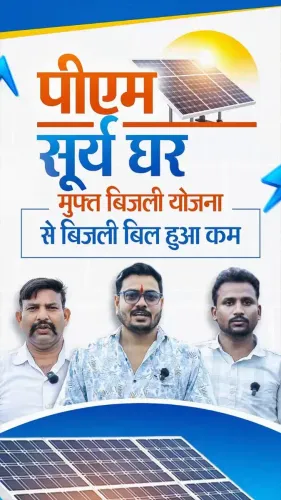
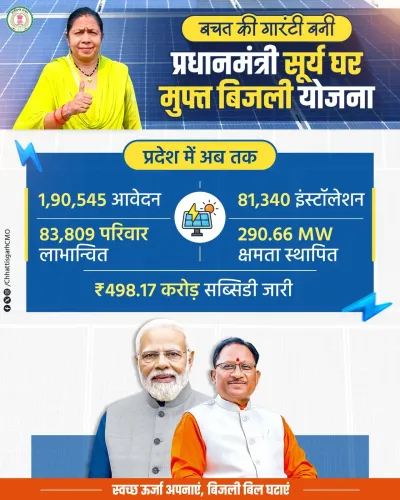
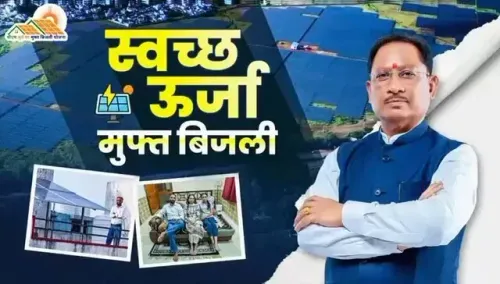
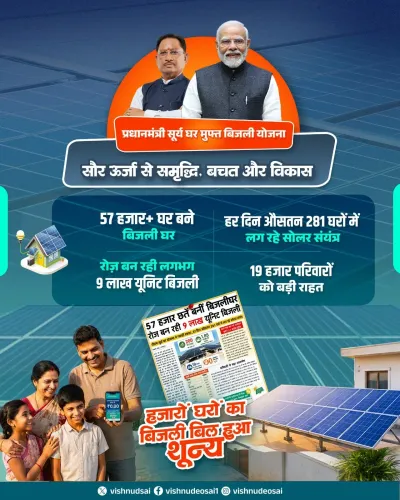
The Chief Minister's Office of Chhattisgarh on Sunday, 19 July 2026, promoted the PM Surya Ghar Muft Bijli Yojana, highlighting how the central rooftop solar scheme promises freedom from electricity bills, income from surplus power, and round-the-clock energy security for every household in the state.
The post, shared in Hindi, declared: 'Har ghar solar, har din bachat' ('Solar in every home, savings every day'), framing the scheme as a path to both environmental protection and household self-reliance. It emphasised three core benefits — elimination of electricity bills, earnings from surplus power fed back to the grid, and 24×7 energy security.
Context
The PM Surya Ghar Muft Bijli Yojana was formally launched on 29 February 2024 following its announcement in the Union Budget 2024-25. Under the scheme, eligible households can receive up to 300 units of free electricity per month through rooftop solar panels, with central financial assistance covering a significant portion of installation costs. The Ministry of New and Renewable Energy oversees implementation through state nodal agencies. Prime Minister Narendra Modi announced the scheme as a flagship initiative to expand renewable energy access at the household level, reduce dependence on grid electricity, and advance India's energy self-reliance goals.Policy Backdrop
The scheme builds on India's National Solar Mission, originally launched in 2010 and revised upward in 2015, which set the foundation for scaling rooftop solar capacity across the country. India has committed to achieving 500 GW of non-fossil fuel capacity by 2030 as part of its net-zero pledges, and rooftop solar is a critical pillar of that target. The emphasis on bill savings and surplus power sales mirrors earlier successful state-level solar pump and rooftop programmes. States are increasingly aligning central subsidy disbursements with local governance priorities to accelerate adoption in both urban and rural areas.Stakeholders and Impact
Chhattisgarh, a state with a significant tribal and rural population, stands to benefit considerably from a scheme designed to bring clean energy to households that have historically faced irregular or expensive electricity supply. The CMO's promotion frames the initiative under the broader Viksit Chhattisgarh vision, linking rooftop solar adoption to good governance and sustainable development. For ordinary electricity consumers, the scheme offers two financial levers: the elimination or near-elimination of monthly power bills, and the opportunity to sell surplus units back to the distribution company, creating a new income stream. For the environment, widespread rooftop solar adoption reduces dependence on coal-based power, lowering carbon emissions at the household level.What's Next
Attention will now turn to state-level installation targets, the pace of subsidy disbursement through Chhattisgarh's nodal agency, and whether the state government introduces any additional incentives or amendments to the central model guidelines in upcoming assembly sessions. The CMO's active social media promotion signals a push to raise awareness and drive enrolments, particularly in rural and semi-urban pockets where rooftop solar penetration remains low. As India races toward its 2030 renewable energy targets, the speed at which states like Chhattisgarh convert awareness campaigns into actual installations will be a key measure of the scheme's real-world impact.Point of View
The messaging is calibrated for a rural and semi-urban audience that responds to direct economic benefit. The tie-in with the 'Viksit Chhattisgarh' brand signals an effort to localise a national scheme and claim governance credit at the state level. Whether this translates into measurable installation numbers will determine the campaign's real policy weight.
NationPress
18 Oct 2026
Frequently Asked Questions
What is PM Surya Ghar Muft Bijli Yojana?
PM Surya Ghar Muft Bijli Yojana is a central government rooftop solar scheme launched on 29 February 2024 that provides eligible households up to 300 units of free electricity per month and central financial assistance for solar panel installation.
How can I benefit from PM Surya Ghar scheme in Chhattisgarh?
Residents of Chhattisgarh can register for the scheme through the state nodal agency under the Ministry of New and Renewable Energy to receive subsidised rooftop solar installation and reduce or eliminate their monthly electricity bills.
Can I earn money from the PM Surya Ghar solar scheme?
Yes. Households that generate surplus solar electricity beyond their own consumption can sell those units back to the local electricity distribution company, creating an additional income stream.
When was PM Surya Ghar Muft Bijli Yojana launched?
The scheme was formally launched on 29 February 2024, following its announcement in the Union Budget 2024-25, by Prime Minister Narendra Modi.
What is Viksit Chhattisgarh and how does solar energy fit into it?
Viksit Chhattisgarh is the Chhattisgarh government's development vision for a prosperous and self-reliant state. Promotion of rooftop solar and clean energy adoption is positioned as a key pillar of this vision, aligning with both household welfare and environmental goals.