CM Bhajan Lal Sharma Greets Rajasthan on Maa Mahagauri Day
Synopsis
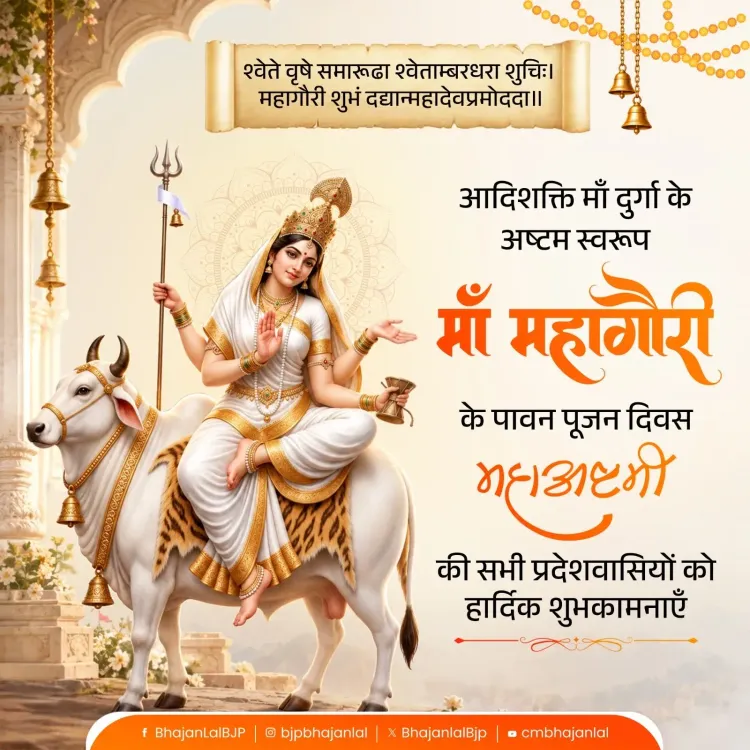
Rajasthan Chief Minister Bhajan Lal Sharma invoked Maa Mahagauri on the eighth day of Sharadiya Navratri 2026, sharing a Sanskrit shloka and praying for the happiness, peace, and prosperity of all Rajasthan residents.
Key Takeaways
CM Bhajan Lal Sharma posted a devotional Navratri message on 18 October 2026 , the eighth day of Sharadiya Navratri.
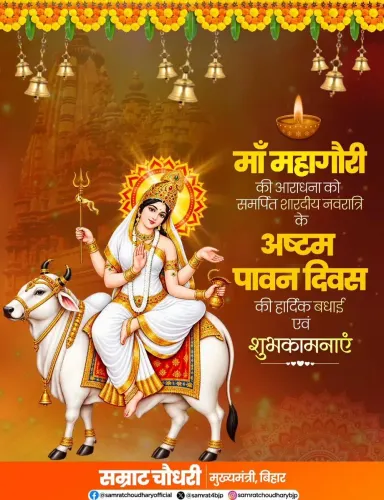
He invoked Maa Mahagauri , the eighth form of Goddess Durga, symbolising purity and motherhood.
The post opened with a classical Sanskrit shloka dedicated to Mahagauri.
CM Sharma prayed for happiness, peace, prosperity, and positive energy for all residents of Rajasthan.
The eighth night, Ashtami , is one of the most significant days in the Navratri calendar, widely observed across Rajasthan.
On the eighth day of Sharadiya Navratri 2026, Rajasthan Chief Minister Bhajan Lal Sharma offered devotional greetings to the people of the state, invoking the blessings of Maa Mahagauri — the eighth and radiant form of Goddess Durga, revered as a symbol of purity and maternal grace.
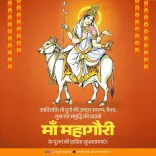
Posting on Sunday, 18 October 2026, CM Sharma began with the classical Sanskrit shloka: 'Shwete vrishe samarudha shwetambaradhara shuchih. Mahagauri shubham dadyanmahadevapramodada.' — meaning, 'Seated on a white bull, clad in white, the pure one; may Mahagauri bestow auspiciousness, she who delights Mahadeva.' He then extended his salutations to the goddess and prayed that she fill the lives of all residents of Rajasthan with happiness, peace, prosperity, and positive energy, and fulfil every wish of the faithful.
Who is Maa Mahagauri, and why the eighth day matters
Maa Mahagauri is the eighth of the nine principal forms of Goddess Durga worshipped sequentially across the nine nights of Navratri. Her iconography — a white complexion, white robes, and a white bull as her mount — embodies absolute purity and the power to wash away suffering. The eighth night, Ashtami, is among the most significant in the Navratri calendar, often marked by kanya pujan (the ritual honouring of young girls as embodiments of the goddess) in homes and temples across Rajasthan and the rest of India.
A ritual of public leadership that stretches across every festival season
Chief ministers across Indian states routinely mark major Hindu festivals with social-media devotional posts — a practice that blends cultural engagement with public outreach. For CM Sharma, whose political identity is closely tied to Rajasthan's predominantly Hindu electorate, such messages serve as a direct, personal touchpoint with millions of citizens observing the festival at home and in community gatherings. The choice of a Sanskrit shloka, rather than a plain prose greeting, signals a deliberate invocation of classical tradition.
As Navratri enters its final stretch, state-level events — temple visits, cultural programmes, and garba gatherings — are expected to continue across Rajasthan in the coming days, with officials likely participating in public observances before the festival concludes.
For millions of Rajasthanis waking to the eighth dawn of Navratri, the Chief Minister's message is a reminder that the season's most sacred night has arrived — and that its light, in the state's official voice, is one of peace and renewal.
Point of View
And CM Bhajan Lal Sharma's Navratri posts fit squarely within that pattern. What distinguishes this particular message is its classical Sanskrit opening — a stylistic choice that signals cultural depth beyond routine pleasantries. For a BJP leader governing a state where religious identity is politically salient, consistent, substantive festival engagement reinforces a broader narrative of cultural stewardship. The practice also reflects how Indian state leaders increasingly use digital platforms to maintain a direct, unmediated relationship with constituents during high-emotion cultural moments.
NationPress
18 Oct 2026
Frequently Asked Questions
Who is Maa Mahagauri in Navratri?
Maa Mahagauri is the eighth of nine forms of Goddess Durga worshipped during Navratri. She is depicted in white, seated on a white bull, and is revered as a symbol of purity and the power to remove suffering.
What did Rajasthan CM Bhajan Lal Sharma post on Navratri Ashtami 2026?
CM Bhajan Lal Sharma posted a Sanskrit shloka dedicated to Maa Mahagauri and prayed for the happiness, peace, prosperity, and positive energy of all Rajasthan residents on 18 October 2026.
What is Sharadiya Navratri?
Sharadiya Navratri is the autumn nine-night festival dedicated to Goddess Durga, observed across India and Rajasthan, typically falling in September or October each year.
What is the significance of Navratri Ashtami?
Ashtami, the eighth night of Navratri, is one of the most important days of the festival, often marked by kanya pujan — a ritual in which young girls are honoured as embodiments of the goddess — in homes and temples.
Why do Indian chief ministers post Navratri greetings on social media?
Indian chief ministers routinely post devotional messages during major Hindu festivals as part of standard public cultural engagement, using social media to connect directly with large numbers of citizens observing the festival.