IMF warns global economy faces mounting risks from wars, debt and trade tensions
Synopsis
The IMF's top policy committee has sounded a broad alarm: wars, trade tensions, energy shocks and swelling sovereign debt are converging into a risk cluster that resilient growth alone cannot offset. The Bangkok meeting also broke new ground by formally flagging AI-driven financial vulnerabilities — a signal that the Fund's crisis radar is widening well beyond traditional macro indicators.
Key Takeaways
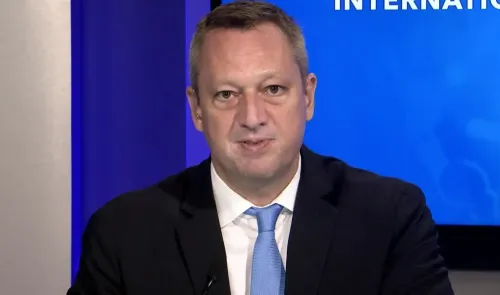
The IMFC issued its warning on 18 October 2025 after its 54th meeting in Bangkok , chaired by Saudi Finance Minister Mohammed Aljadaan .
The committee cautioned that wars, trade tensions, energy disruptions and rising sovereign debt pose escalating risks despite resilient global growth.
Rising sovereign bond yields and high public debt were identified as additional threats to financial stability, especially for heavily indebted nations.
The IMFC flagged AI technologies as a potential amplifier of existing economic vulnerabilities — one of its most explicit AI warnings to date.
The Bangkok Blueprint on digital finance safeguards and cybersecurity was formally welcomed by the committee.
The committee renewed commitment to improving sovereign debt restructuring for low-income and vulnerable middle-income countries.
The International Monetary Fund's (IMF) policy-setting body has cautioned that the global economy confronts escalating risks from ongoing conflicts, trade disruptions, energy insecurity and rising sovereign debt — even as growth has demonstrated more resilience than anticipated. The warning was issued on Saturday, 18 October 2025, following the 54th meeting of the International Monetary and Financial Committee (IMFC), held in Bangkok.
Key Warning from the IMFC
The committee, meeting under the chairmanship of Saudi Finance Minister Mohammed Aljadaan, stated that economic stability cannot be presumed even amid relatively steady global output. 'The global economy has weathered the latest in a series of shocks better than expected, but continued resilience should not be taken for granted,' the committee said in its official statement.
The IMFC stressed that governments worldwide are now confronting overlapping geopolitical and financial pressures that have eroded their capacity to absorb further disruptions. Notably, this is the second consecutive IMFC meeting at which geopolitical fragmentation has featured prominently on the agenda.
Conflicts, Trade Tensions and Energy Risks
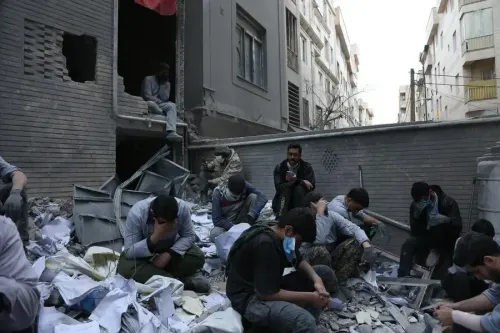
The committee identified active wars and conflicts as imposing substantial humanitarian and economic costs, with poorer and lower-income nations bearing a disproportionate burden. It warned that escalating geopolitical tensions could further disrupt international trade routes, push up commodity prices and deepen existing energy and food insecurity.
The assessment arrives amid persistent uncertainty surrounding global energy supplies and shifting international trade policies. The IMFC also cautioned that disruptions to supply chains could prove self-reinforcing if left unaddressed by coordinated multilateral action.
Debt, Bond Yields and Financial Stability
On the financial front, the committee flagged rising sovereign bond yields, high levels of public debt and refinancing pressures as compounding threats to stability. These conditions, it warned, could create acute difficulties for countries with heavy borrowing needs or constrained access to international capital markets.
The IMFC called on governments to address fiscal weaknesses while continuing to protect vulnerable populations and maintain investments critical to long-term economic growth. Central bank independence was identified as essential for preserving policy credibility and anchoring inflation expectations.
AI Technologies and New Vulnerabilities
In a notable broadening of its traditional mandate, the committee acknowledged the growing influence of advanced artificial intelligence (AI) technologies on the global economy. While it recognised that rapid technological progress was stimulating investment, trade and productivity gains, the IMFC warned that uncertainty around the economic and financial consequences of these technologies could amplify pre-existing vulnerabilities.
This marks one of the IMFC's more explicit engagements with AI's macroeconomic implications in a formal communiqué.
Bangkok Blueprint and Debt Restructuring
The committee welcomed the Bangkok Blueprint, a new initiative designed to strengthen digital finance safeguards, enhance cybersecurity resilience and bolster international efforts against digital fraud. It also renewed its commitment to improving sovereign debt restructuring processes, particularly for low-income and vulnerable middle-income economies.
The IMFC called for greater transparency from both borrowers and creditors and pushed for more predictable debt restructuring arrangements — a priority that reflects the rising debt distress across parts of Africa, South Asia and Latin America. Greater cooperation to address excessive global imbalances, trade distortions and the imperative of freedom of navigation for global commerce were also underscored. With multiple risk vectors converging, the committee's next meeting will be closely watched for any revision to the IMF's growth projections.
Point of View
Trade tensions, energy insecurity, high debt and AI uncertainty in a single communiqué signals that the Fund sees these as an interconnected cluster, not isolated headwinds. What is conspicuously absent is a frank reckoning with the role that the geopolitical choices of major powers — including IMFC member governments — have played in creating these disruptions. The welcome given to the Bangkok Blueprint is encouraging, but digital finance safeguards are a footnote against the scale of fiscal and geopolitical challenges the statement describes. For emerging economies like India, the convergence of higher bond yields, commodity price risk and AI-driven productivity divergence could widen the gap between advanced and developing economies faster than the Fund's own projections assume.
NationPress
18 Oct 2026
Frequently Asked Questions
What did the IMF's IMFC warn about at its Bangkok meeting?
The IMFC warned that the global economy faces mounting risks from wars, trade tensions, energy disruptions and rising sovereign debt, even as growth has proved more resilient than expected. The committee cautioned that this resilience cannot be taken for granted given the overlapping geopolitical and financial challenges governments now face.
Where and when was the 54th IMFC meeting held?
The 54th meeting of the International Monetary and Financial Committee was held in Bangkok and its statement was issued on 18 October 2025. The meeting was chaired by Saudi Finance Minister Mohammed Aljadaan.
Why did the IMFC raise concerns about artificial intelligence?
The IMFC acknowledged that AI technologies are driving investment and productivity gains, but warned that uncertainty over their economic and financial effects could amplify existing vulnerabilities in the global financial system. This represents one of the committee's most explicit engagements with AI risk in a formal statement.
What is the Bangkok Blueprint mentioned in the IMFC statement?
The Bangkok Blueprint is a new international initiative welcomed by the IMFC to strengthen digital finance safeguards, improve cybersecurity resilience and enhance global cooperation against digital fraud. It reflects growing recognition among policymakers that digital financial risks require coordinated multilateral responses.
How does the IMFC statement affect developing and low-income countries?
The committee specifically noted that wars and conflicts impose disproportionate costs on poorer nations, and renewed its commitment to improving sovereign debt restructuring for low-income and vulnerable middle-income economies. It called for greater transparency from borrowers and creditors and more predictable debt restructuring mechanisms to ease debt distress in these countries.