IMF's Georgieva flags AI boom, energy shock and record debt as global tripwires

Synopsis
The IMF's top official has delivered one of the starkest pre-meeting warnings in years: the world economy is simultaneously being turbocharged by AI and throttled by an energy crisis, all while sitting on a debt pile not seen since World War II. With oil near $100 and Brent futures pointing to pain through 2027, Georgieva's message to finance ministers gathering in Thailand is blunt — delay on policy is no longer an option.
Key Takeaways
IMF Managing Director Kristalina Georgieva delivered a global economic warning on 7 October 2026 in Singapore , ahead of the IMF-World Bank Annual Meetings in Thailand.
AI hardware and related products already account for more than one-tenth of global goods trade , with investment expected to rival historical outlays on railways and electricity grids.
Oil prices remain near $100 a barrel , with structural refining shortages pushing diesel to record highs; Brent futures signal elevated prices through 2027 .
Global public debt is on course to exceed 100% of GDP — its highest level since the aftermath of World War II .
Georgieva called for a 'prudently hawkish bias' in monetary policy, warning that AI, energy, tariffs and defence spending all carry inflationary risk.
The IMF's World Economic Outlook , due next week, will show the largest growth losses this year in conflict-affected economies including Ukraine and the Gulf .
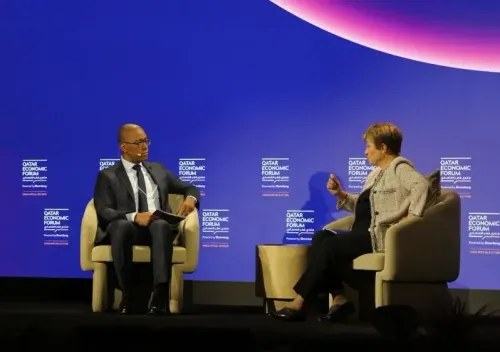
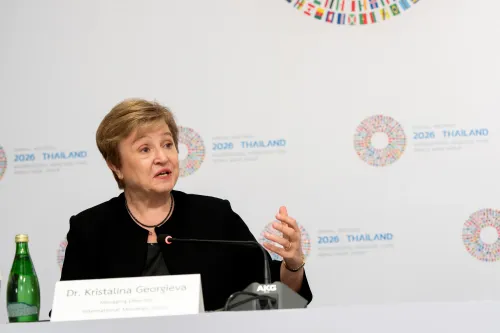
IMF Managing Director Kristalina Georgieva on Wednesday, 7 October 2026, warned that the global economy is caught between a powerful artificial intelligence investment surge and a worsening energy supply shock, even as governments worldwide stagger under near-record public debt loads. Speaking at a curtain-raiser event in Singapore ahead of the IMF-World Bank Annual Meetings in Thailand next week, Georgieva called for immediate and decisive policy action to navigate the three compounding pressures.
AI: A Windfall for Some, a Widening Gap for Others
Georgieva described artificial intelligence as rapidly becoming 'a key driver of countries' relative fortunes in the world economy,' regardless of whether nations embrace or fear the technology. According to IMF estimates, AI hardware and related technology products already account for more than one-tenth of global goods trade — a figure that underscores how quickly the sector has moved from speculative to structural.
She noted that global investment in AI relative to GDP is likely to reach and eventually exceed the scale of historical investments in railways, electricity grids, and telecommunications networks. The United States, China, and India are currently net importers of AI hardware but are actively building infrastructure to position themselves as major AI providers. Five of the other seven economies in the global top 10 by AI exposure are in Asia.
However, Georgieva warned that the AI boom is largely bypassing large parts of the developing world, raising the risk of a new layer of global economic inequality layered on top of existing structural divides.
Energy: The Negative Shock Compounding the Crisis
On the energy front, the picture is considerably grimmer. Oil prices remain around $100 a barrel despite a tentative recovery in flows from the Gulf, while a structural shortage in global refining capacity has pushed diesel and other refined-product prices to record levels, according to Georgieva.
Natural gas supplies from the Gulf remain severely impaired as threats to shipping through the Strait of Hormuz constrain LNG transportation, with Asia and Europe particularly affected. Invoking a reference to the television series Game of Thrones, Georgieva warned that 'winter is coming' — energy price pressures could intensify as Northern Hemisphere demand picks up and countries scramble to replenish depleted reserves.
Critically, she cautioned that even an early resolution of the Gulf conflict would not quickly ease the crunch. Brent futures data indicate elevated oil prices could persist through 2027, leaving energy-importing economies with limited near-term relief.
Record Debt and the Fiscal Reckoning
The third major threat Georgieva identified is the state of government finances globally. Public debt is approaching its highest level since the aftermath of World War II and is on course to exceed 100 per cent of GDP, with advanced economies carrying some of the heaviest burdens. Rising interest rates are amplifying the cost of servicing those debts.
Georgieva pushed back against any assumption that future productivity gains — including those potentially unlocked by AI — would automatically resolve fiscal imbalances without hard political choices. 'We cannot keep delaying necessary policy action — you have the tools, now have the wisdom to use them,' she said.
Monetary Policy and the Inflation Overhang
On monetary policy, Georgieva argued that the confluence of AI investment, energy shocks, food price volatility, tariffs, elevated defence spending, and high public debt all carry inflationary potential. 'Now may be a good time for a prudently hawkish bias in many countries' monetary policy,' she said — a signal likely to be closely parsed by central bankers gathering in Thailand.
Despite the considerable headwinds, Georgieva struck a cautiously optimistic note on AI's longer-term potential, saying the technology could provide a substantial lift to global growth if managed properly. The IMF's full World Economic Outlook, due for release at the Annual Meetings next week, is expected to detail the growth impact on economies affected by conflict, including Ukraine and parts of the Gulf region, which have suffered the largest blows to output this year.
Point of View
Energy shock, debt overhang — is more politically pointed than the IMF's usual cautious language, and deliberately so. The warning that AI is widening inequality between nations, not just within them, should unsettle policymakers in the developing world who have been banking on technology as a leapfrog mechanism. Meanwhile, the energy diagnosis is uncomfortable for central banks: oil near $100 with Brent futures pointing to 2027 means any pivot to rate cuts risks being premature. The debt warning is the most underappreciated element — at over 100% of GDP and rising, the fiscal space to respond to the next shock is structurally thinner than at any point in modern peacetime. Georgieva is telling ministers, in unusually direct terms, that hoping AI productivity solves the debt problem is not a plan.
NationPress
7 Oct 2026
Frequently Asked Questions
What did IMF chief Kristalina Georgieva warn about the global economy?
Georgieva warned on 7 October 2026 that the global economy is simultaneously caught between a positive AI investment shock and a negative energy supply shock, compounded by public debt heading toward 100% of global GDP. She called for urgent policy action, urging policymakers not to delay difficult fiscal and monetary decisions.
Why are energy prices so high, and how long could they stay elevated?
Oil prices remain near $100 a barrel due to a structural shortage in global refining capacity and severely impaired natural gas supplies from the Gulf, with shipping through the Strait of Hormuz under threat. Georgieva noted that Brent futures data indicate high prices could persist through 2027, even if the Gulf conflict ends early.
How does the AI investment boom affect countries differently?
The AI boom is concentrated in a handful of major economies — the US, China, India, and several other Asian nations — which are building infrastructure to become key AI providers. Many other countries, particularly developing economies, are largely being bypassed by the boom, raising the risk of widening global economic inequality, according to Georgieva.
What is the IMF's position on monetary policy amid these risks?
Georgieva said 'now may be a good time for a prudently hawkish bias in many countries' monetary policy,' citing inflationary risks from AI investment, energy shocks, food price volatility, tariffs, and elevated defence spending. The statement is widely seen as a signal against premature interest rate cuts.
When and where is the IMF-World Bank Annual Meetings 2026, and what will be discussed?
The IMF-World Bank Annual Meetings are scheduled to be held in Thailand the week after 7 October 2026, bringing together finance ministers and central bank governors from 191 member countries. The IMF's World Economic Outlook, to be released at the meetings, will detail growth impacts on conflict-affected economies including Ukraine and the Gulf.