IMF Reports Global Growth to Decrease to 3.1% Amid War Impact
Synopsis
The IMF warns of a slowing global economy, predicting growth to fall to 3.1% in 2026 due to ongoing conflicts causing disruptions in energy supplies and trade. Kristalina Georgieva emphasizes the need for cautious policies to mitigate inflation and support vulnerable regions.
Key Takeaways
The IMF forecasts a decline in global growth to 3.1% by 2026.
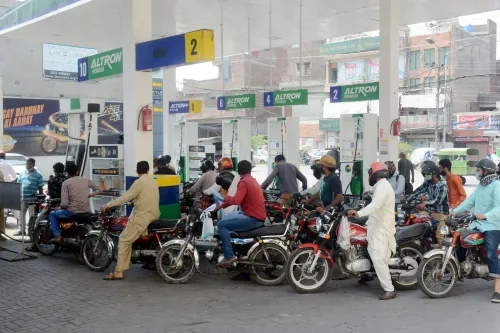
Ongoing conflicts are significantly impacting energy supplies and trade routes.
Inflation projections have been revised upwards due to rising price pressures.
Central banks are advised to act cautiously in response to these economic challenges.
Demand for IMF financial assistance is expected to increase, particularly from vulnerable regions.
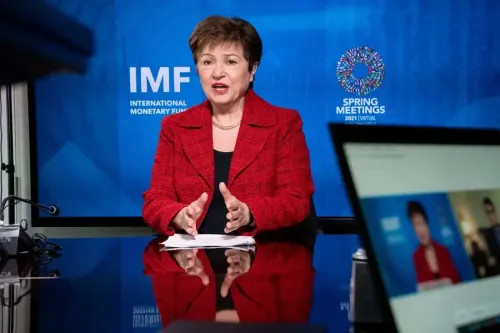
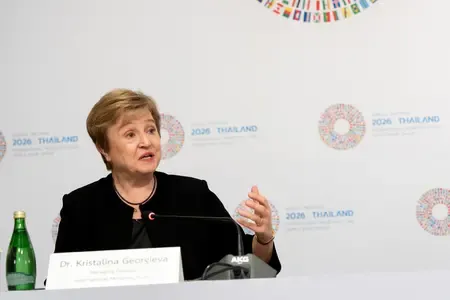
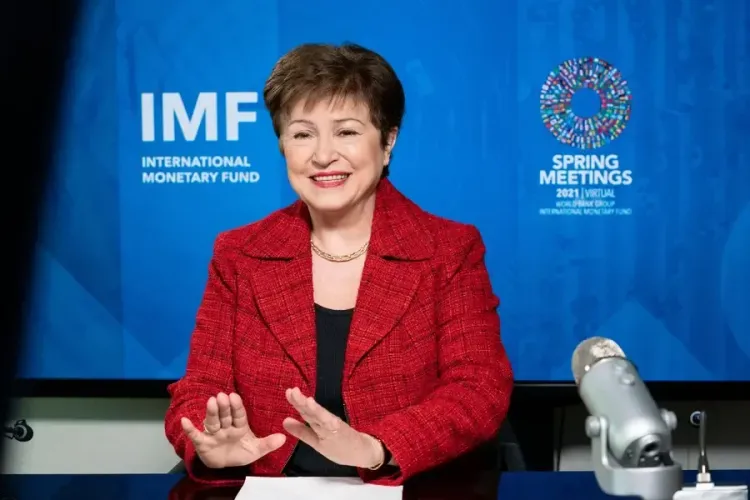
Washington, April 16 (NationPress) The world economy is projected to decelerate in 2026 due to disruptions in energy supplies and trade routes caused by ongoing conflicts, which are leading to rising prices and reduced growth, warned Kristalina Georgieva, Managing Director of the International Monetary Fund (IMF). She cautioned that the situation could worsen if the unrest continues.
“Even in the event of a brief conflict, significant damage to infrastructure and disruptions in supply chains are driving prices higher and causing global growth to decrease from 3.4% last year to 3.1% in 2026,” Georgieva stated during the IMF’s Spring Meetings press briefing on Wednesday (local time).
She emphasized that a prolonged conflict along with persistently high oil prices could lead to a much grimmer outlook. “In the worst-case scenario, growth could plummet to 2%, and the shock will be felt globally,” she remarked, noting that “all nations are impacted by elevated energy prices,” although the burden is “unequally distributed,” hitting energy-importing and low-income countries the hardest.
The IMF highlighted increasing risks stemming from supply chain interruptions, particularly in Asia. Georgieva noted that shortages are already occurring “not just in oil and gas, but also in helium and other critical supplies,” warning that the situation may deteriorate in the weeks ahead.
“This is not going to disappear instantly, even if the conflict were to end tomorrow,” she added, pointing out logistical challenges. “A tanker is a slow-moving vessel… it will take 40 days” to reach distant markets, prolonging the economic shock.
Inflationary pressures are also on the rise. The IMF has updated its inflation projections for 2026, reversing earlier expectations for a reduction in price pressures. Georgieva indicated that short-term inflation expectations have surged in the United States and Europe, though “long-term inflation expectations remain stable.”
She warned that disruptions in supply chains could lead to increased food prices if fertilizer supply chains continue to face challenges. “We might see upward pressure on food prices,” she explained, referencing a steep rise in urea prices in Africa, which have surged from $400 to $800.
On the policy front, the IMF urged caution. “Look before you leap,” Georgieva advised central banks with a strong track record, suggesting they “wait and see” instead of making aggressive moves, while those with less credibility may need to act sooner.
Fiscal policy remains limited. “Global public debt is projected to exceed 100% of GDP by 2029,” she warned, stressing that governments must balance support for vulnerable populations with the need to maintain fiscal integrity.
She cautioned against blanket interventions. “Such indiscriminate measures will only prolong the burden of high prices,” she noted, referring to broad subsidies and tax reductions.
The IMF anticipates an increase in demand for its financial assistance. Georgieva indicated that near-term support needs could range from $20 billion to $50 billion, with “expected requests for new programs from at least a dozen nations,” particularly many in sub-Saharan Africa.
She highlighted that vulnerable regions will bear the most severe impacts. “Most sub-Saharan African nations fall into this category of vulnerability,” she noted, stating that the Fund would “act swiftly to respond to requests.”
Despite the immediate challenges, Georgieva emphasized that countries should not lose sight of necessary structural reforms. “A robust economy serves as the best buffer,” she said, encouraging policymakers to enhance productivity and restore fiscal space.
The IMF chief also acknowledged the resilience of emerging markets. “Take India, for example. Its growth rate is over twice that of the global average,” she remarked, attributing this to strong economic fundamentals.
Point of View
It is crucial for policymakers to implement strategic measures to mitigate rising inflation and support vulnerable populations. The IMF's warnings highlight the interconnectedness of global markets and the need for structural reforms to bolster economic resilience.
NationPress
18 Sept 2026
Frequently Asked Questions
What is the projected global growth rate for 2026 according to the IMF?
The IMF projects global growth to decrease to 3.1% in 2026.
What factors are contributing to the slowdown in global growth?
Ongoing conflicts are disrupting energy supplies and trade routes, leading to rising prices and reduced growth.
How might inflation be affected by these disruptions?
The IMF has revised its inflation projections upwards, indicating increased short-term inflation expectations in major economies.
What advice did the IMF give to central banks in response to these economic conditions?
The IMF advised central banks to exercise caution, suggesting that those with strong credibility should wait before making aggressive moves.
What is the expected demand for IMF financial assistance?
The IMF anticipates a rise in demand for financial assistance, with near-term support needs estimated between $20 billion and $50 billion.