Is a Tsunami Impacting the Labour Market with AI? Investment in Skills is Essential, Says IMF Chief
Synopsis
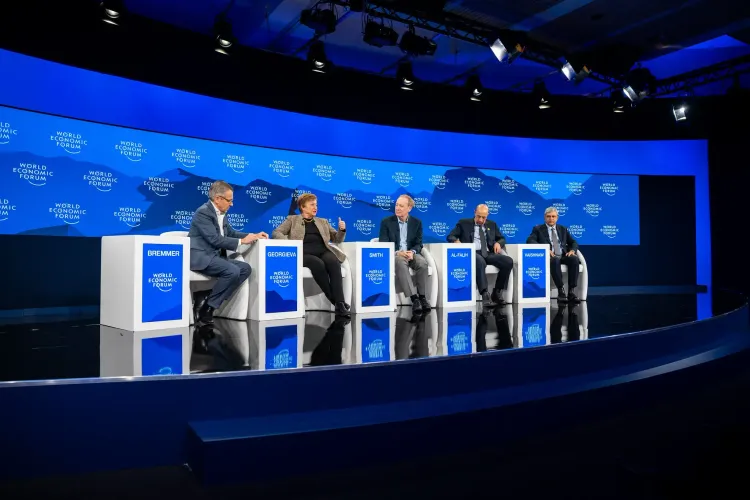
In a crucial discussion at the World Economic Forum, IMF chief Kristalina Georgieva highlighted the significant impact of AI on the labour market, urging a focus on skill investment. With AI reshaping job roles globally, the disparities in opportunity raise pressing questions about community readiness for this technological shift.
Key Takeaways
AI is significantly altering the labour market.
Investment in skills is essential for community preparedness.
Disparities in opportunity exist across different regions.
AI can enhance productivity in various sectors.
Global collaboration is necessary for equitable AI access.
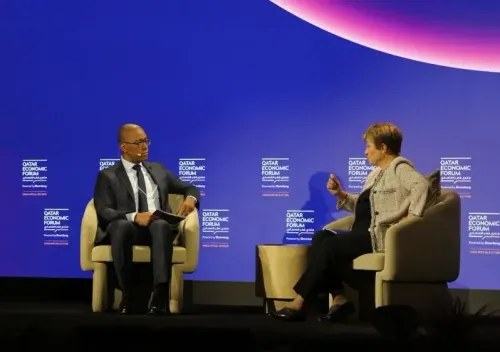
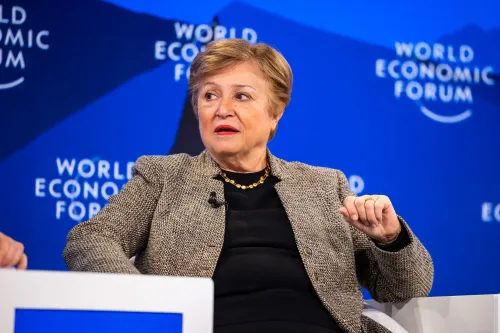
Davos, Jan 21 (NationPress) A massive wave is sweeping through the labour market, with roles being augmented and replaced by artificial intelligence (AI), stated Kristalina Georgieva, the Managing Director of the International Monetary Fund (IMF).
While addressing a session at the World Economic Forum (WEF) annual gathering in Davos, she noted that the global economy is currently witnessing the impact of AI, but expressed concern over the disparity in opportunities across different regions.
"AI is rapidly transforming economies. Some positions expand, while others vanish. It is essential to invest in skills and equip communities for this shift," she emphasized.
AI is enhancing productivity in sectors like translation and research analysis, serving to support rather than replace jobs. However, she voiced concern for communities lacking access to AI technologies.
The IMF estimates that, on average, 40% of jobs are influenced by AI—either enhanced, eliminated, or substantially altered without necessarily leading to better compensation. In advanced economies, this figure rises to 60%, whereas in low-income nations, it is between 20% and 26%, she reported.
"We foresee a notable range of effects on global growth, estimated between 0.1% and 0.8%. A 0.8% boost in productivity could elevate growth beyond pre-pandemic levels," Georgieva remarked to the audience.
During the session, Ashwini Vaishnaw, the Minister of Electronics and Information Technology, shared that merely creating a large AI model does not bestow national power.
There is a need to comprehend the economics surrounding what he refers to as the 5th Industrial Revolution.
"The economics of this revolution will hinge on ROI. ROI will emerge from deploying the most cost-effective solutions to achieve the highest possible returns," Vaishnaw stated.
The race for AI dominance is intensifying, according to Khalid Al-Falih, the Minister of Investment in Saudi Arabia.
"Everyone is eager to construct the necessary infrastructure, but the core of AI's potential lies in its accessibility. The diffusion of AI must not only occur within competing economies but should also be pursued on a global scale," he added.
Technology and AI serve as vital enablers for Saudi Arabia, according to Al-Falih.
Point of View
I recognize the profound implications of AI on global employment dynamics. The insights shared by IMF chief Kristalina Georgieva at the WEF underscore the urgency for nations to invest in skill development, ensuring equitable access to opportunities amidst rapid technological advancements. The conversation around AI is not just about innovation; it’s a matter of preparing our workforce for the future—an essential step that cannot be overlooked.
NationPress
26 Sept 2026
Frequently Asked Questions
What impact does AI have on jobs?
AI is reshaping labor markets by enhancing some roles and eliminating others, with the IMF estimating that up to 60% of jobs in advanced economies could be affected.
Why is investing in skills important?
Investing in skills is crucial to prepare communities for the changes brought by AI, ensuring that individuals can adapt to new job requirements and opportunities.