IMF chief warns of stubborn inflation, AI investment risks amid global resilience
Synopsis
IMF Managing Director Kristalina Georgieva has delivered a multi-front warning at the Qatar Economic Forum in New York — stubborn inflation forcing central banks to keep tightening, debt service costs rising as a result, and a potential AI-financing bubble concentrated in the US that could shock the system if tech expectations disappoint. The IMF's October outlook will formally price in these elevated risks.
Key Takeaways
IMF Managing Director Kristalina Georgieva warned on 21 September of persistent inflation, high debt service costs, and AI investment risks at the Qatar Economic Forum in New York City .
Georgieva said inflation is 'stubborn' with 'no quick resolution,' requiring continued central bank tightening globally.
She flagged leverage and circular financing in AI investment as a potential systemic shock if high expectations fail to materialise.
AI financing risk is 'primarily concentrated in the United States ,' though supply-chain exposure spans Asia and Europe .
Global growth near 3 per cent was described as a 'massive achievement' given recent shocks.
The IMF 's updated global economic projections are due in October 2026 and will reflect continued elevated risks.
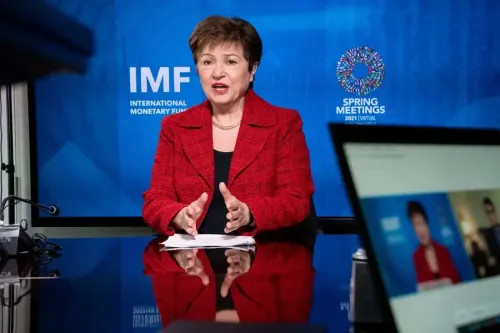
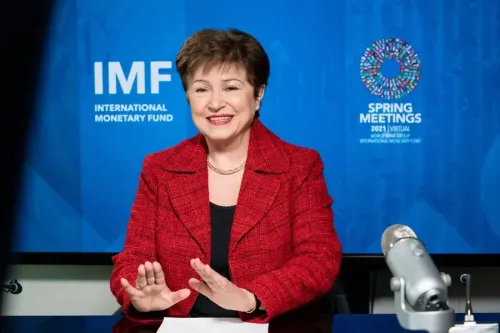
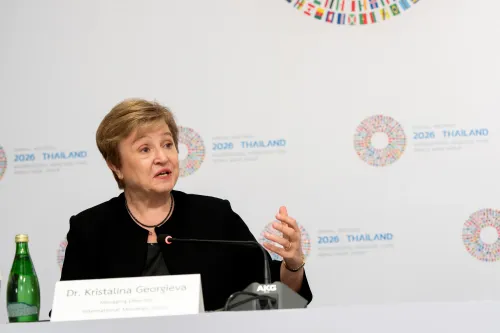
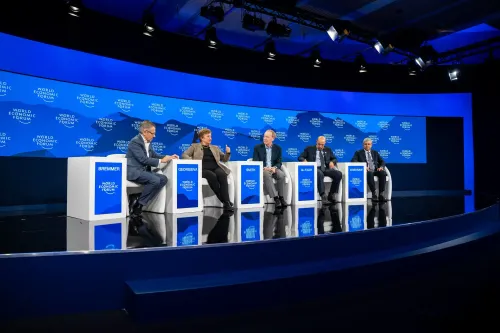
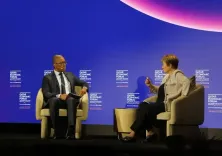
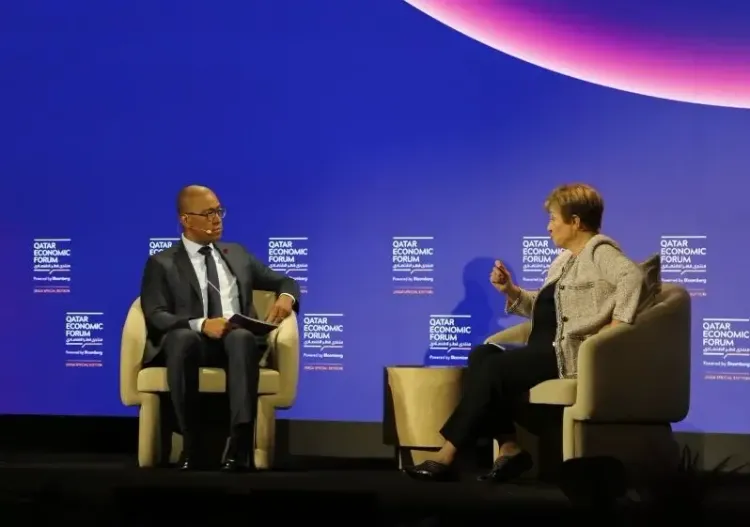
International Monetary Fund (IMF) Managing Director Kristalina Georgieva on Sunday, 21 September warned that the world economy continues to face multiple serious risks — including persistent inflation, rising debt service costs, and potential instability from artificial intelligence (AI) financing — even as global growth has proved more resilient than many economists had feared. Georgieva made her remarks during a dialogue at a special edition of the Qatar Economic Forum in New York City.
Inflation and Debt: The Twin Pressure Points
'Inflation is stubborn. We are not anticipating a quick resolution. And that means that many central banks have to tighten,' Georgieva said at the forum. Her warning signals that monetary policy relief may still be some distance away for households and governments worldwide.
Georgieva noted that the prolonged fight against inflation has simultaneously increased the cost and difficulty of sovereign and corporate debt service. She acknowledged there is broad understanding of the need for fiscal consolidation but stressed that 'not enough action' has followed. This gap between rhetoric and reform remains a key vulnerability in the global financial architecture.
AI Investment: A Systemic Risk in the Making
Beyond inflation, Georgieva flagged a less-discussed but growing concern — leverage and circular financing patterns within the booming AI investment cycle. She described this as 'something that we have to be mindful of.' The IMF chief warned that if AI fails to meet the exceptionally high expectations currently priced into markets, 'disappointment may lead to potentially a shock to the system.'
Georgieva pointed out that the risk from AI financing is 'primarily concentrated in the United States,' though she acknowledged that many players across Asia and Europe are embedded in AI supply chains, meaning any disruption would carry cross-border consequences.
Growth Hovering Near 3%: A 'Massive Achievement'
Despite the risks, Georgieva offered a measured note of optimism. She characterised global growth hovering around 3 per cent as 'a massive achievement, given all the shocks we have been experiencing.' She also expressed encouragement at the 'remarkable, fast action' taken to counter energy supply shocks in recent years.
The IMF's updated global economic projections, due to be released in October, will reflect the continued elevated risk environment, according to Georgieva. Markets and policymakers will closely watch those forecasts for any revision to growth or inflation outlooks.
Interdependence Despite Fragmentation
Georgieva pushed back against narratives of a fully fragmented global order. 'While there is a lot of talk about a fragmented world. And indeed, it is less unified. It is still a world in which we are interdependent and we cooperate,' she said. The comment is significant as geopolitical tensions and trade decoupling concerns have intensified debates about de-globalisation.
She closed with a note of caution that has become something of an IMF refrain: 'We have to be careful and cautious. The risks are high and uncertainty is the new normal.' The IMF's October outlook update will be closely watched for how the Fund formally quantifies those risks.
Point of View
But the IMF is now formally flagging leverage and circular financing in AI as a systemic watch item. This comes as US tech valuations have been driven partly by expectation-priced AI returns rather than realised revenues, a dynamic that rhymes uncomfortably with past asset bubbles. The 'fragmentation but still interdependent' framing is also worth scrutinising: it papers over the fact that supply-chain interdependence in AI actually means contagion risk is global even if the financing concentration is American. The October projections will tell us whether the Fund is willing to put numbers to what Georgieva described in words.
NationPress
21 Sept 2026
Frequently Asked Questions
What did IMF chief Kristalina Georgieva say about the world economy?
Georgieva warned on 21 September that the world economy faces multiple risks including stubborn inflation, rising debt service costs, and potential instability from AI investment financing, even as global growth has been more resilient than many feared. She made the remarks at the Qatar Economic Forum in New York City.
Why is the IMF concerned about AI investment?
Georgieva highlighted risks from leverage and circular financing patterns in the AI investment boom, warning that if AI fails to meet high market expectations, 'disappointment may lead to potentially a shock to the system.' She said this risk is primarily concentrated in the United States, though Asia and Europe are exposed via AI supply chains.
What is the IMF's current view on global growth?
Georgieva described global growth hovering around 3 per cent as a 'massive achievement' given the scale of recent shocks. However, she cautioned that risks remain high and that 'uncertainty is the new normal.' The IMF's updated global projections are due in October 2026.
When will the IMF release its next world economic outlook?
The IMF's new global economic projections are scheduled for release in October 2026. According to Georgieva, the update will reflect the fact that risks to the world economy remain elevated.
What did Georgieva say about global fragmentation and cooperation?
Georgieva acknowledged the world is 'less unified' but argued it remains one in which countries are interdependent and still cooperate. She cautioned against overstating fragmentation while also stressing that caution and careful navigation remain essential given high global uncertainty.