Global Economic Imbalances Surge Due to Gulf Conflict
Synopsis
As the Persian Gulf conflict escalates, major economies are facing a renewed wave of global imbalances. IMF officials highlight the risks of persistent deficits and structural changes that could lead to financial instability. Find out how this situation impacts the global economic landscape.
Key Takeaways
Global imbalances are widening amid escalating Gulf tensions.
IMF warns of structural increases in economic disparities.
High energy prices impact oil-importing countries.
Policymakers need to adopt comprehensive strategies for stability.
Historical context reveals that imbalances can lead to major economic crises.
Washington, April 16 (NationPress) With the ongoing Persian Gulf conflict triggering a new energy crisis, major economies are facing increasing vulnerabilities, and global imbalances are once again widening, as warned by top officials from the IMF and various policymakers.
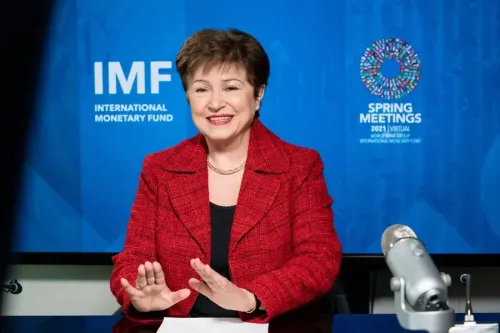
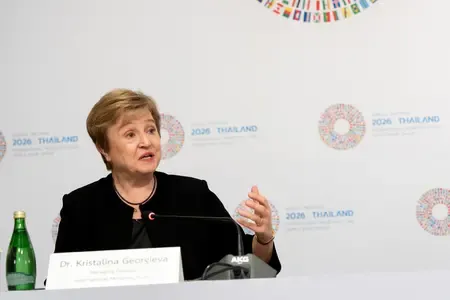
During a high-level panel discussion on Wednesday (local time), IMF Managing Director Kristalina Georgieva remarked that “imbalances have been fluctuating in waves” and they are currently “on the rise again.” This situation sees major surplus nations like China, Germany, and Japan in contrast to a “large persistent deficit” in the United States.
Georgieva emphasized that this current phase may indicate a “structural increase” rather than temporary cycles, which could make the risks more long-lasting. “It is crucial to consider how we can work towards reducing them in a systematic way,” she stated.
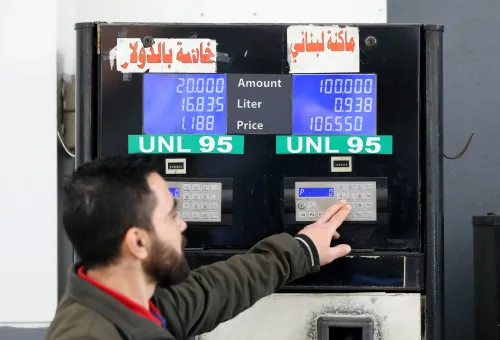
The recent shock—an abrupt spike in global energy prices due to the Gulf conflict—is reshaping the economic landscape. Georgieva described this shock as “very large” and “highly asymmetric,” severely impacting oil-importing nations, especially those with constrained fiscal resources.
Rising oil prices could enhance revenues for some exporters while aggravating deficits in other regions. “If we are heading towards a scenario where deficits may continue to rise… the cost of servicing that debt will increase,” she noted, highlighting the associated risk of escalating interest rates.
Bank of England Governor Andrew Bailey remarked that the current imbalances differ significantly from those observed during the global financial crisis, where substantial cross-border capital flows exacerbated risks. Although such “gross flows” are not as pronounced now, he pointed out emerging vulnerabilities, such as increasing public debt and structural changes in government debt markets.
“We have witnessed a significant rise in public debt across many nations,” Bailey said, cautioning that sovereign debt market volatility has intensified in recent weeks.
He also warned of the potential for sudden reversals in private credit flows that could lead to “quite a severe, possibly sharp adjustment.”
Economists participating in the panel highlighted that imbalances are not uniform. Adam Posen from the Peterson Institute stated that the issue is “fundamentally tied to the irresponsible policies of the Chinese and US governments,” rather than being a widespread global issue.
Hélène Rey from the London Business School pointed out the “unbalanced growth models,” especially in China, where excessive investment and restrained consumption continue to produce external surpluses. She suggested that structural reforms, such as enhancing health coverage to lower precautionary savings, could aid in rebalancing the economy.
Kristin Forbes of MIT emphasized the need for policymakers to look beyond annual trade figures to the growing stock of global imbalances. “They’ve nearly doubled in the last 15 years,” she remarked, cautioning that rising external positions increase exposure to fluctuations in exchange rates and interest rates.
The panel also expressed skepticism about simplistic policy solutions. Tariffs alone cannot rectify trade deficits without impacting savings, investment, and capital flows, participants noted, while adjustments in exchange rates must be complemented by broader macroeconomic policies to be effective.
Georgieva reiterated that the IMF’s role is primarily focused on surveillance and policy guidance. “We are still seen as the reference point regarding the state of the global economy,” she mentioned, adding that the Fund aims to make its evaluations more actionable.
This discussion arrives as global policymakers contend with escalating geopolitical tensions and fragmented economic collaboration. The IMF has cautioned that prolonged imbalances, if unaddressed, could lead to chaotic adjustments and financial instability.
Historically, global imbalances—often reflected through current account deficits and surpluses—have preceded significant economic upheavals, including the Latin American debt crisis of the 1980s and the 2008 global financial crisis.
Point of View
Leading to significant concerns among policymakers. As imbalances widen, it's crucial for nations to adopt comprehensive strategies to mitigate risks and ensure financial stability.
NationPress
14 Sept 2026
Frequently Asked Questions
What are global economic imbalances?
Global economic imbalances refer to the disparities in economic performance between countries, often reflected in trade deficits and surpluses. They can lead to financial instability if not addressed.
How does the Gulf conflict affect global energy prices?
The Gulf conflict has led to a sharp increase in energy prices, impacting oil-importing countries the hardest and reshaping the global economic landscape.
What role does the IMF play in addressing imbalances?
The IMF provides surveillance and policy guidance to help countries manage economic imbalances and ensure financial stability.
Who are the main players contributing to these imbalances?
Key players include major surplus economies like China, Germany, and Japan, contrasted with the persistent deficits seen in the United States.
What risks do rising oil prices pose?
Rising oil prices can boost revenues for some exporters but may worsen deficits elsewhere, increasing the cost of debt servicing and raising interest rates.