Global Economic Growth and Inflation Under Threat from Middle East Conflict: IMF Insights
Synopsis
The IMF warns of a significant slowdown in global economic growth and rising inflation risks due to the Middle East conflict disrupting energy supplies, raising concerns for policymakers and markets alike.
Key Takeaways
The IMF warns of a sharp slowdown in global growth due to the Middle East conflict.
Inflation is projected to rise to 4.4 percent as energy supplies are disrupted.
Three potential scenarios for growth have been outlined, with risks remaining high.
Central banks are advised to monitor the situation closely without immediate reactions.
Low-income nations will likely face the most severe impacts.
Washington, April 15 (NationPress) The global economy is witnessing a significant deceleration alongside increasing inflation threats as the ongoing conflict in the Middle East disrupts energy supplies, the International Monetary Fund (IMF) cautioned on Tuesday, indicating greater uncertainty for policymakers and markets.
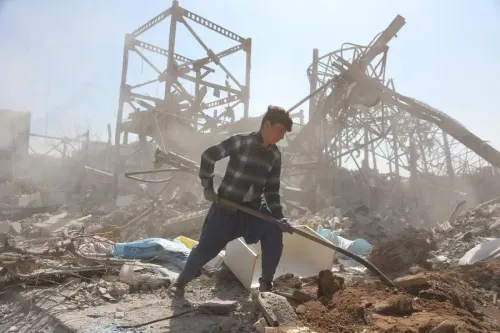
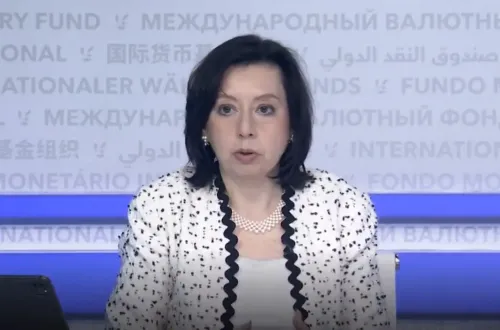
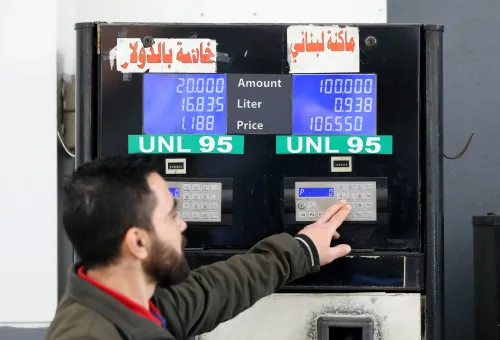
In the latest World Economic Outlook report, IMF Chief Economist Pierre-Olivier Gourinchas stated that the conflict has effectively “stopped” the previous growth momentum and escalated the danger of a substantial energy shock, with oil and gas prices soaring due to interruptions related to the closure of the Strait of Hormuz.
“The Middle East war has put a halt to this growth,” he remarked, adding that “the closing of the Strait of Hormuz and significant damage to essential energy facilities… heightens the likelihood of a major energy crisis.”
The IMF now anticipates global growth to decrease to 3.1 percent by 2026, a revision from its earlier projection in January, while headline inflation is predicted to climb to 4.4 percent.
The report presents three potential scenarios. Under an adverse scenario, growth could dip to 2.5 percent with inflation rising to 5.4 percent. In a severe scenario, extended energy disruptions could reduce global growth to 2 percent and inflate prices above 6 percent.
Gourinchas emphasized that risks remain “extremely high,” warning that escalating commodity prices are functioning as a “textbook negative supply shock,” raising costs, disrupting supply chains, and diminishing purchasing power.
Moreover, financial conditions are tightening as investors flock to safer assets, boosting the US dollar and exerting pressure on emerging markets. “This appreciation is generating inflationary pressures in other nations… and it also tightens financial conditions,” he pointed out.
The IMF noted that the global outlook now relies heavily on the duration of the conflict. Gourinchas highlighted that the world is already moving away from the baseline scenario. “With each passing day… we edge closer to the adverse scenario,” he remarked.
Central banks should refrain from immediate overreactions but must remain alert. “They can afford to wait and observe for now,” he advised, stressing the necessity to act if inflation expectations become unanchored.
However, fiscal policy options have become considerably limited. Governments were urged to avoid broad subsidies or price controls. “Most nations no longer have that luxury,” Gourinchas stated, advocating for targeted and temporary assistance for vulnerable populations.
The IMF also cautioned that the current disruption is comparable in magnitude to the oil crisis of the 1970s regarding supply interruptions, although the global economy is now less reliant on oil and better equipped with policy instruments.
Low-income, energy-importing nations are predicted to bear the brunt, while Gulf economies will suffer direct repercussions from the conflict, he noted, adding that emerging markets, despite showing resilience in recent years, may find their fiscal boundaries tested due to escalating debt and borrowing expenses.
“With appropriate policies… the repercussions can be minimized,” Gourinchas remarked, calling for a swift resolution to the hostilities and the reopening of essential trade routes.
The IMF’s World Economic Outlook is published biannually, with updates slated for July and January as global conditions continue to evolve.
Point of View
The IMF's report highlights a critical juncture for the global economy. The challenges posed by rising inflation and decelerating growth require careful navigation by policymakers. A balanced approach is essential to mitigate risks while supporting vulnerable populations.
NationPress
7 Oct 2026
Frequently Asked Questions
What is the IMF's latest growth forecast?
The IMF projects global growth to slow to 3.1 percent by 2026.
How is the Middle East conflict affecting inflation?
The conflict has led to disruptions in energy supplies, causing inflation to rise to an expected 4.4 percent.
What scenarios does the IMF outline for global growth?
The IMF presents three scenarios: a baseline of 3.1 percent growth, an adverse scenario of 2.5 percent, and a severe scenario of 2 percent.
What should central banks do in response?
Central banks should remain vigilant but can afford to wait and observe the situation before making immediate changes.
Who will be most affected by the current economic situation?
Low-income, energy-importing countries are expected to suffer the most from rising energy prices and inflation.