IMF Adjusts Global Growth Forecast Amid Middle East Conflict
Synopsis
The latest report from the IMF reveals a significant reduction in global growth predictions due to the ongoing conflict in the Middle East, despite earlier signs of economic stability. As energy prices rise and supply chains face disruptions, the future outlook remains uncertain.
Key Takeaways
Middle East conflict negatively impacts global growth forecasts.
IMF reduces 2026 growth projection from 3.4% to 3.1%.
Strong technology investment was previously supporting growth.
Risks include rising food prices and potential financial instability.
The situation remains fluid, dependent on the conflict's duration.
Washington, April 14 (NationPress) The ongoing conflict in the Middle East has negatively impacted the global economy, leading to a decrease in growth forecasts, according to the International Monetary Fund (IMF) on Tuesday. Despite strong underlying momentum fueled by investment in technology and resilience in the private sector, the IMF has revised its growth projections downward.
During a group interview with journalists from India, Japan, the UAE, the Netherlands, and Chile, IMF Chief Economist Pierre-Olivier Gourinchas remarked that the conflict has undermined previous expectations for a slight increase in global growth.
“We were initially anticipating an increase in our forecast for 2026 to 3.4 percent,” he stated, noting that current estimates are now closer to “3.1 percent,” largely due to the war's repercussions.
This downgrade occurs at a moment when the global economy was beginning to stabilize following previous shocks from tariffs and uncertainties in trade policy.
“There was significant momentum,” Gourinchas commented, highlighting a variety of factors that had bolstered growth, such as “very accommodating financial conditions” and “the AI tech boom.”
He emphasized that the adaptability of the private sector has been crucial. “The private sector was quite agile in redirecting supply,” he pointed out, which helped mitigate previous disruptions linked to trade tensions.
The IMF estimates that tariffs and trade policy uncertainties had previously weighed on global growth by “0.5 to 0.6 percentage points,” but their impact has started to diminish.
“The issues concerning trade and tariffs are increasingly becoming a thing of the past,” he added.
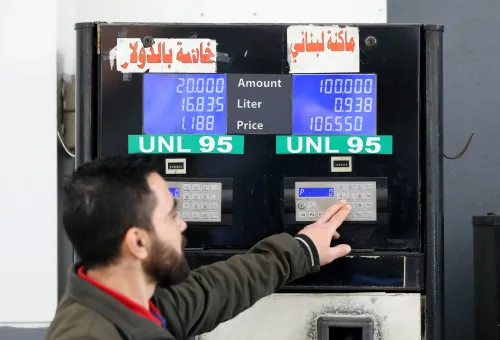
However, the escalation in the Middle East has surfaced as a new and considerable obstacle, primarily due to rising energy prices and supply chain disruptions.
Gourinchas indicated that the extent of the damage would be contingent upon the duration of the conflict and the severity of the effects on energy markets.
“In our reference forecast, we anticipate a relatively brief conflict and a normalization of oil and energy flows,” he remarked, adding that in such a case, “the effects would primarily be felt this year.”
Nonetheless, he cautioned that more severe scenarios could yield longer-lasting consequences. “If financial conditions tighten, it might cast a shadow beyond just one or two years,” he warned.
He also pointed out risks associated with rising food prices and potential financial instability, particularly in vulnerable economies. “This could lead to food insecurity, especially among the most vulnerable populations,” he noted.
The IMF highlighted that earlier gains in global growth were supported by a combination of easing tariff pressures, strong technology investments, and resilient domestic demand across major economies.
At the beginning of the year, there were hopes that growth would modestly strengthen as trade tensions eased and financial conditions remained supportive.
However, the conflict in the Middle East has interrupted this positive trajectory, introducing uncertainty into energy markets and escalating inflationary pressures worldwide.
Point of View
I provide an unbiased perspective on the IMF's latest report, which highlights the adverse effects of the Middle East conflict on global economic growth. The situation necessitates close monitoring, as its impacts may ripple through various sectors worldwide.
NationPress
18 Sept 2026
Frequently Asked Questions
How has the Middle East conflict impacted global growth?
The ongoing conflict has led to a reduction in global growth forecasts, primarily due to rising energy prices and supply disruptions.
What are the IMF's new growth projections?
The IMF has adjusted its growth forecast for 2026 from 3.4% to approximately 3.1%.
What factors contributed to earlier growth optimism?
Earlier optimism was driven by strong technology investments and resilient private sector performance.
What risks does the IMF highlight?
The IMF warns of rising food prices and financial instability, particularly affecting vulnerable economies.
How might the situation evolve?
The extent of economic damage will depend on the duration of the conflict and its effects on energy markets.