CM Bhajan Lal Sharma Greets Rajasthan on Navratri Day 4
Synopsis
Rajasthan Chief Minister Bhajan Lal Sharma marked Navratri Day 4 by invoking Maa Kushmanda with a Sanskrit shloka, wishing citizens happiness, health, and positive energy during the nine-night autumn festival.
Key Takeaways
CM Bhajan Lal Sharma posted a devotional Navratri greeting on October 14, 2026 .
The message marks the fourth day of Shardiya Navratri, dedicated to Maa Kushmanda .
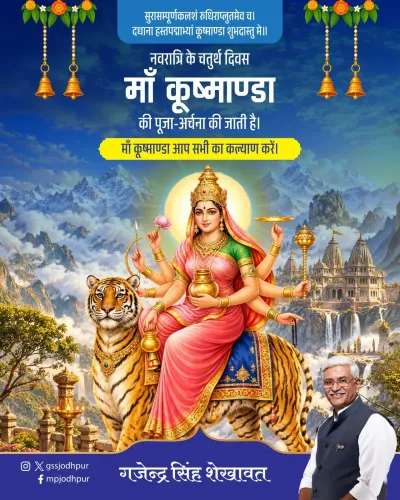
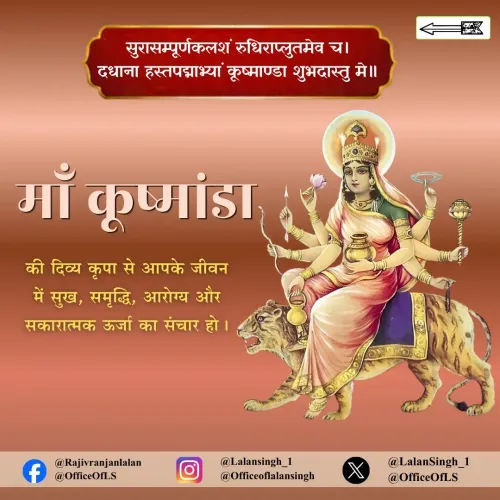
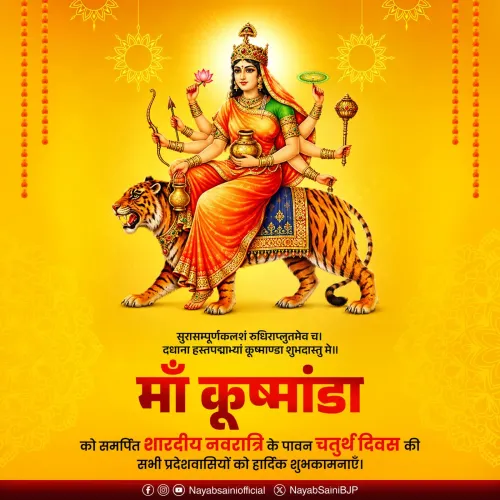
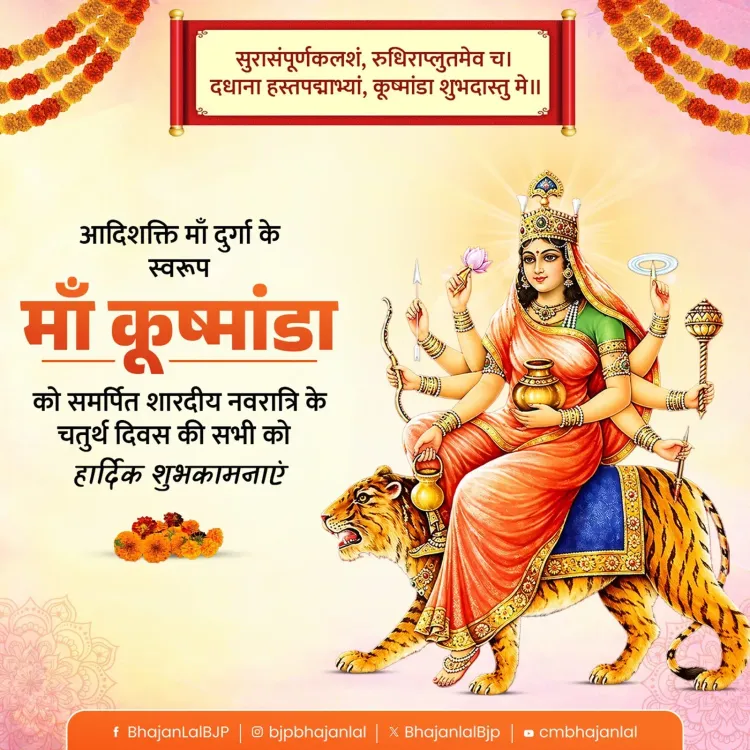
He opened with a Sanskrit shloka describing the goddess holding a nectar-filled pot.
Kushmanda is revered in Hindu tradition as the cosmic creator who fashioned the universe with her smile.
CM Sharma wished all citizens happiness, good health, positive energy, and fresh enthusiasm.
Vijayadashami , the festival's culmination, approaches in the coming days.
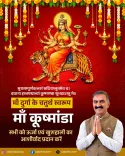
Rajasthan Chief Minister Bhajan Lal Sharma marked the fourth day of Shardiya Navratri on Wednesday, October 14, 2026, with a devotional greeting to Maa Kushmanda — the form of Goddess Durga believed to have created the universe with her gentle smile.
Reciting the Sanskrit shloka 'Suraasampurna kalasham, rudhiraplutameva cha' ('She who holds a pot filled with nectar and is bathed in the light of creation'), CM Sharma offered his reverence at the sacred feet of the goddess. He extended wishes that the blessings of Maa Kushmanda bring happiness, good health, positive energy, and fresh enthusiasm into the lives of all.
Maa Kushmanda — the Cosmic Creator
Among the nine forms of Goddess Durga celebrated during Navratri, Kushmanda holds a singular place: Hindu tradition holds that her smile gave birth to the universe itself. She is depicted holding a pot filled with divine nectar in her lotus hands — precisely the imagery invoked in the shloka CM Sharma chose to open his greeting. Devotees across Rajasthan and India observe the fourth day with special prayers and temple rituals dedicated to her.A Ritual of Public Engagement During Festival Season
Sharma's post follows a well-established pattern of Indian elected leaders sharing religious greetings across all nine nights of Navratri. The nine-night autumn festival, known as Shardiya Navratri, is among the most widely observed Hindu celebrations in the country. For Rajasthan's chief minister, whose state carries deep devotional traditions, marking each day publicly reinforces a connection with the cultural fabric of the electorate. With Vijayadashami approaching at the festival's close, state-level cultural events are expected to follow in the coming days.Point of View
Chief ministers use such devotional messages to maintain emotional proximity with their core electorate, especially in festival seasons that command high social-media traffic. For Sharma, personally leading each day's greeting signals consistent pastoral engagement rather than a one-off moment. The approach is low-risk and high-reach, blending governance persona with cultural stewardship ahead of Vijayadashami events that often carry political optics of their own.
NationPress
14 Oct 2026
Frequently Asked Questions
Which goddess is worshipped on the fourth day of Navratri?
Maa Kushmanda is worshipped on the fourth day of Navratri. She is considered the creator of the universe in Hindu tradition, known for her gentle, radiant smile.
What did Rajasthan CM Bhajan Lal Sharma post for Navratri 2026?
CM Bhajan Lal Sharma shared a Sanskrit shloka dedicated to Maa Kushmanda and wished citizens happiness, good health, positive energy, and fresh enthusiasm on the fourth day of Shardiya Navratri.
What is the meaning of the shloka CM Sharma posted?
The shloka describes Maa Kushmanda as one who holds a pot filled with nectar in her lotus hands. It is a traditional verse of invocation seeking her blessings.
When is Shardiya Navratri celebrated?
Shardiya Navratri is the nine-night autumn festival dedicated to Goddess Durga. It culminates with Vijayadashami, also known as Dussehra, and is observed widely across India.
Why do Indian politicians post Navratri greetings?
Indian elected leaders routinely share religious greetings during major festivals like Navratri as a form of public engagement and cultural connection with their electorate. The practice is common across political parties and states.