CM Sai: Chhattisgarh wins PM Surya Ghar Excellence Award
Synopsis
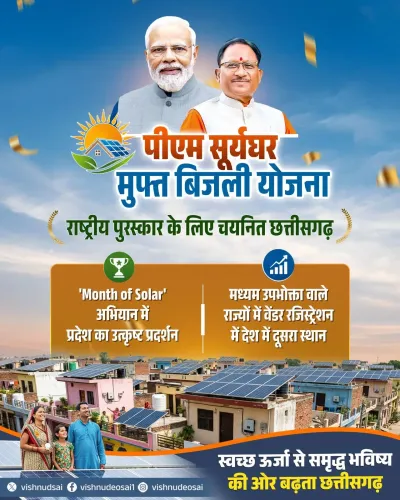
Chhattisgarh Chief Minister Vishnu Deo Sai announced the state has been selected for the PM Surya Ghar Excellence Award after finishing second nationally in vendor registrations among medium-consumer-base states during the Month of Solar campaign under the Centre's flagship rooftop solar scheme.
Key Takeaways
Chhattisgarh selected for the PM Surya Ghar Excellence Award for performance in the 'Month of Solar' campaign.
State ranked second nationally for vendor registrations in the medium-consumer-base category.
CM Vishnu Deo Sai credited the Energy Department, CREDA, discoms and partner institutions.
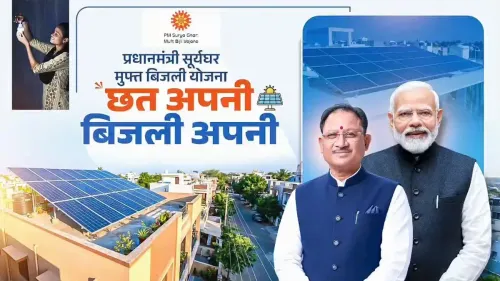
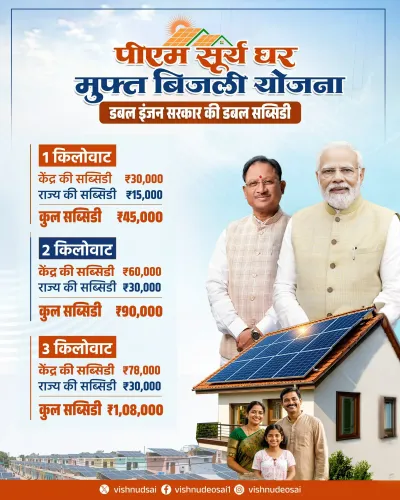
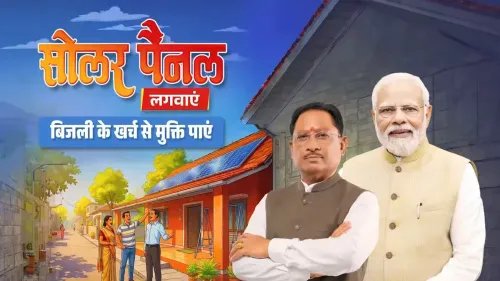
Award falls under the PM Surya Ghar: Muft Bijli Yojana launched in February 2024 targeting one crore households.
Scheme offers up to 300 units of free electricity per month via subsidised rooftop installations.
Recognition signals Chhattisgarh's pivot from a coal-heavy energy base toward distributed solar.
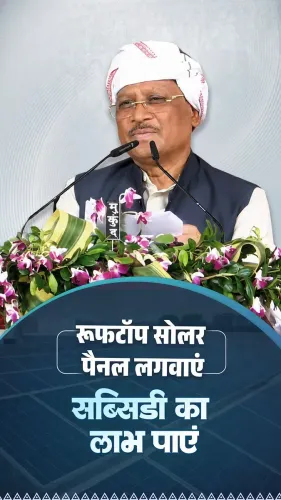
Chhattisgarh Chief Minister Vishnu Deo Sai on 2 June 2026 announced that the state has been selected for the PM Surya Ghar Excellence Award for its performance during the 'Month of Solar' campaign under the Centre's rooftop solar scheme. Writing on X, Sai said Chhattisgarh secured the second position nationally in the category of states with a medium consumer base for the highest number of vendor registrations.
'It is a matter of great pride and joy for Chhattisgarh,' the Chief Minister wrote, congratulating the state's Energy Department, the Chhattisgarh Renewable Energy Development Agency (CREDA), power distribution companies and associated institutions. He added that under Prime Minister Narendra Modi's leadership, the state remains committed to building an urja aatmanirbhar tatha harit Chhattisgarh (energy self-reliant and green Chhattisgarh). The post tagged the Prime Minister and the Union Ministry of New and Renewable Energy.
Context
The recognition stems from the 'Month of Solar' campaign organised under the PM Surya Ghar: Muft Bijli Yojana, the Union government's flagship rooftop solar initiative. The campaign tracks state-level execution metrics such as vendor onboarding, consumer applications and installations.
Chhattisgarh's second-place finish among medium-consumer-base states places it alongside front-running peers in operationalising the scheme's vendor ecosystem, a prerequisite for scaling household installations across districts.
Policy backdrop
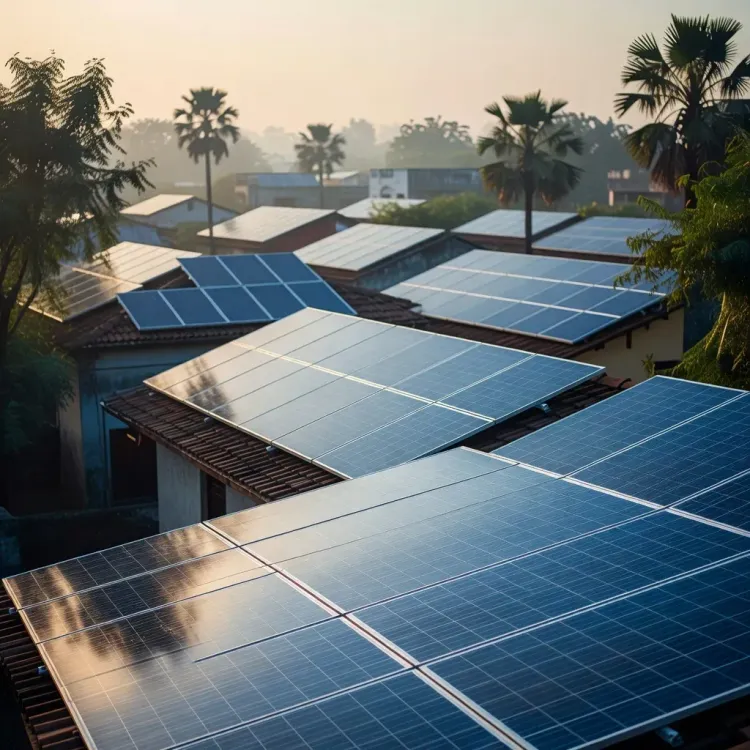
The PM Surya Ghar: Muft Bijli Yojana was launched by the Union government in February 2024 with the goal of equipping one crore households with rooftop solar systems and providing up to 300 units of free electricity each month through subsidised installations. The scheme is implemented in partnership with state nodal agencies and discoms.
In Chhattisgarh, CREDA serves as the implementing agency, coordinating with vendors, certifying installations and processing subsidies. The scheme sits within the broader arc of India's National Solar Mission, first launched in 2010, and the Centre's wider target of 500 GW of non-fossil fuel electricity capacity by 2030.
For a state that has historically anchored its power economy in coal, the rooftop push marks a deliberate diversification. Chhattisgarh is among India's largest coal producers, and progress on distributed solar adds a consumer-facing layer to its energy transition.
Stakeholders and impact
The immediate beneficiaries of strong vendor registration are households seeking rooftop installations, who depend on an active pool of certified installers to access subsidies under the scheme. A larger vendor base typically shortens waiting times and improves price competition.
For state discoms, accelerated rooftop adoption brings both opportunities and challenges, lower daytime demand from solarised consumers, but also new requirements for net-metering infrastructure and grid balancing. Renewable energy vendors, meanwhile, gain a predictable pipeline of certified work under a centrally backed scheme.
The Chief Minister's framing of the award as collective recognition, naming the Energy Department, CREDA, discoms and partner institutions, signals an intent to keep inter-agency coordination at the centre of the rollout.
What's next
Attention will turn to the conversion of vendor registrations into actual household installations in the coming quarters, the metric that ultimately determines the scheme's reach. Subsequent campaign cycles under the Ministry of New and Renewable Energy are expected to track installation numbers and subsidy disbursal more closely.
The state's 2026-27 budget cycle and any fresh allocations to CREDA and solar infrastructure will indicate how Chhattisgarh plans to sustain momentum beyond the campaign window. With the Centre targeting one crore rooftop installations nationally, state-level league tables of the kind that produced this award are likely to become a recurring feature of India's solar push, and a marker of how coal-belt states recalibrate toward distributed renewables.
Point of View
And Chhattisgarh's strong showing on vendor registrations matters because installer capacity is usually the binding constraint on rooftop rollouts. For a coal-belt state, even a procedural win like this carries political signalling value, it positions the BJP-led government as both aligned with PM Modi's energy agenda and capable of delivery. The harder test, converting vendors into installed kilowatts and subsidy-backed household savings, lies ahead. Watch the next campaign cycle for installation numbers, not just onboarding metrics.
NationPress
16 Oct 2026
Frequently Asked Questions
What is the PM Surya Ghar Excellence Award?
It is a recognition under the PM Surya Ghar: Muft Bijli Yojana given to states for outstanding performance in implementing the rooftop solar scheme, including metrics such as vendor registrations and installations during designated campaigns like the 'Month of Solar'.
Why has Chhattisgarh been selected for the award?
Chhattisgarh was selected after finishing second nationally in vendor registrations among states with a medium consumer base during the 'Month of Solar' campaign, as announced by Chief Minister Vishnu Deo Sai.
What is the PM Surya Ghar: Muft Bijli Yojana?
It is a central government scheme launched in February 2024 to install rooftop solar systems in one crore households and provide up to 300 units of free electricity per month through subsidised installations.
What role does CREDA play in the scheme?
CREDA, the Chhattisgarh Renewable Energy Development Agency, is the state nodal body that coordinates vendor certification, household applications, installations and subsidy processing under the rooftop solar programme.
How does this fit into Chhattisgarh's energy transition?
Chhattisgarh is a major coal-producing state, and expanding rooftop solar through PM Surya Ghar diversifies its energy mix, supports India's 500 GW non-fossil capacity target for 2030 and aligns the state with the Centre's net-zero pathway.