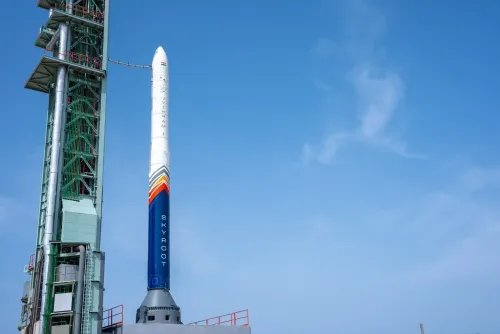
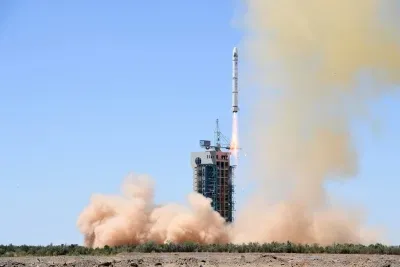
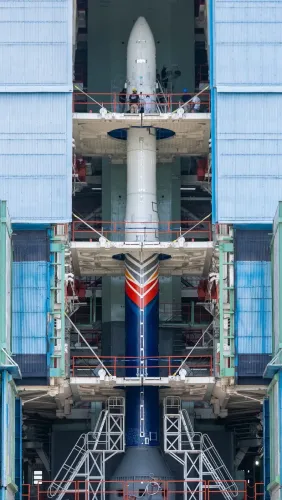
Vikram-1 orbital launch: Skyroot's Mission Aagaman puts India's private space sector on global map
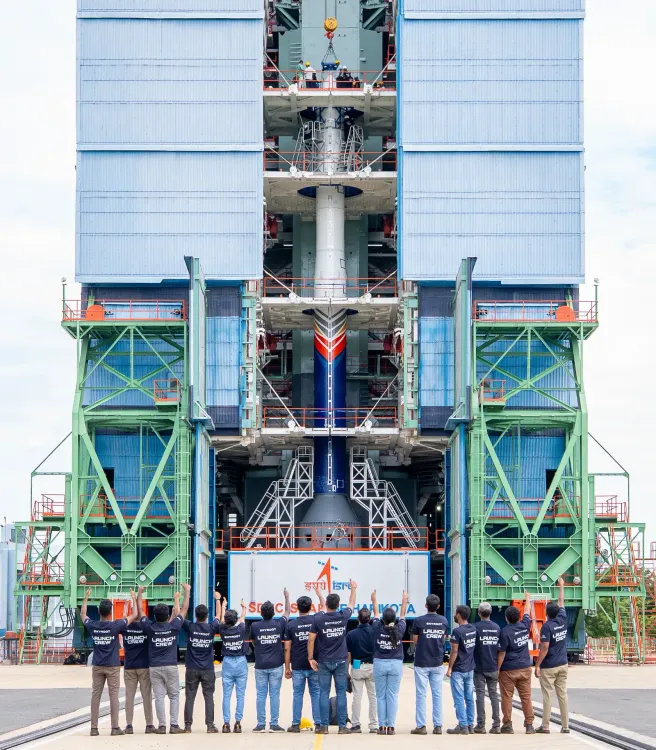
Synopsis
Skyroot Aerospace's Vikram-1 has done what no Indian private company had done before — reach orbit. Mission Aagaman isn't just a launch milestone; it's the proof-of-concept that could unlock sovereign launch contracts and reposition India as a credible small-satellite launch destination in a market dominated by SpaceX and RocketLab.
Key Takeaways
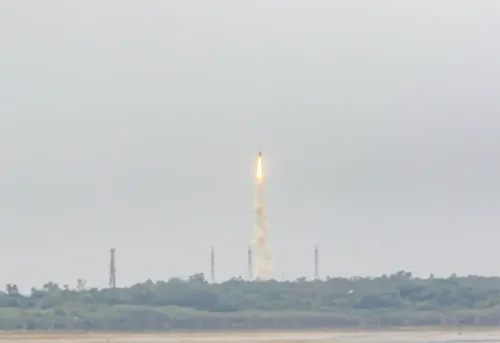
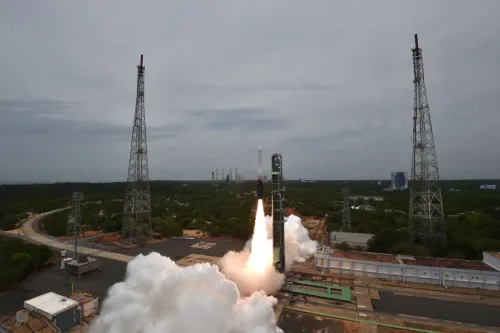
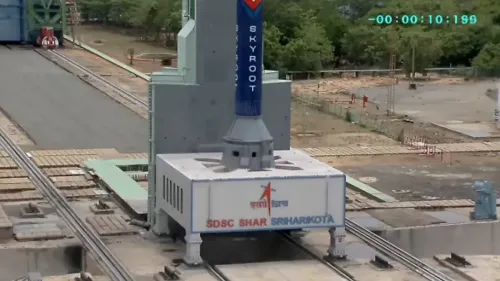
Skyroot Aerospace's Vikram-1 successfully reached orbit on 18 July under Mission Aagaman — India's first fully private orbital mission.
Payloads deployed include Cosmoserve Space's EMBRACE robotic arm, Skyroot's SCOPE , and Grahaa Space's SOLARAS S3 satellite.
ISpA Director General Lt.
Bhatt (Retd.) called the launch a 'defining milestone' that proves Indian private firms can handle end-to-end space missions.
Suhora Technologies CEO Krishanu Acharya said the mission will lower costs for Indian satellite operators and downstream space startups.
Skyroot is now recognised as India's first space technology unicorn , signalling investor confidence in the country's private space sector.
Skyroot Aerospace's Vikram-1 rocket successfully reached orbit on Saturday, 18 July under Mission Aagaman, marking India's first fully private orbital mission and drawing immediate acclaim from industry bodies and space technology firms. The milestone, achieved without direct government launch execution, signals a structural shift in how India participates in the global commercial space economy.
What Mission Aagaman Achieved
The Vikram-1 vehicle deployed multiple technology-demonstration payloads during the mission, including Cosmoserve Space's EMBRACE robotic arm — designed for orbital debris removal — Skyroot's own SCOPE instrument, and Grahaa Space's SOLARAS S3 satellite. The deployment of these payloads, each carrying proprietary intellectual property, represents a qualitative leap beyond earlier suborbital tests by Indian private players.
What Industry Leaders Said
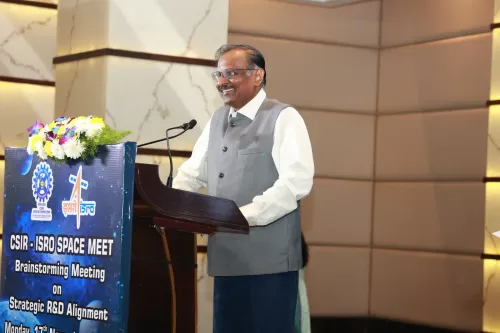
Lt. Gen. A.K. Bhatt (Retd.), Director General of the Indian Space Association (ISpA), called the launch 'a defining milestone for India's space journey.' In a statement, Bhatt said Skyroot had 'shattered legacy boundaries, demonstrating that our domestic industry is primed to handle end-to-end space missions.'
Bhatt further noted that the deployment of 'complex, IP-heavy payloads proves that our private ecosystem is now building critical global infrastructure for space sustainability and high-resolution Earth intelligence.' He also highlighted that Skyroot's emergence as India's first space technology unicorn sends 'a strong signal to global sovereign and institutional investors' that the country's private space sector has become 'a globally competitive and bankable industry.'
Krishanu Acharya, CEO and Co-Founder of space analytics firm Suhora Technologies, said the mission would have cascading downstream benefits. 'Lower-cost and more responsive launch services will enable more Indian satellite operators to deploy and replenish constellations, significantly improving the availability, revisit frequency and timeliness of Earth observation data,' Acharya said. He added that the mission 'lowers the barrier for emerging downstream and application-focused space startups to own and operate dedicated satellite assets tailored to specific industry needs.'
Why This Matters for India's Space Economy
India's commercial space sector has expanded rapidly following the government's decision to open launch and satellite operations to private players. Vikram-1's orbital success validates the end-to-end capability of a private Indian company — from rocket design and manufacturing to mission execution and payload deployment. This is the kind of proof-of-concept that sovereign customers and institutional investors typically require before committing to launch contracts.
Notably, the small satellite launch market is among the fastest-growing segments globally, with demand driven by Earth observation, broadband connectivity, and in-orbit servicing. Skyroot's demonstrated capability positions it to compete directly with international players for this pipeline.
What Comes Next
With orbital capability now validated, attention will turn to Skyroot's launch cadence and pricing competitiveness. Industry observers expect the Mission Aagaman success to accelerate fundraising and potentially attract anchor customers for future Vikram-series flights. The ISpA has indicated it will push for faster regulatory clearances to help private launch providers scale operations.
Point of View
But the harder test begins now — converting a milestone into a pipeline. India's private space sector has long struggled with the gap between demonstration and commercial scale, and Skyroot's unicorn valuation already prices in execution that hasn't yet materialised at volume. The real signal to watch is whether Mission Aagaman attracts paying sovereign or commercial customers for follow-on flights, or remains a celebrated proof-of-concept without a launch manifest to back it. The ISpA's call for faster regulatory clearances is also telling — bureaucratic friction, not technical capability, remains the sector's most stubborn constraint.
NationPress
16 Oct 2026
Frequently Asked Questions
What is Mission Aagaman and what did Vikram-1 achieve?
Mission Aagaman is the orbital launch mission conducted by Skyroot Aerospace using its Vikram-1 rocket on 18 July. It marked India's first fully private orbital mission, successfully deploying multiple technology-demonstration payloads including a robotic arm for debris removal and an Earth observation satellite.
What payloads were deployed during the Vikram-1 launch?
Vikram-1 deployed three payloads: Cosmoserve Space's EMBRACE robotic arm designed for orbital debris removal, Skyroot's own SCOPE instrument, and Grahaa Space's SOLARAS S3 satellite. Each payload carries proprietary intellectual property, underscoring the mission's technical depth.
Why is the Vikram-1 orbital launch considered a milestone for India?
It is the first time an Indian private company has independently executed an end-to-end orbital mission — from rocket manufacturing to payload deployment — without direct government launch execution. This validates India's private space sector as capable of competing in the global commercial launch market.
What does Skyroot's unicorn status mean for India's space sector?
Skyroot Aerospace is India's first space technology unicorn, a valuation milestone that signals investor confidence. According to ISpA, this status sends a strong signal to global sovereign and institutional investors that India's private space sector is now a globally competitive and bankable industry.
How will Mission Aagaman benefit India's satellite and downstream industries?
According to Suhora Technologies CEO Krishanu Acharya, lower-cost and more responsive launch services will allow Indian satellite operators to deploy and replenish constellations more frequently, improving Earth observation data availability. It also lowers entry barriers for downstream space startups seeking dedicated satellite assets.