CM Samrat Choudhary hails Vikram-1 launch as mark of Atmanirbhar Bharat

Synopsis
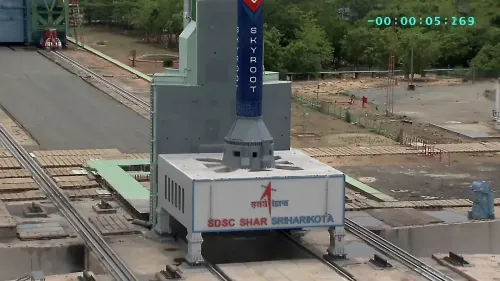
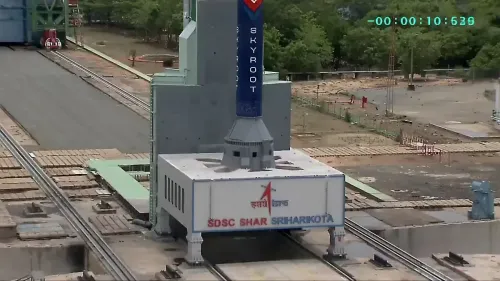
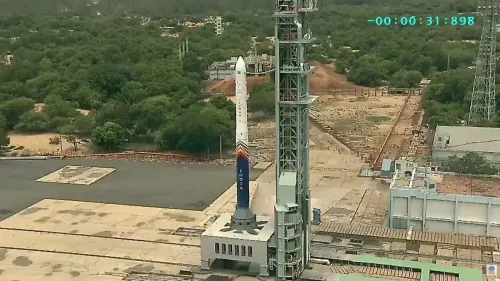
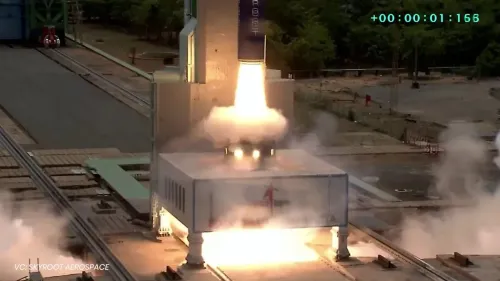
Bihar Chief Minister Samrat Choudhary congratulated Hyderabad-based Skyroot Aerospace on the launch of Vikram-1, India's first privately developed orbital-class rocket, calling it a landmark for national self-reliance and scientific excellence under the Viksit Bharat vision.
Key Takeaways
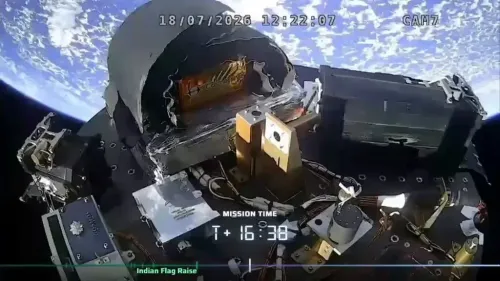
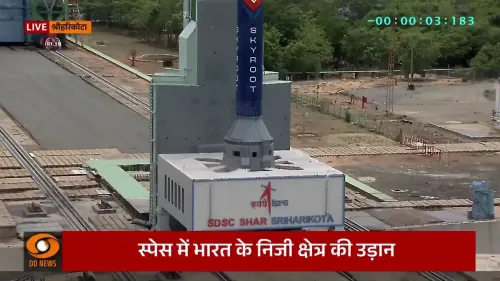
Bihar Chief Minister Samrat Choudhary congratulated Skyroot Aerospace on 18 July 2026 for the successful launch of Vikram-1 .
Vikram-1 is India's first orbital-class rocket developed entirely by a private company.
Skyroot Aerospace is a Hyderabad -based startup founded in 2018 , operating under India's liberalised space sector framework.
India's IN-SPACe body, created in 2020 , enabled private firms to build and launch orbital vehicles alongside ISRO .
CM Choudhary linked the achievement to the Viksit Bharat and Atmanirbhar Bharat national development goals.
The launch is expected to accelerate India's private space economy and reduce reliance on foreign launch providers for small satellites.
Bihar Chief Minister Samrat Choudhary on Saturday, 18 July 2026 congratulated Skyroot Aerospace and its team on the successful launch of Vikram-1, describing India's first privately developed orbital-class rocket as an inspiring example of innovation, self-reliance, and scientific excellence in the country's space sector.
Context
Posting on X with the hashtags #IndiaWithVikram1, #ISRO, #Skyroot, and #Vikram1, CM Choudhary called the achievement 'ऐतिहासिक' — historic — and said it stands as 'a powerful proof of India's scientific capability, innovation, and the growing strength of the private space sector.' He extended 'heartfelt congratulations to all scientists and the entire team of Skyroot Aerospace.'
The Chief Minister added that the success 'will further strengthen the resolve of a Viksit Bharat' — a developed India — invoking the government's long-term national development vision.
Policy Backdrop
Skyroot Aerospace, founded in 2018 and headquartered in Hyderabad, has been developing the Vikram series of small satellite launch vehicles as part of India's expanding private space ecosystem. The company's work sits within a broader policy framework that the central government began building in 2020, when it established IN-SPACe (Indian National Space Promotion and Authorisation Centre) to regulate and promote private participation in space activities.
The same year, the Atmanirbhar Bharat initiative explicitly identified space as a priority sector for indigenous technology development, opening the door for startups to compete in a domain historically dominated by ISRO, India's national space agency. Vikram-1 represents the first orbital-class vehicle to emerge from that liberalisation drive.
Stakeholders and Impact
The successful orbital launch is significant for India's private space industry, which has attracted growing investor interest since the sector was opened to non-government players. A proven domestic orbital launch capability reduces India's dependence on foreign providers for deploying small satellites — a market that is expanding rapidly worldwide.
ISRO, which has historically conducted all of India's orbital missions, has been repositioned under recent policy changes as an enabler and collaborator for private ventures rather than their sole competitor. The Vikram-1 milestone underscores how that transition is taking shape on the launchpad.
What's Next
Attention will now turn to Skyroot's commercial launch manifest and the pace at which other Indian private startups advance their own vehicle programmes. Policymakers will also be watching for any updates to the proposed Space Activities Bill and the evolution of the IN-SPACe licensing framework as demand for domestic launch slots grows.
For the broader Viksit Bharat agenda, a functioning private orbital launch industry would mark a structural shift — moving India from a country that builds satellites to one that can reliably and commercially put them into orbit on homegrown rockets.
Point of View
' he ties a technological milestone to the ruling party's 2047 national development narrative, reinforcing the BJP's positioning as the architect of India's deep-tech ambitions. The congratulatory post also signals that space, once a niche federal policy domain, is now a mainstream political touchstone across party ranks. If Skyroot's orbital capability translates into a reliable commercial launch cadence, it could reshape India's standing in the global small-satellite market and validate the 2020 liberalisation bet.
NationPress
18 Jul 2026
Frequently Asked Questions
What is Vikram-1 and who built it?
Vikram-1 is India's first orbital-class rocket developed entirely by a private company. It was built by Skyroot Aerospace, a Hyderabad-based startup founded in 2018.
Why did Bihar CM Samrat Choudhary comment on a space launch?
CM Choudhary posted congratulations on X to celebrate the national milestone, linking it to the Viksit Bharat and Atmanirbhar Bharat goals championed by the BJP-led central government.
What is IN-SPACe and how does it relate to Vikram-1?
IN-SPACe, established in 2020, is India's regulatory body for private space activities. It created the policy framework that allowed Skyroot Aerospace to develop and launch Vikram-1 outside of ISRO's direct control.
What does Vikram-1's launch mean for India's space sector?
It marks the first time a private Indian firm has demonstrated orbital launch capability, reducing dependence on foreign providers for small satellite deployment and opening a new commercial chapter in India's space economy.
What is Skyroot Aerospace's background?
Skyroot Aerospace is a Hyderabad-based private startup founded in 2018. It has been developing the Vikram series of small satellite launch vehicles and is among the first private companies to operate under India's liberalised space policy.