Pinarayi Vijayan Demands Release of NTA Protest Detainees
Synopsis
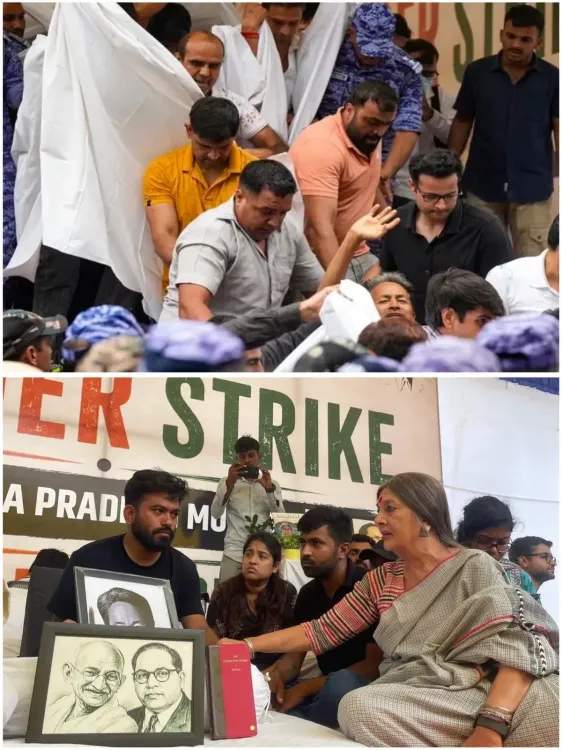
Kerala Chief Minister Pinarayi Vijayan has demanded the immediate and unconditional release of Sonam Wangchuk, Abhijeet Deepke, and others detained over NTA protests, calling it an attack on the constitutional right to dissent and accusing the Union Government of shielding those responsible for exam failures.
Key Takeaways
Kerala CM Pinarayi Vijayan demanded the immediate and unconditional release of Sonam Wangchuk , Abhijeet Deepke , and other detainees on 18 July 2026 .
He described the detentions as 'an attack on the constitutional right to dissent.' The statement holds the National Testing Agency (NTA) responsible for leaving 'lakhs of students' anxious about their futures due to 'grave failures and corruption.' Vijayan accused the Union Government of protecting those responsible rather than ensuring accountability.
The intervention reflects an established pattern of federal friction between Kerala's LDF government and the Union Government on education and civil liberties.
Opposition pressure through parliamentary questions, court petitions, and state-level resolutions is expected to follow.
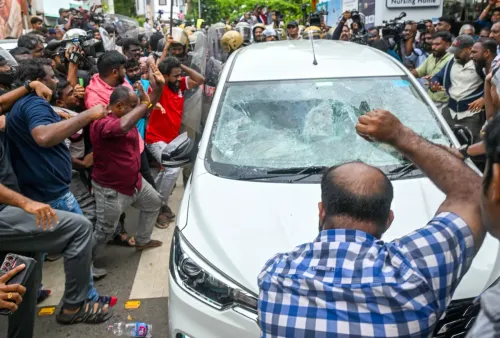
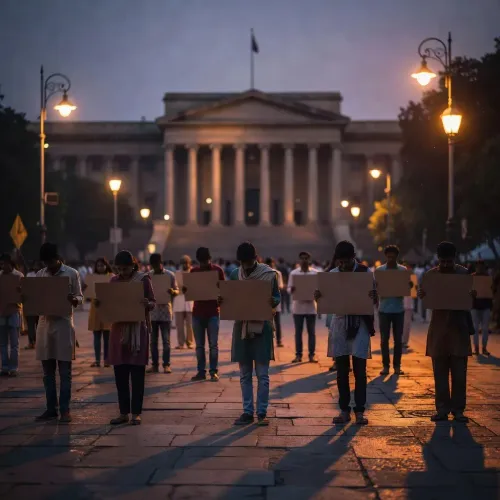
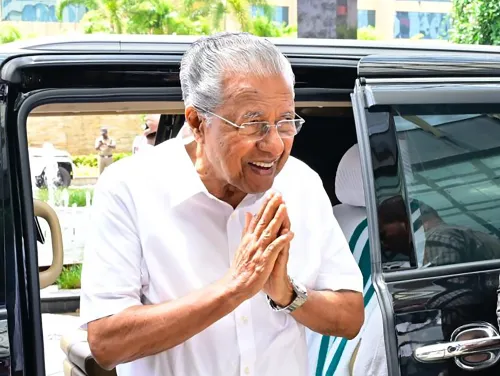
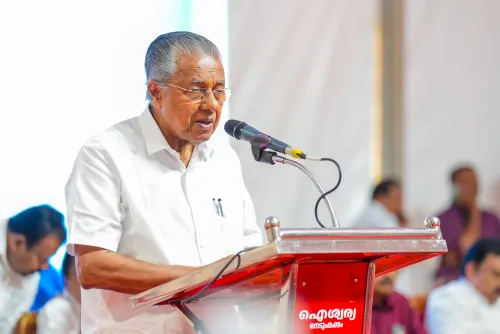
Kerala Chief Minister Pinarayi Vijayan on Saturday, 18 July 2026, demanded the immediate and unconditional release of Sonam Wangchuk, Abhijeet Deepke, and others detained amid protests over alleged failures and corruption in the National Testing Agency (NTA), calling their detention an attack on the constitutional right to dissent.
Context
In his post, CM Vijayan stated that 'lakhs of students across the country have been left anxious about their future because of the grave failures and corruption in the National Testing Agency.' He further charged that instead of holding those responsible accountable, the Union Government has 'chosen to silence those demanding justice.' The remarks directly link the detention of activists to the government's broader response to the NTA crisis.
Sonam Wangchuk, the Ladakh-based engineer and environmental activist widely recognised for campaigns demanding constitutional protections for Ladakh, was among those named. Abhijeet Deepke was also cited by the Chief Minister as a detainee whose release he demanded.
Policy Backdrop
The National Testing Agency is an autonomous body under the Union Ministry of Education, responsible for conducting high-stakes national entrance examinations including NEET-UG and JEE. Widespread allegations of paper leaks and irregularities in the NEET-UG 2024 examination had already triggered large-scale student protests and calls for systemic reform of the agency.
The controversy placed the NTA under sustained scrutiny, with student groups, opposition parties, and civil society organisations demanding accountability from both the agency's leadership and the Ministry of Education. CM Vijayan's statement situates the current detentions squarely within that unresolved accountability deficit.
Stakeholders and Impact
The most directly affected constituency is the vast pool of aspirants — numbering in the lakhs — who appear for NTA-conducted examinations each year. Uncertainty over examination integrity has compounding effects on medical and engineering admissions, with downstream consequences for students, coaching institutions, and universities.
Civil liberties advocates have also emerged as a key stakeholder group, arguing that the detention of protesters represents a disproportionate state response. Kerala under the Left Democratic Front (LDF) government has consistently challenged what it characterises as central overreach in education and security matters, and CM Vijayan's intervention follows that established pattern of federal friction between Thiruvananthapuram and New Delhi.
What's Next
The demand for unconditional release of the detainees is likely to intensify pressure on the Union Government ahead of any parliamentary session where opposition members could raise the matter through questions or adjournment motions. Legal challenges through court petitions on both the NTA's functioning and the legality of the detentions remain a likely avenue for affected parties.
Whether the Union Government responds to calls from state leaders and civil society — or whether the detentions become a sustained flashpoint in the broader NTA accountability debate — will determine the political and legal trajectory of this issue in the weeks ahead.
Point of View
He broadens the coalition of grievance and frames the Union Government's response as constitutionally illegitimate rather than merely politically inconvenient. This fits a longer arc in which opposition chief ministers have used social media to contest the Centre's narrative on national institutions, particularly in education. The statement's demand for 'immediate and unconditional' release signals that Vijayan is staking out a maximalist position, leaving little room for a quiet resolution.
NationPress
18 Jul 2026
Frequently Asked Questions
Why is Kerala CM Pinarayi Vijayan demanding the release of Sonam Wangchuk?
CM Vijayan says Sonam Wangchuk and others were detained for demanding justice over failures and corruption in the National Testing Agency, and he calls this detention an attack on the constitutional right to dissent.
What is the National Testing Agency (NTA) controversy about?
The NTA, which conducts NEET-UG and JEE examinations, faced widespread allegations of paper leaks and irregularities in NEET-UG 2024, triggering student protests and demands for systemic reform and accountability.
Who is Abhijeet Deepke?
Abhijeet Deepke is named by CM Vijayan as one of the individuals detained in connection with protests over NTA failures; the Chief Minister has demanded his immediate and unconditional release.
What does the Kerala government say about the Union Government's handling of NTA protests?
CM Vijayan has accused the Union Government of choosing to silence those demanding justice rather than holding those responsible for NTA's failures accountable.
What action has Kerala CM Pinarayi Vijayan called for regarding the NTA detentions?
He has called for the immediate and unconditional release of all those detained, including Sonam Wangchuk and Abhijeet Deepke, describing their detention as constitutionally unjustifiable.