CM Yogi champions DBT model as UP's no-leakage governance
Synopsis
Chief Minister Yogi Adityanath, in a statement shared by the UP Chief Minister's Office on 18 July 2026, said the 'double engine' government ensures every rupee sent by the Centre and the state reaches poor beneficiaries directly via DBT, calling it the model of non-discriminatory good governance.
Key Takeaways
CM Yogi Adityanath stated that ₹100 sent by PM Modi from the Centre and ₹100 sent from Lucknow both reach poor beneficiaries' accounts without deduction.
The statement explicitly invokes the 'double engine' governance model, referencing BJP control of both the Union government and Uttar Pradesh .
Direct Benefit Transfer (DBT) , backed by Jan Dhan accounts and Aadhaar linkage, is the technical mechanism underpinning the claim.
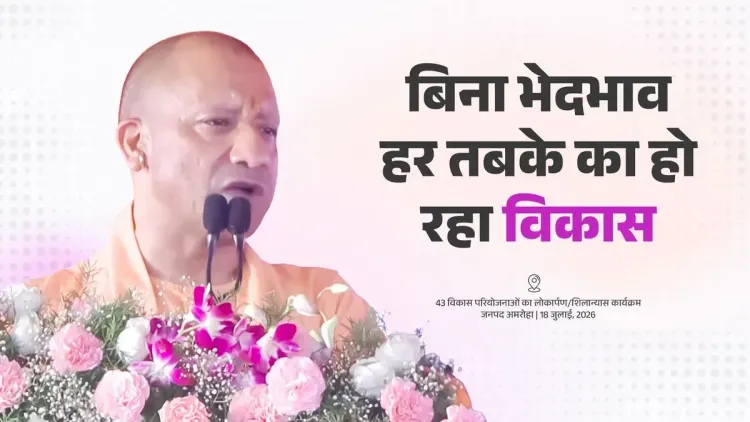
CM Yogi emphasised delivery 'without discrimination' ( bina bhedbhav ), framing DBT as caste- and community-neutral welfare.
Uttar Pradesh , India's most populous state, has one of the country's largest pools of DBT beneficiaries across central and state schemes.
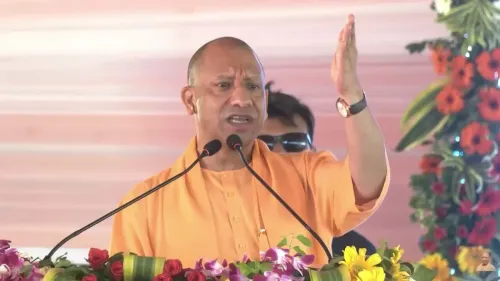
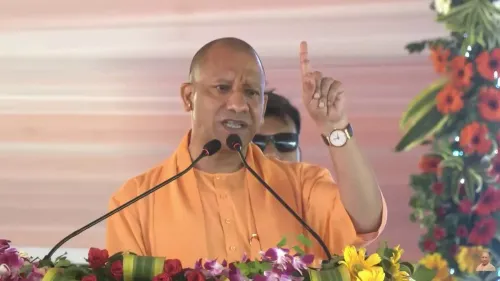
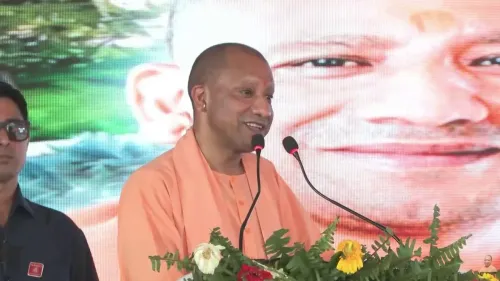
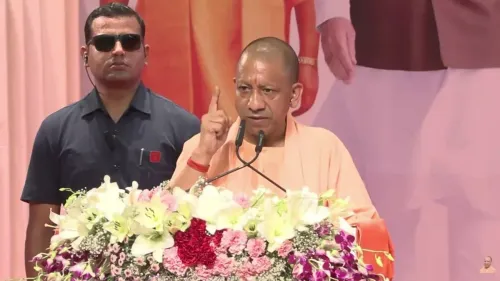
The Chief Minister's Office of Uttar Pradesh, on Saturday, 18 July 2026, shared a statement by Chief Minister Yogi Adityanath underlining the 'double engine' governance model, asserting that welfare funds sent by both the Centre and the state reach beneficiaries' bank accounts without any deduction or diversion.
Speaking on the principle of direct benefit delivery, CM Yogi Adityanath stated: 'In the double engine government, when Prime Minister Narendra Modi sends ₹100 from the Centre, ₹100 reaches the poor person's account directly. When we send ₹100 from Lucknow, that too reaches the poor person's account directly. This is the model of good governance — where there is security and every section of society is getting the benefit of schemes without discrimination.'
Context
The statement draws on the BJP's long-standing 'double engine' narrative, which refers to the alignment of governance when the same party holds power at both the Centre and the state. In Uttar Pradesh, the Bharatiya Janata Party has governed the state since 2017 under CM Yogi Adityanath, while Prime Minister Modi has led the Union government since 2014. The argument is that this alignment eliminates friction in welfare delivery. The emphasis on ₹100 reaching the recipient intact is a direct reference to the Direct Benefit Transfer (DBT) architecture, which routes subsidies and welfare payments straight into beneficiaries' Aadhaar-linked bank accounts, bypassing intermediaries who historically siphoned funds.Policy Backdrop
Direct Benefit Transfer was scaled up nationally from 2013 onward and received a significant infrastructure boost after 2014 through the Pradhan Mantri Jan Dhan Yojana, launched in August 2014. Jan Dhan accounts gave millions of unbanked Indians — particularly in states like Uttar Pradesh — the banking access needed to receive DBT payments. The linkage of Jan Dhan accounts, Aadhaar biometrics, and mobile numbers — the so-called JAM trinity — is the technical backbone the CM's statement implicitly references. Uttar Pradesh, as India's most populous state, has one of the largest pools of DBT beneficiaries across schemes ranging from food subsidies to pension payments and farm-input support.Stakeholders and Impact
The primary beneficiaries of DBT-linked schemes in Uttar Pradesh include poor households, farmers, senior citizens, and women enrolled in central and state welfare programmes. The CM's framing of 'bina bhedbhav' (bina bhedbhav — without discrimination) positions the delivery model as caste- and community-neutral, a politically significant claim in a state with a complex social fabric. For the state administration, DBT reduces the administrative burden on district officials and gram panchayats while also shrinking opportunities for rent-seeking. Critics of the model have historically pointed to challenges such as Aadhaar seeding errors and connectivity gaps in rural areas, though the CM's statement does not address these.What's Next
The statement signals that the UP government intends to continue positioning DBT-led, non-discriminatory welfare delivery as a defining achievement ahead of future political cycles. Analysts and civil society groups will watch state-level DBT performance audits and budget allocations for welfare schemes in Uttar Pradesh to assess whether the on-ground numbers match the political messaging. The broader question is whether the 'double engine' model can be demonstrated through independently verified transfer data rather than political communication alone.Point of View
The CM translates an abstract governance claim into a voter-legible promise. The emphasis on non-discrimination is particularly calibrated for Uttar Pradesh's diverse electorate, where welfare delivery has historically been viewed through a caste and community lens. The statement fits a broader BJP pattern of using DBT's verifiable architecture to pre-empt opposition charges of corruption or exclusion in welfare distribution.
NationPress
18 Jul 2026
Frequently Asked Questions
What is the 'double engine' government model CM Yogi is referring to?
The 'double engine' government refers to the BJP holding power simultaneously at the Centre under PM Narendra Modi and in Uttar Pradesh under CM Yogi Adityanath , which the party argues enables seamless, leakage-free delivery of welfare schemes.
How does Direct Benefit Transfer (DBT) work in Uttar Pradesh?
Direct Benefit Transfer routes welfare payments — such as subsidies, pensions, and farm support — directly into beneficiaries' Aadhaar-linked Jan Dhan bank accounts, eliminating middlemen and reducing the risk of funds being diverted.
What did CM Yogi Adityanath say about welfare funds on 18 July 2026?
CM Yogi Adityanath said that whether PM Modi sends ₹100 from the Centre or the state government sends ₹100 from Lucknow , the full amount reaches the poor person's bank account directly without any deduction.
What is Jan Dhan Yojana and why is it important for DBT?
Pradhan Mantri Jan Dhan Yojana , launched in August 2014 , created bank accounts for millions of previously unbanked Indians, providing the financial infrastructure necessary for Direct Benefit Transfer to function at scale in states like Uttar Pradesh .
What does 'bina bhedbhav' mean in CM Yogi's statement?
' Bina bhedbhav ' means 'without discrimination' in Hindi. CM Yogi used the phrase to assert that welfare scheme benefits are being delivered to all sections of society regardless of caste, community, or religion.