CM Fadnavis Breaks Ground on 3 Elevated Highways in Pune
Synopsis
Maharashtra CM Devendra Fadnavis and Union Minister Nitin Gadkari broke ground on three elevated highway projects in Pune — the 53.4 km Pune-Shirur, 53.2 km Talegaon-Chakan-Shikrapur, and 31 km Hadapsar-Yavat corridors — under a BOT model set to yield ₹950 crore upfront for the state.
Key Takeaways
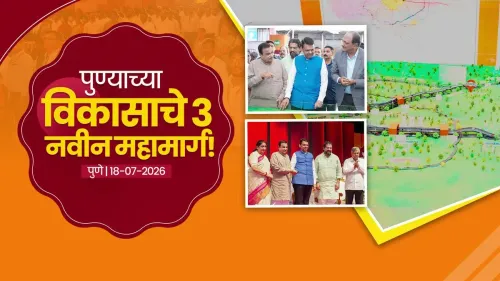
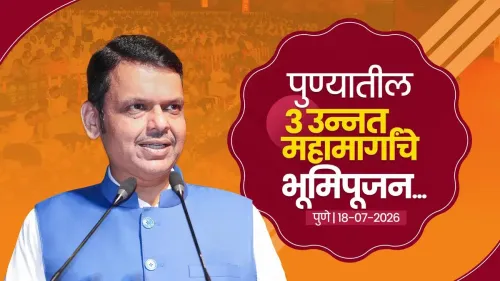
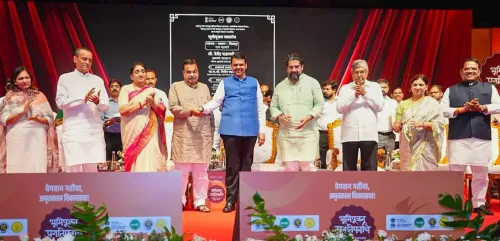
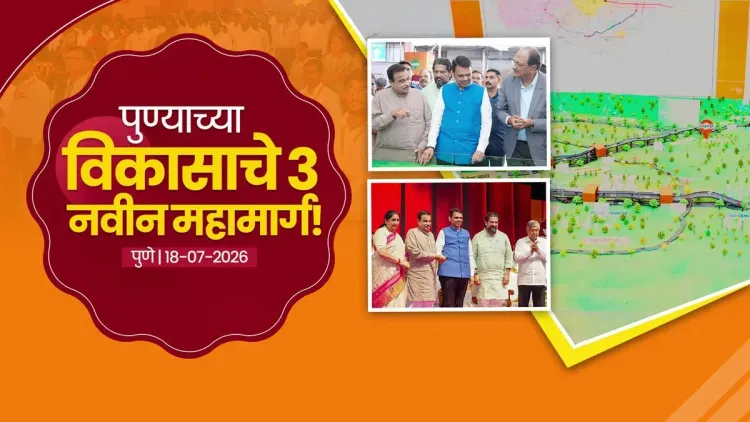
CM Devendra Fadnavis and Union Minister Nitin Gadkari performed the Bhoomipujan of three Pune elevated highways on 18 July 2026 .
The three corridors — Pune-Shirur (53.4 km) , Talegaon-Chakan-Shikrapur (53.2 km) , and Hadapsar-Yavat (31 km) — together span over 137 km .
Projects will be implemented via a Build-Operate-Transfer (BOT) model , generating an upfront premium of ₹950 crore for the Maharashtra government.
Corridors are designed with future Pune Metro integration to enable seamless multimodal connectivity.
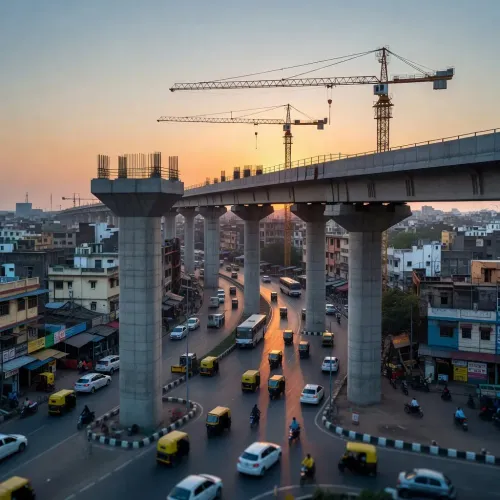
The initiative targets decongestion of key corridors serving Pune's IT, industrial, and residential zones.
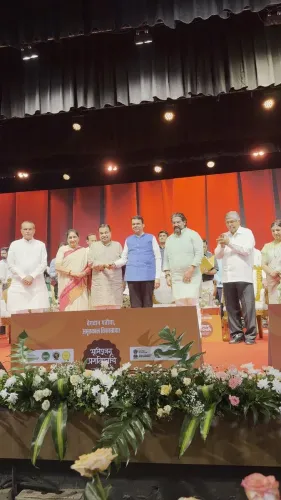
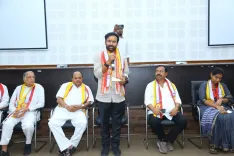
Senior leaders including Deputy CM Sunetra Pawar , multiple ministers, and Pune Mayor Manjusha Nagpure attended the event.
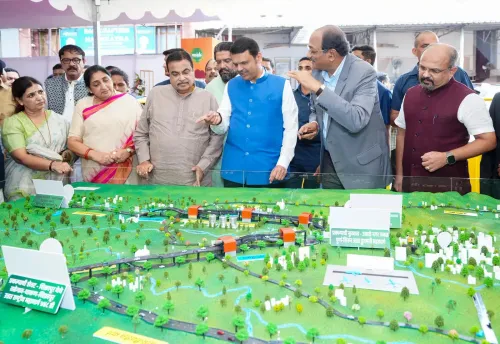
Maharashtra Chief Minister Devendra Fadnavis on Saturday, 18 July 2026, performed the Bhoomipujan of three elevated highway projects in the Pune Metropolitan Region (PMR), alongside Union Minister for Road Transport and Highways Nitin Gadkari. The groundbreaking marks the formal launch of infrastructure works expected to reshape connectivity across Pune and its satellite towns.
Context
The three projects — the Pune-Shirur Elevated Corridor (53.4 km), the Talegaon-Chakan-Shikrapur Elevated Highway (53.2 km), and the Hadapsar-Yavat Elevated Highway (31 km) — together span over 137 km of elevated road network across the PMR. Fadnavis described the initiative as 'powering the next phase of Pune's growth,' positioning the city and neighbouring Pimpri-Chinchwad as entering a new era of infrastructure transformation.
The event was attended by a cross-section of elected representatives including Deputy Chief Minister Sunetra Pawar, Minister Chandrakant Dada Patil, Minister Shivendra Sinh Raje Bhonsle, Minister of State Madhuri Misal, MP Shrirang Appa Barne, and Pune Mayor Manjusha Nagpure.
Policy Backdrop
The projects are being implemented through a Build-Operate-Transfer (BOT) model, a public-private partnership structure that shifts construction and operational responsibility to private concessionaires while the government retains ownership. This model is expected to generate an upfront premium of ₹950 crore for the Maharashtra government, making the projects financially self-sustaining beyond their infrastructure value.
The corridors have been designed with future metro integration in mind, aligning with the broader Pune Metro expansion plans. This approach reflects a wider national trend under the Bharatmala Pariyojana — the central government's highway development programme launched in 2015 — which has accelerated elevated and expressway construction in major urban centres across India, including Maharashtra.
Fadnavis credited the projects to 'the visionary leadership of Prime Minister Narendra Modi and the guidance of Union Minister Nitin Gadkari,' underscoring the Centre-state coordination driving the initiative.
Stakeholders and Impact
Pune is one of India's fastest-growing metropolitan regions, home to a large IT and manufacturing sector and a population that has long grappled with severe traffic congestion on arterial roads. The Pune-Shirur and Hadapsar-Yavat corridors are expected to ease pressure on eastern Pune's road network, while the Talegaon-Chakan-Shikrapur corridor targets the industrial belt north of the city — an area dense with automotive and electronics manufacturing units.
Commuters, logistics operators, and businesses in the PMR stand to benefit from reduced travel times and improved freight movement. Land acquisition and streamlining of allied processes are cited as key priorities under the BOT framework, though these typically represent the most time-sensitive challenges in large corridor projects.
What's Next
Attention will now shift to the pace of land acquisition, finalisation of BOT concession agreements, and the timeline for actual construction commencement. The integration of these elevated corridors with upcoming Pune Metro lines will be a critical design and coordination challenge for both state and civic bodies. Successful delivery of all three projects would significantly reinforce the PMR's position as a future-ready economic hub in western Maharashtra.
Point of View
With its ₹950 crore upfront premium, is a deliberate pitch to fiscal hawks — demonstrating that large road projects need not be purely expenditure-driven. Gadkari's presence ties the projects to the Centre's Bharatmala brand, reinforcing the BJP's strategy of presenting Centre-state synergy as a governance dividend. The metro-integration design clause is the most consequential long-term detail: it signals ambition, but also sets a high coordination bar for delivery.
NationPress
18 Jul 2026
Frequently Asked Questions
What are the three elevated highways launched in Pune in July 2026?
The three projects are the Pune-Shirur Elevated Corridor (53.4 km) , the Talegaon-Chakan-Shikrapur Elevated Highway (53.2 km) , and the Hadapsar-Yavat Elevated Highway (31 km) , all inaugurated via Bhoomipujan on 18 July 2026.
What is the BOT model used for Pune's elevated highway projects?
The Build-Operate-Transfer (BOT) model is a public-private partnership where a private concessionaire finances, builds, and operates the road for a fixed period before transferring it to the government. For these Pune projects, the model will generate an upfront premium of ₹950 crore for the Maharashtra government.
Who attended the Bhoomipujan of Pune's elevated highways?
The event was attended by CM Devendra Fadnavis , Union Minister Nitin Gadkari , Deputy CM Sunetra Pawar , Ministers Chandrakant Dada Patil , Shivendra Sinh Raje Bhonsle , MoS Madhuri Misal , MP Shrirang Appa Barne , and Pune Mayor Manjusha Nagpure .
How will the Pune elevated highways reduce traffic congestion?
The corridors are designed to decongest key arterial routes in the Pune Metropolitan Region by providing grade-separated, high-speed alternatives to existing surface roads, reducing travel time for commuters and freight vehicles across eastern and northern Pune.
Will the new Pune elevated highways connect to the Pune Metro?
Yes, all three elevated corridor projects have been designed with future Pune Metro integration in mind, enabling multimodal connectivity between road and rail transit systems in the metropolitan region.