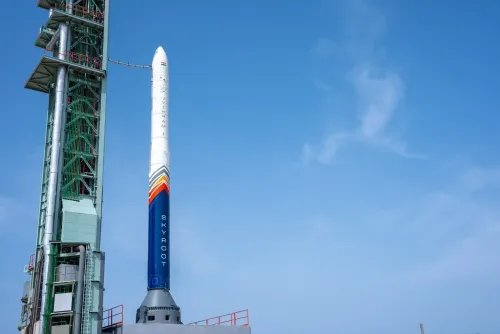
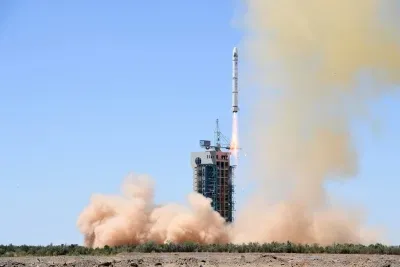
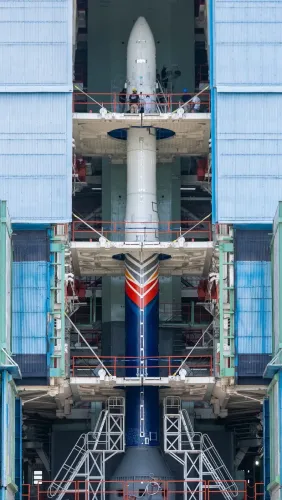
Vikram-1 launch: India's first private orbital mission a landmark for space sector
Synopsis
India crossed a milestone no private company had before — Skyroot Aerospace's Vikram-1 reached a 453-km orbit on its very first attempt, just eight years after the company was founded. ISRO and IN-SPACe leaders refused to frame it as India's 'SpaceX moment' — they called it something more: an India moment.
Key Takeaways
Skyroot Aerospace's Vikram-1 completed India's first private sector orbital launch on 18 July under Mission Aagaman .
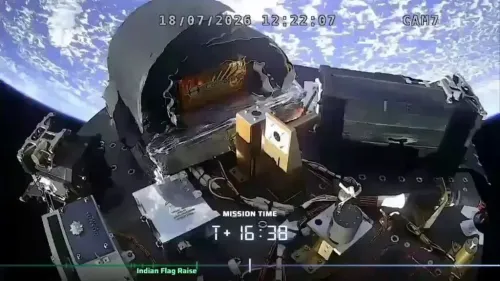
The rocket reached a 453-km orbit , far exceeding its primary objective of clearing the launch tower.
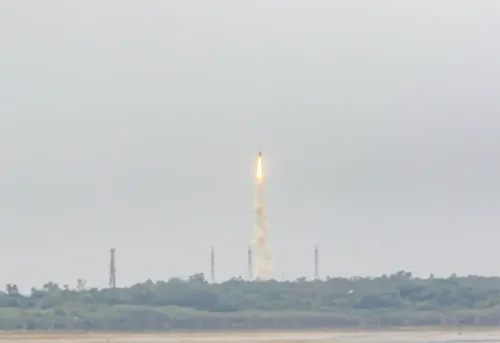
Liftoff took place from the First Launch Pad at Satish Dhawan Space Centre, Sriharikota .
Narayanan called it 'a great achievement,' noting Skyroot was founded just eight years ago .
IN-SPACe Chairman Pawan Goenka declared it 'an India moment,' declining comparisons with international counterparts.
Skyroot Aerospace's Vikram-1 rocket completed India's first-ever private sector orbital launch on 18 July, reaching a 453-km orbit under Mission Aagaman — far exceeding its primary objective. ISRO Chairman Dr V. Narayanan hailed the mission as a defining moment for India's growing commercial space ecosystem.
What Vikram-1 Achieved
Hyderabad-based Skyroot Aerospace lifted off from the First Launch Pad at the Satish Dhawan Space Centre in Sriharikota, successfully placing its payload into a 453-km orbit. The mission's stated primary objective was simply to clear the launch tower — making the orbital insertion a significant overperformance.
Notably, Skyroot Aerospace was founded just eight years ago, making it one of the fastest private aerospace firms globally to develop and successfully fly an orbital-class launch vehicle on its maiden attempt.
What ISRO Chairman Dr Narayanan Said
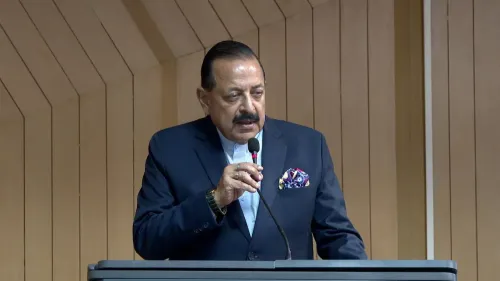
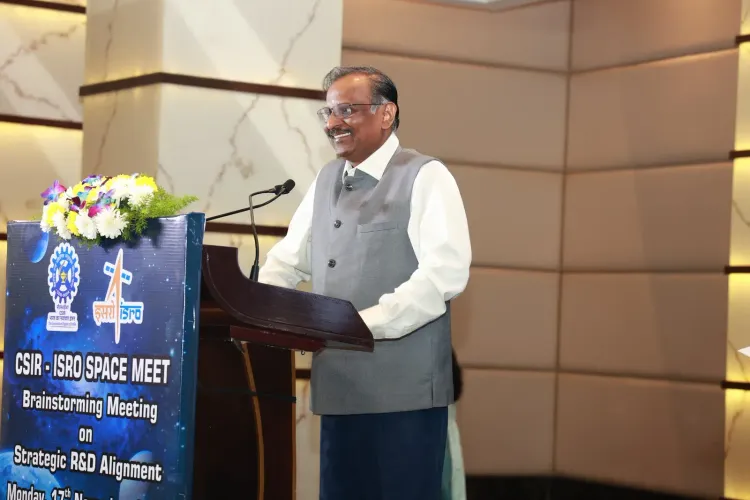
Addressing the media after the launch, Dr V. Narayanan described the achievement as extraordinary. 'Skyroot Aerospace started just eight years back, and developing an orbital launch vehicle and making it a successful mission on the first attempt is really a great achievement,' he said.
Narayanan credited the broader growth of India's private space sector to the enabling environment built under Prime Minister Narendra Modi, stating: 'India's space ecosystem is growing under the leadership of the Prime Minister of India.'
IN-SPACe Calls It 'An India Moment'
Indian National Space Promotion and Authorisation Centre (IN-SPACe) Chairman Pawan Goenka formally announced the mission's success and pushed back against comparisons with international milestones. 'I don't want to call it a SpaceX moment because I don't want to compare what happened today to something else that happened far away in a different company. What we witnessed today was an India moment,' Goenka said.
Goenka also confirmed that the mission had substantially exceeded its benchmark: 'Not only did Vikram-1 meet its mission objective, which was simply to clear the tower, it went all the way up to a 453-km orbit.'
Why This Matters for India's Space Sector
The Vikram-1 launch marks a structural shift in India's space ambitions — from a state-led programme to a hybrid model where private players operate orbital-class rockets independently. This is the first time a fully private Indian company has achieved orbital insertion, a milestone that nations and corporations elsewhere took decades and multiple failed attempts to reach.
This comes amid a broader global commercial space race, with India's policy reforms post-2020 having opened launch infrastructure and regulatory pathways to private firms through IN-SPACe. The success of Mission Aagaman is likely to accelerate investor interest and talent flows into India's nascent but fast-expanding space startup ecosystem.
What Comes Next
Skyroot Aerospace is expected to build on this success with further commercial missions. Industry observers note that a first-attempt orbital success significantly de-risks the company for future launch contracts, both domestic and international. The broader Indian private space sector — which includes several other launch vehicle and satellite startups — is likely to draw renewed attention following this milestone.
Point of View
Or remains an isolated feat. India's launch infrastructure and regulatory framework through IN-SPACe were designed precisely for moments like this; the test is whether the ecosystem can replicate and scale it. With global satellite launch demand rising and incumbents like SpaceX commanding premium pricing, a credible Indian private alternative has genuine market opportunity — but only if Skyroot can demonstrate consistency across missions, not just a spectacular debut.
NationPress
17 Oct 2026
Frequently Asked Questions
What is the Vikram-1 rocket and who built it?
Vikram-1 is an orbital-class launch vehicle developed by Hyderabad-based Skyroot Aerospace, a private Indian space startup founded eight years ago. It successfully completed India's first-ever private sector orbital launch on 18 July under Mission Aagaman.
How high did Vikram-1 reach on its maiden launch?
Vikram-1 reached a 453-km orbit, significantly exceeding its primary mission objective, which was simply to clear the launch tower. The achievement was confirmed by IN-SPACe Chairman Pawan Goenka.
Where did the Vikram-1 launch take place?
The rocket lifted off from the First Launch Pad at the Satish Dhawan Space Centre in Sriharikota, on India's eastern coast in Andhra Pradesh.
What did ISRO say about the Vikram-1 launch?
ISRO Chairman Dr V. Narayanan called the mission an extraordinary accomplishment, noting that developing an orbital launch vehicle and succeeding on the very first attempt within eight years of the company's founding was 'a great achievement.' He also credited the growth of India's space ecosystem to the enabling environment under Prime Minister Narendra Modi.
Why is the Vikram-1 launch significant for India's space sector?
It marks the first time a fully private Indian company has independently achieved orbital insertion, signalling a structural shift from a state-dominated space programme to a hybrid model. The success is expected to attract greater investment into India's private space startup ecosystem and validate the IN-SPACe regulatory framework introduced post-2020.