CM Pema Khandu Hails Vikram-1 Private Orbital Launch Success
Synopsis
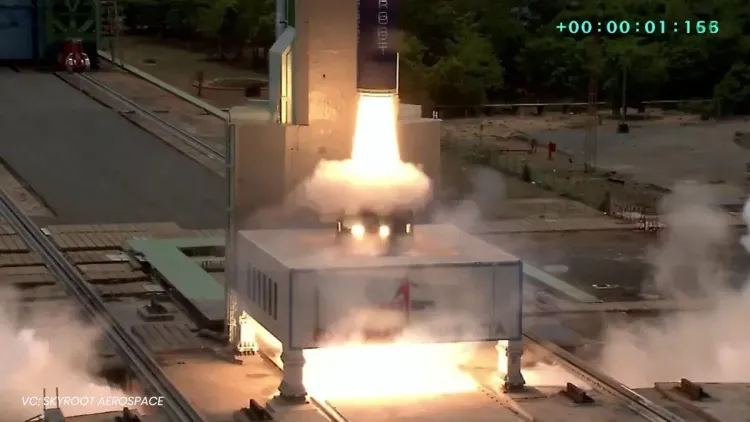
Arunachal Pradesh Chief Minister Pema Khandu celebrated the successful orbital flight of Vikram-1, India's first privately developed orbital rocket by Skyroot Aerospace, which deployed payloads into a 450 km orbit on 18 July 2026, marking a landmark for Indian private space enterprise.
Key Takeaways
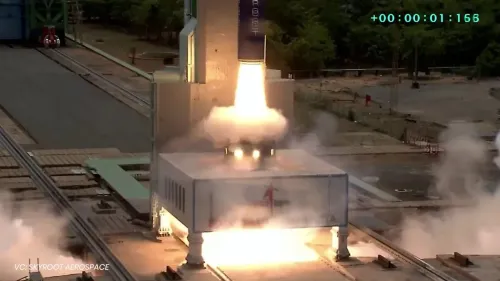
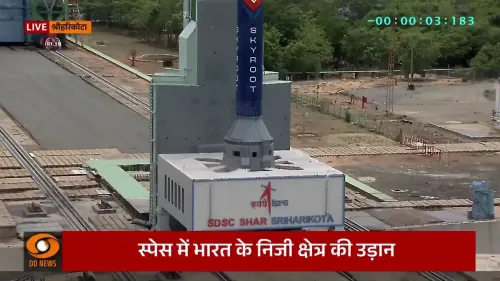
Vikram-1 Test Flight-1 , India's first privately developed orbital rocket by Skyroot Aerospace , successfully reached orbit on 18 July 2026 .
The rocket deployed its payloads into a 450 km orbit , completing the mission objectives.
India is now among only three nations to have demonstrated a successful private orbital launch capability.
Arunachal Pradesh CM Pema Khandu hailed the achievement as a milestone for Indian science, technology, and entrepreneurship.
The success builds on India's 2020 space-sector reforms and the establishment of IN-SPACe as a private-sector facilitator.
ISRO has provided technical support and infrastructure access to private launch startups under the reformed framework.
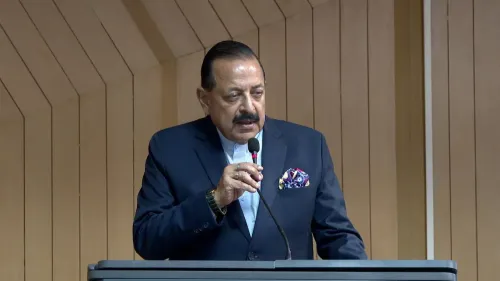
Arunachal Pradesh Chief Minister Pema Khandu on Saturday, 18 July 2026, celebrated a landmark moment for India's space sector, calling the successful orbital flight of Vikram-1 — the country's first privately developed orbital rocket — a defining milestone for Indian science, technology, and entrepreneurship. The rocket, developed by Hyderabad-based Skyroot Aerospace, successfully reached orbit and deployed its payloads into a 450 km orbit, marking what Khandu described as a proud achievement for the nation.
Context
In his post, CM Khandu wrote: 'India has done it again. Vikram-1 Test Flight-1, the country's first privately developed orbital rocket, has successfully reached orbit and deployed its payloads into a 450 km orbit. With this landmark mission, India becomes only the third nation to achieve a successful private orbital launch capability.' He added that 'the future of India's space sector has truly lifted off.'
The achievement places India in elite company globally, as only a handful of nations have seen privately funded entities successfully deliver payloads to orbit. The milestone is seen as a validation of India's years-long effort to open its space sector to private enterprise.
Policy Backdrop
The success of Vikram-1 is the direct outcome of space-sector reforms initiated by the Government of India in 2020, which opened launch services, satellite manufacturing, and related activities to private companies for the first time. Alongside these reforms, the government established IN-SPACe (Indian National Space Promotion and Authorisation Centre) as a single-window regulatory and facilitation agency for non-government space operations.
ISRO (Indian Space Research Organisation) has played a key supporting role, offering technical guidance and access to its infrastructure to emerging private launch providers. This public-private collaboration model mirrors approaches adopted in the United States, where commercial orbital capability grew significantly once regulatory and infrastructure support was extended to private players.
Skyroot Aerospace, founded in Hyderabad, has been among the most closely watched startups in India's nascent private space ecosystem. The company's Vikram series of rockets is designed to serve the small satellite launch market, a segment expected to see rapid global growth through the late 2020s.
Stakeholders and Impact
The successful orbital mission stands to benefit a wide range of stakeholders across India's space economy — from satellite manufacturers and data service providers to defence and remote-sensing agencies that rely on affordable and frequent launch access. Private launch capability reduces dependence on foreign launch providers and can significantly lower costs through competition.
For the broader startup ecosystem, the milestone sends a strong signal that deep-technology ventures in India can achieve world-class outcomes. Investors and entrepreneurs in the space sector are likely to view the mission as a proof-of-concept for further capital deployment into Indian space startups.
India's ambition to grow its share of the global space economy — estimated to be worth hundreds of billions of dollars by the 2030s — receives a significant boost with a demonstrated private orbital launch capability, making the country a more credible and competitive destination for international satellite launch contracts.
What's Next
Attention now turns to subsequent test and commercial flights by Skyroot Aerospace and other private launch providers that have received IN-SPACe authorisation. The pace at which these companies can transition from test missions to regular commercial operations will determine how quickly India can capture a meaningful share of the global small satellite launch market.
Policymakers are also expected to revisit FDI norms and licensing frameworks for the space sector to attract greater foreign investment, building on the momentum generated by this mission. As India's private space sector matures, the interplay between ISRO's institutional role and the growing commercial ecosystem will be a defining policy question in the years ahead.
Point of View
Which championed the 2020 space reforms, the mission provides a tangible proof point that liberalisation of strategic sectors can yield world-class results. CM Khandu's public celebration, while ceremonial in tone, reflects a broader ruling-party effort to associate itself with India's emerging innovation narrative. The real test now lies in whether the regulatory and investment ecosystem can scale fast enough to convert this milestone into sustained commercial competitiveness.
NationPress
18 Jul 2026
Frequently Asked Questions
What is Vikram-1 and who built it?
Vikram-1 is India's first privately developed orbital rocket, built by Hyderabad-based startup Skyroot Aerospace. It successfully reached orbit on 18 July 2026, deploying payloads into a 450 km orbit.
Why is the Vikram-1 launch significant for India?
The Vikram-1 mission makes India one of only three nations to have achieved a successful private orbital launch capability, marking a major milestone for the country's private space sector.
What is IN-SPACe and what role does it play?
IN-SPACe, or the Indian National Space Promotion and Authorisation Centre, was established in 2020 as a single-window agency to regulate and facilitate private sector participation in India's space activities.
What did CM Pema Khandu say about the Vikram-1 launch?
Arunachal Pradesh Chief Minister Pema Khandu called the mission a 'proud milestone for Indian science, technology, and entrepreneurship,' saying 'the future of India's space sector has truly lifted off.'
How did India's 2020 space reforms enable private rocket launches?
In 2020, the Government of India opened launch services and satellite manufacturing to private companies and set up IN-SPACe to authorise and support non-government space operations, enabling startups like Skyroot Aerospace to develop orbital rockets.