CM Naidu Hails Vikram-1 Orbital Success as Space Milestone
Synopsis
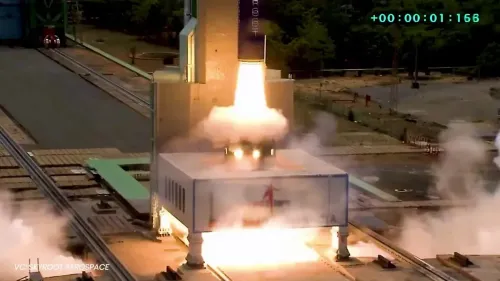
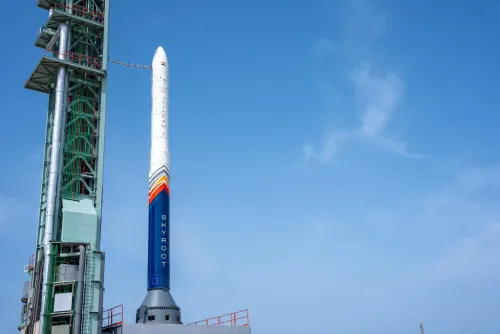
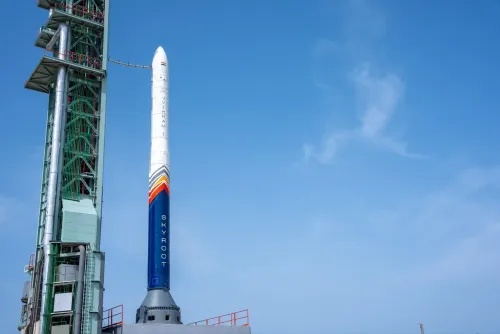
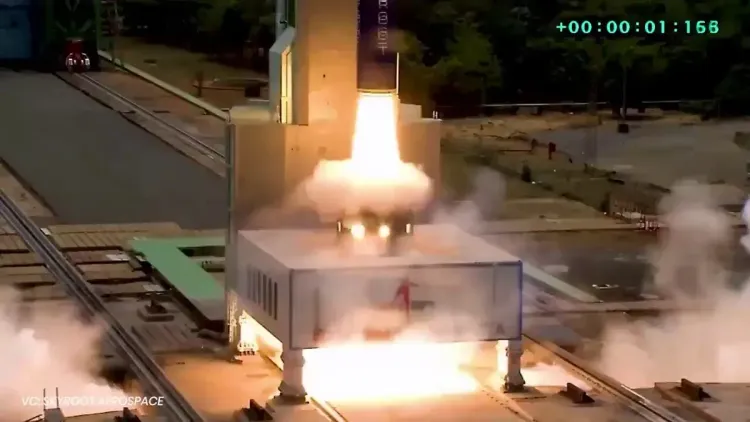
Andhra Pradesh CM N. Chandrababu Naidu hailed the successful orbital flight of Skyroot Aerospace's Vikram-1 on 18 July 2026 as a 'historic milestone,' crediting India's 2020 space reforms and the combined effort of ISRO, IN-SPACe, NSIL, and thousands of engineers for enabling the country's first fully private orbital launch.
Key Takeaways
Vikram-1 by Hyderabad-based Skyroot Aerospace completed India's first fully private orbital rocket mission on 18 July 2026 .
Chandrababu Naidu called the achievement a 'historic milestone' and extended congratulations to Skyroot Aerospace , ISRO , IN-SPACe , and NSIL .
India's 2020 space sector reforms opened launch-vehicle development to private players and established IN-SPACe as a single-window regulator.
NSIL , incorporated in 2019 , serves as ISRO's commercial arm facilitating technology transfers and private-sector collaboration.
The success is expected to strengthen investor confidence and position India as a competitive destination for commercial satellite launches.
Naidu described the mission as 'an inspiration for generations of young innovators,' linking it to the Atmanirbhar Bharat vision of technological self-reliance.
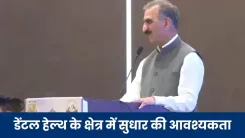
Andhra Pradesh Chief Minister and Telugu Desam Party national president N. Chandrababu Naidu on Saturday, 18 July 2026, celebrated the successful orbital flight of Vikram-1, calling it a 'historic milestone' for India's private space sector and congratulating Skyroot Aerospace, ISRO, IN-SPACe, and NSIL along with the thousands of scientists and engineers behind the achievement.
Context
Vikram-1, developed by Hyderabad-based private startup Skyroot Aerospace, is India's first fully private orbital launch vehicle. Its maiden mission marks a landmark moment in the country's evolving public-private space ecosystem, demonstrating that homegrown commercial entities can deliver payloads to orbit independently. CM Naidu described the achievement as 'the dawn of a new era — where the strength of our scientific institutions and the ingenuity of Indian entrepreneurs come together to push the boundaries of innovation.'
Naidu extended 'heartiest congratulations' to Skyroot Aerospace, ISRO, IN-SPACe, NSIL, and the 'thousands of scientists, engineers, technicians, and partners whose vision, perseverance, and excellence made this remarkable achievement possible.'
Policy Backdrop
The success of Vikram-1 is a direct product of India's 2020 space sector reforms, which opened satellite and launch-vehicle development to private players for the first time. The government established IN-SPACe — the Indian National Space Promotion and Authorisation Centre — in June 2020 as a single-window regulator and facilitator, enabling startups to seek clearances and access ISRO infrastructure without navigating multiple agencies.
NSIL — NewSpace India Limited, incorporated in 2019 as ISRO's commercial arm — handles technology transfers and commercial launch mandates, bridging the gap between government capability and private enterprise. Together, these institutions form the scaffolding on which ventures like Skyroot Aerospace, founded in 2018, have built their programmes. The reforms align with the broader Atmanirbhar Bharat agenda of technological self-reliance and reducing the cost of access to orbit.
Stakeholders and Impact
The successful orbital insertion of Vikram-1 is expected to boost investor confidence in India's private space sector, which has seen growing interest from domestic and global venture capital since the 2020 liberalisation. For the wider ecosystem of IN-SPACe-authorised startups, it establishes a proof-of-concept that Indian private launch vehicles can compete internationally, opening pathways for commercial satellite deployment contracts.
CM Naidu framed the achievement not merely as a technological feat but as social inspiration, calling it 'a proud moment for every Indian and an inspiration for generations of young innovators.' Andhra Pradesh, which hosts a significant concentration of aerospace and defence manufacturing, stands to benefit from the reputational and economic spillovers of a thriving private space industry.
What's Next
Attention will now turn to subsequent commercial flights by Skyroot Aerospace and other IN-SPACe-authorised startups as they seek to convert this milestone into a repeatable, revenue-generating launch cadence. Analysts and policymakers will also watch for potential updates to the national space policy framework, including licensing timelines and incentive structures for the next cohort of private launch-vehicle developers. As Naidu put it: 'May India's journey to the stars continue to soar.'
Point of View
Which successive governments have nurtured as a high-visibility component of the Atmanirbhar Bharat agenda. For a leader whose political base in Andhra Pradesh overlaps significantly with the Hyderabad aerospace corridor, celebrating a Hyderabad-born startup's orbital success carries both symbolic and regional-economic weight. The post also signals that state-level political leadership sees private space as a governance priority worth amplifying, not merely a central-government story. Sustained success by Skyroot and its peers could accelerate calls for state-level aerospace incentive policies, drawing competitive interest from multiple Indian states.
NationPress
18 Jul 2026
Frequently Asked Questions
What is Vikram-1 and who built it?
Vikram-1 is a small satellite launch vehicle developed by Skyroot Aerospace , a private startup founded in 2018 and headquartered in Hyderabad . It is designed to carry small payloads to low Earth orbit and is named in honour of pioneering Indian space scientist Vikram Sarabhai .
Why is the Vikram-1 launch considered historic for India?
The Vikram-1 orbital mission is regarded as India's first fully private orbital rocket flight, demonstrating that a homegrown commercial company — not just the government's ISRO — can independently deliver payloads to orbit, a milestone enabled by India's 2020 space sector reforms .
What is IN-SPACe and what role did it play?
IN-SPACe (Indian National Space Promotion and Authorisation Centre) was established in June 2020 as a single-window regulator to grant clearances and facilitate private companies' access to ISRO infrastructure, playing a key enabling role in Skyroot's development and launch programme.
What did CM Chandrababu Naidu say about the Vikram-1 launch?
CM N. Chandrababu Naidu called the achievement a 'historic milestone' and said it marks 'the dawn of a new era,' congratulating Skyroot Aerospace , ISRO , IN-SPACe , NSIL , and thousands of scientists and engineers for their 'vision, perseverance, and excellence.'
How does the Vikram-1 success relate to Atmanirbhar Bharat?
The mission is seen as a concrete demonstration of Atmanirbhar Bharat — India's self-reliance initiative — in the high-technology domain, showing that Indian private enterprise can develop and operate orbital launch vehicles without dependence on foreign platforms, reducing the cost of access to space.