India's space economy hits $9 billion mark, startups surge to 440
Synopsis
India's space economy has more than doubled in a decade — and the real story isn't satellites, it's the startup explosion. With registered space startups rising from one in 2014 to 440 today, investor funding up six-fold, and NSIL revenues growing ten-fold, India is quietly building a commercial space sector that could rival established players — if its regulatory architecture can keep pace.
Key Takeaways
India's space economy reached approximately $9 billion in 2026, up from $8.4 billion in 2023.
Registered space-sector startups rose to 440 from just one in 2014.
Cumulative startup investment grew more than six-fold to $618.5 million by 31 March 2026 .
NSIL revenues surged nearly ten-fold to over ₹3,000 crore in FY 2024–25, with 118 technology transfer agreements signed.
IN-SPACe granted 113 authorisations to 52 non-government entities , including 18 startups , by mid-2026.
India's global space cooperation network covers over 300 agreements across 61 countries and 5 multilateral organisations .
India's space economy has expanded to approximately $9 billion as of 2026, up from $8.4 billion in 2023, with the number of registered space-sector startups climbing to 440 — a staggering rise from just one in 2014, according to a government factsheet released on 15 November 2026. The figures underscore a sweeping transformation of the country's space sector, driven by a deliberate policy shift toward private participation.
Investment Surge and Startup Growth
Cumulative investment in Indian space startups grew more than six-fold — from $100.5 million in 2021–22 to $618.5 million by 31 March 2026, according to the factsheet. The jump reflects both increased investor confidence and a regulatory environment reshaped by reforms introduced in June 2020, when the Union Cabinet approved measures enabling greater private-sector participation in space activities.
These reforms marked a significant pivot: the government retained public-sector leadership while actively inviting private innovation, investment, and entrepreneurship — a shift from the decades-long model where the Indian Space Research Organisation (ISRO) operated as the sole dominant actor.
NSIL and IN-SPACe: Building the Architecture
NewSpace India Limited (NSIL), established in March 2019 as the commercial arm of the Department of Space (DoS), has emerged as a key revenue driver. Its revenues surged nearly ten-fold — from ₹321.77 crore in FY 2021–22 to over ₹3,000 crore in FY 2024–25. NSIL has also signed 118 technology transfer agreements covering 83 ISRO technologies, commercialising decades of publicly funded research.
Alongside NSIL, the Indian National Space Promotion and Authorisation Centre (IN-SPACe) operates as an autonomous agency under the DoS and serves as a single-window interface for private enterprises seeking regulatory clearances. By January 2026, IN-SPACe had facilitated 71 technology transfers to industry and startups. By mid-2026, it had granted 113 authorisations to 52 non-government entities (NGEs), of which 18 were startups.
Private Launches and Global Partnerships
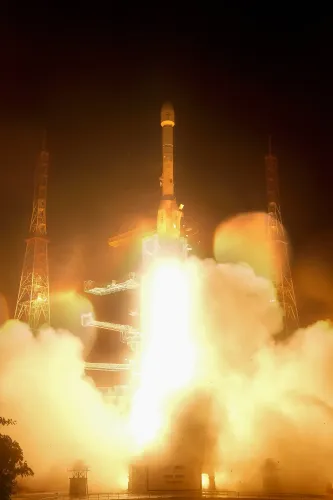
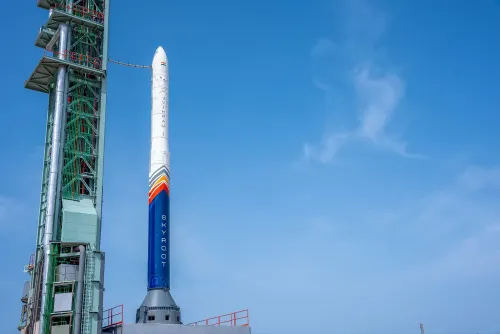
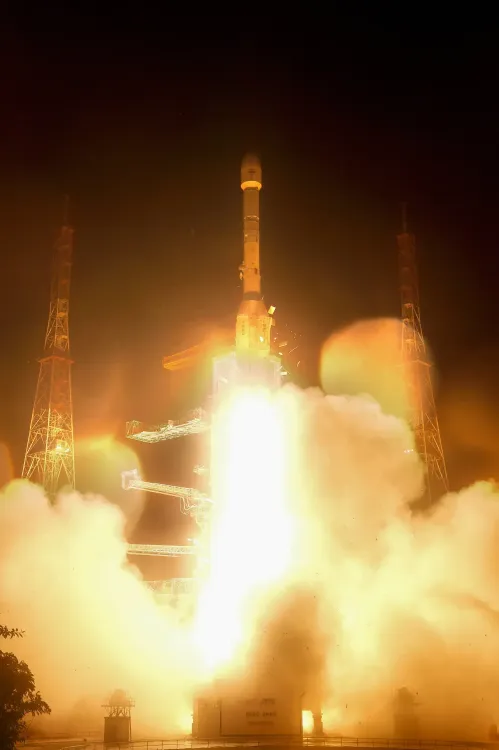
The expanding private role is visible on the launchpad as well. Six Indian non-government entities launched 18 satellites, while 25 payloads were flown or scheduled aboard ISRO's PSLV Orbital Experimental Module (POEM) platforms — an initiative designed to give startups affordable access to orbit.
India's international footprint has also grown considerably. As of June 2026, the country's global space cooperation network encompassed over 300 agreements spanning 61 countries and five multilateral organisations. The government had additionally received 11 FDI proposals worth ₹1,745.40 crore for the space sector by mid-2026.
What This Means for India's Global Position
India's space economy remains a fraction of the global market — estimated at over $500 billion — but the direction of travel is notable. The country is positioning itself not merely as a low-cost launch provider but as a broad-based commercial space destination, with capabilities spanning manufacturing, earth observation, communication satellites, and in-orbit services.
Notably, this expansion comes as other spacefaring nations — including the United States, Japan, and members of the European Space Agency — are themselves accelerating public-private partnerships in space. India's early-mover advantage in deregulation and its competitive launch costs could prove decisive in attracting further foreign investment.
With IN-SPACe authorisations rising, NSIL revenues compounding, and global partnerships deepening, the trajectory points toward continued acceleration — though execution risk around regulatory capacity and skilled-workforce availability remains a factor to watch.
Point of View
But the structural question is whether India's space governance architecture can scale as fast as the ambition. IN-SPACe is handling a growing authorisation pipeline with a mandate that spans safety, frequency coordination, and orbital registration — all technically demanding functions that established agencies in the US and Europe have taken decades to mature. The six-fold investment surge is real, but a large share of it has flowed into a handful of well-capitalised names; the long tail of 440 startups still faces acute challenges around access to test facilities and sovereign procurement pipelines. The $9 billion figure also needs context: it remains under 2% of the global space economy. India's competitive edge is cost — not yet depth of commercial ecosystem. That gap is closeable, but it requires consistent policy continuity beyond the reform announcements of 2020.
NationPress
15 Nov 2026
Frequently Asked Questions
How large is India's space economy in 2026?
India's space economy has grown to approximately $9 billion in 2026, up from $8.4 billion in 2023, according to a government factsheet released on 15 November 2026. The growth reflects increased private participation, rising startup investment, and expanding commercial activity by NSIL.
How many space startups does India have in 2026?
India had 440 registered space-sector startups as of 2026, compared to just one in 2014. Cumulative investment in these startups rose more than six-fold from $100.5 million in 2021–22 to $618.5 million by 31 March 2026.
What is IN-SPACe and what role does it play?
IN-SPACe, or the Indian National Space Promotion and Authorisation Centre, is an autonomous agency under the Department of Space that acts as a single-window regulatory interface for private space enterprises. By mid-2026, it had granted 113 authorisations to 52 non-government entities, including 18 startups, and facilitated 71 technology transfers to industry.
How has NewSpace India Limited (NSIL) performed financially?
NSIL's revenues grew nearly ten-fold from ₹321.77 crore in FY 2021–22 to over ₹3,000 crore in FY 2024–25. The commercial arm of the Department of Space has also signed 118 technology transfer agreements covering 83 ISRO technologies.
What is India's international footprint in the space sector?
As of June 2026, India had signed over 300 space cooperation agreements with 61 countries and five multilateral organisations. The government had also received 11 FDI proposals worth ₹1,745.40 crore for the space sector by mid-2026.