CM Sai hikes tendu leaf rate to ₹5,500 on Janjatiya Gaurav Diwas
Synopsis
Chief Minister Vishnu Deo Sai announced on Janjatiya Gaurav Diwas 2026 that Chhattisgarh will raise the tendu leaf collection rate from ₹4,000 to ₹5,500 per standard bag, delivering a 37.5 per cent income boost to lakhs of tribal families under the 'Modi ki Guarantee' framework.
Key Takeaways
CM Vishnu Deo Sai announced the revision at Dashahara Maidan, Dharamjaigarh, Raigarh on 15 November 2026 .
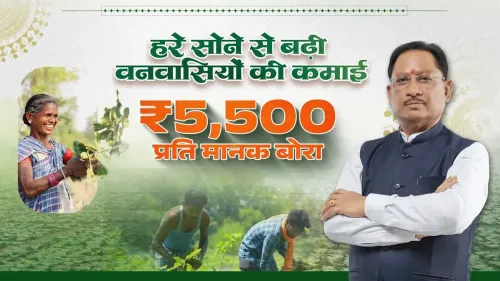
The tendu leaf collection rate rises from ₹4,000 to ₹5,500 per standard bag (manak bora) — a 37.5 per cent increase.
The measure is framed under the BJP's 'Modi ki Guarantee' tribal welfare commitment.
Lakhs of tribal families in Chhattisgarh depend on the annual tendu collection season as a primary income source.
The announcement was made on Janjatiya Gaurav Diwas , the national observance of Birsa Munda's birth anniversary.
Implementation during the 2026-27 collection season will determine real-world impact on household incomes.
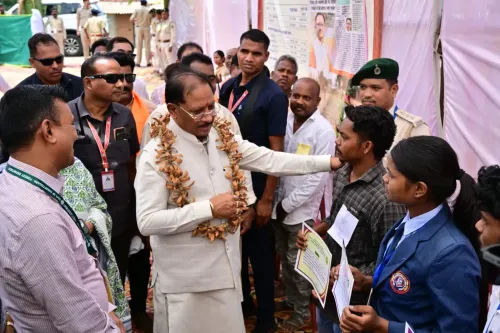
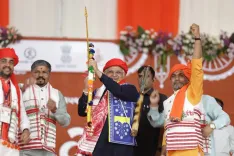
On the day India honours its tribal heritage, Chief Minister Vishnu Deo Sai chose Janjatiya Gaurav Diwas, 15 November 2026, to announce a direct income boost for the lakhs of forest-dwelling families who make Chhattisgarh's tendu leaf economy tick — raising the collection rate from ₹4,000 to ₹5,500 per standard bag (manak bora).
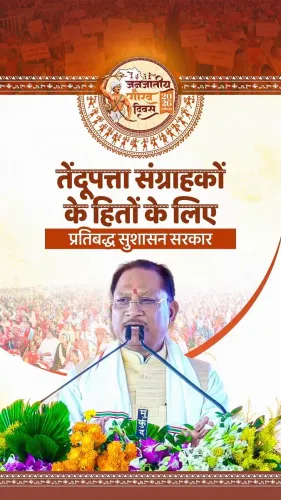
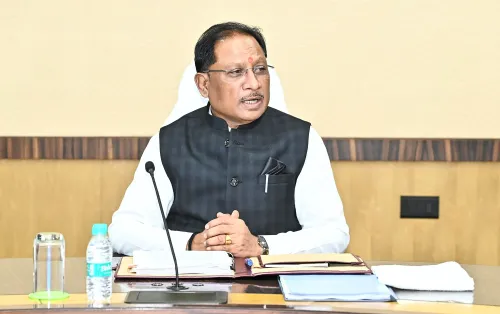
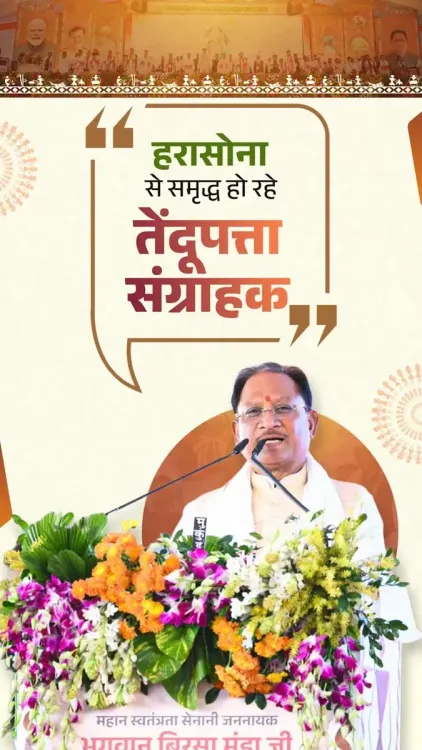
Speaking at the Janjatiya Gaurav Diwas Samaroh held at Dashahara Maidan, Dharamjaigarh, Raigarh, CM Sai framed the revision as a fulfilment of what his government calls the 'Modi ki Guarantee' — the BJP's pre-election promise framework centred on measurable welfare deliverables. 'Lakhs of families from the tribal community in Chhattisgarh are connected to tendu leaf collection,' he said. 'To give proper respect to their hard work and increase their income, our government has raised the tendu leaf collection rate.'
What tendu leaf means to Chhattisgarh's tribal households
Tendu leaves — used to wrap beedis — are among the most economically significant minor forest produce in central India. Chhattisgarh, one of the states with the largest Scheduled Tribe populations, has long treated the annual tendu collection season as a critical income window for communities with limited alternative livelihoods. Hundreds of thousands of tribal families participate in the state-managed procurement cycle every year, with the government-fixed rate acting as a price floor that directly determines seasonal earnings.
State governments across the central Indian belt have periodically revised these support prices as part of tribal income-support measures. The ₹37.5 per cent jump — from ₹4,000 to ₹5,500 per standard bag — is a substantial single-step revision by any historical benchmark, translating into a meaningful per-family income increase during the collection months.
Janjatiya Gaurav Diwas as a policy platform
15 November marks the birth anniversary of Birsa Munda, the iconic tribal freedom fighter, and has been observed as Janjatiya Gaurav Diwas as a national occasion to celebrate tribal culture and announce welfare measures. The choice of this date and the Raigarh venue — deep in a region with strong tribal demographics — signals the political as well as the welfare significance of the announcement. Such announcements tied to commemorative events have become a recognisable pattern in central Indian states.
The Sai government, in office since December 2023, has positioned tribal welfare at the centre of its early governance narrative, with this rate revision forming part of that larger arc.
What matters next is execution: whether the revised ₹5,500 rate flows through to collectors during the 2026-27 procurement season and how the state forest department's calendar is adjusted to reflect the new floor. The announcement sets the expectation — the collection season will test whether the cheque clears.
Point of View
In a tribal-majority district — is not incidental: welfare announcements on commemorative dates are a well-worn political grammar in central India, and the BJP has consistently used the Birsa Munda anniversary as a high-visibility platform since designating it a national day. The 37.5 per cent rate jump is substantive enough to escape the 'tokenism' critique, but its credibility will ultimately rest on prompt disbursement during the collection season rather than the stage it was announced from. For the Sai government, still consolidating its tribal-vote base after winning back Chhattisgarh in late 2023, this revision also closes a campaign promise loop — 'Modi ki Guarantee' needed a visible delivery to point to in the forest belt.
NationPress
15 Nov 2026
Frequently Asked Questions
What is the new tendu leaf collection rate in Chhattisgarh?
The new rate is ₹5,500 per standard bag (manak bora) , up from the earlier ₹4,000 — an increase of ₹1,500 per bag announced by CM Vishnu Deo Sai on 15 November 2026.
What is Janjatiya Gaurav Diwas and why is it observed on 15 November?
Janjatiya Gaurav Diwas is a national observance held every year on 15 November to mark the birth anniversary of tribal icon and freedom fighter Birsa Munda and celebrate tribal culture and contributions.
Who is Vishnu Deo Sai and when did he become Chhattisgarh CM?
Vishnu Deo Sai is a BJP leader who became Chief Minister of Chhattisgarh in December 2023 after the party won the state assembly elections.
What is tendu patta and why is it important for tribal communities?
Tendu patta (tendu leaves) are used to wrap beedis and are one of the most significant minor forest produce items in central India. For lakhs of tribal families in states like Chhattisgarh, the seasonal collection of these leaves is a critical source of household income.
What is 'Modi ki Guarantee' in the context of Chhattisgarh tribal welfare?
' Modi ki Guarantee ' is the BJP's pre-election promise framework that includes specific welfare commitments for tribal communities. The Chhattisgarh government has invoked it to frame the tendu leaf rate hike as a fulfilment of a concrete electoral pledge.