Jharkhand CMO: Lohardaga Worker Sushma Toppo Home from Oman
Synopsis
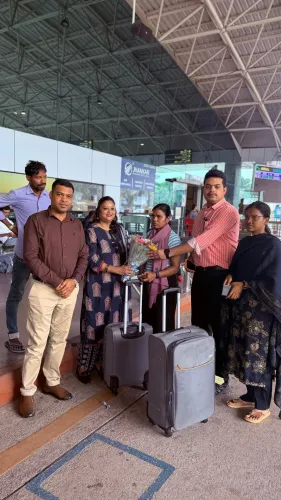
Sushma Toppo, a migrant worker from Lohardaga, Jharkhand, was safely repatriated from Oman on 14 November 2026 through joint efforts by the Jharkhand Migrant Cell under the Labour Department and the Indian Embassy in Muscat, the Chief Minister's Office confirmed.
Key Takeaways
Sushma Toppo from Lohardaga district, Jharkhand , who was stranded in Oman , returned safely to India on 14 November 2026 .
The repatriation was coordinated by the Jharkhand Migrant Cell under the Labour Department, Jharkhand , in partnership with the Indian Embassy in Muscat .
The Jharkhand Migrant Cell was established following the 2020 COVID-19 disruptions to handle distress cases of workers stranded in Gulf countries.
Lohardaga has a predominantly tribal population and significant out-migration to Gulf states, making its workers particularly vulnerable to overseas labour risks.
The case reflects a broader pattern of Indian state governments acting as first-responder institutions in migrant worker welfare alongside central consular services.
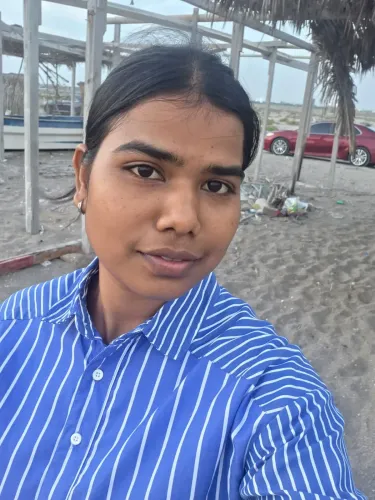
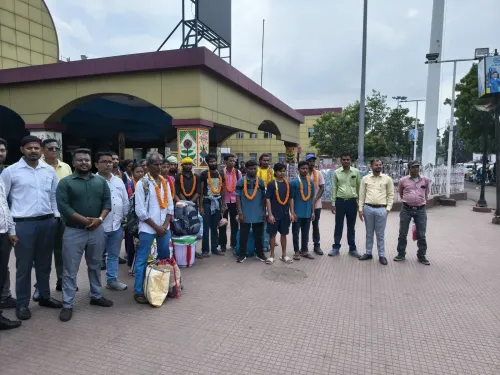
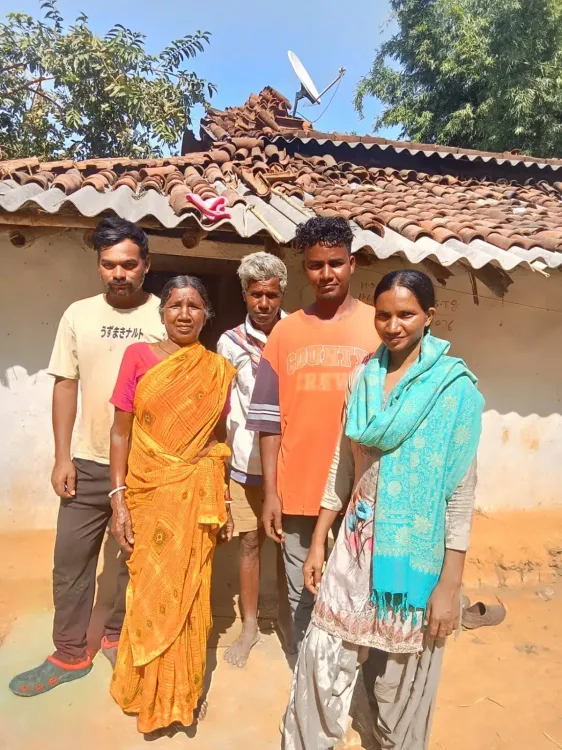
A tribal woman from one of Jharkhand's most migration-dependent districts walked back onto Indian soil on 14 November 2026 — safe, after being stranded in Oman. The Chief Minister's Office of Jharkhand confirmed on Sunday that Sushma Toppo, a migrant worker from Lohardaga district, had been successfully repatriated through a coordinated effort between the state's Migrant Cell and the Indian Embassy in Muscat.
The CMO's post credited @LabourDeptJH, @migrantcell_JH, and @Indemb_Muscat for making the return possible — a brief but pointed acknowledgement of the inter-institutional machinery that quietly manages India's most vulnerable overseas workers.
Lohardaga: A District That Sends Its People Far
Lohardaga has a predominantly tribal population and a long history of out-migration, with workers often moving to Gulf countries under informal or semi-formal contract arrangements. That economic pressure — combined with limited local employment — makes residents from districts like Lohardaga especially exposed to the vulnerabilities of overseas labour markets: wage disputes, contract violations, and situations where workers find themselves unable to leave.
Oman, a Gulf Cooperation Council member, hosts tens of thousands of Indian workers under its kafala-linked sponsorship system, which has historically constrained workers' ability to exit employment or the country without employer clearance.
The Migrant Cell's Role in Sushma's Return
The Jharkhand Migrant Cell — a dedicated unit under the Labour Department — was operationalised in the wake of the 2020 COVID-19 disruptions, when thousands of Jharkhand workers were left stranded across Gulf states. Since then, it has served as the primary point of contact for distress cases, working in tandem with Indian embassies to coordinate documentation, clearances, and travel logistics.
Sushma Toppo's case follows that established playbook: state-level intervention triggering consular action, culminating in a confirmed safe return. The Indian Embassy in Muscat has been an active partner in several such cases involving workers from eastern Indian states.
A Wider Pattern of Sub-National Diplomacy
What may look like a routine welfare update is, in practice, a small but significant data point in India's evolving model of migrant worker protection. Labour-sending states like Jharkhand increasingly act as first responders — not waiting for central government channels — by maintaining their own tracking and rescue mechanisms for overseas workers. Women workers, often in domestic or caregiving roles, face compounded risks abroad and are a priority focus of such cells.
The Jharkhand government's decision to publicly announce Sushma's return serves a dual purpose: accountability to the worker's family and community, and a signal to other migrants in distress that institutional pathways exist and function.
One safe return at a time — that is the quiet, unglamorous arithmetic of migrant welfare. Sushma Toppo's journey home is evidence it can work.
Point of View
State-led migrant rescue mechanisms. Jharkhand's Migrant Cell exemplifies this sub-national turn: rather than deferring entirely to central channels, the state now runs a parallel intervention layer that plugs directly into Indian embassies. For a predominantly tribal, economically fragile district like Lohardaga, where overseas remittances are a lifeline, this institutional capacity is not incidental — it is an increasingly essential plank of welfare governance. The question for policymakers is whether such cells are adequately resourced and staffed to handle caseloads that will only grow.
NationPress
15 Nov 2026
Frequently Asked Questions
Who is Sushma Toppo and where is she from?
Sushma Toppo is a migrant worker from Lohardaga district in Jharkhand . She was stranded in Oman before being repatriated to India on 14 November 2026 .
How did Sushma Toppo return from Oman?
Her safe return was facilitated by the Jharkhand Migrant Cell under the state's Labour Department in coordination with the Indian Embassy in Muscat, Oman .
What is the Jharkhand Migrant Cell?
The Jharkhand Migrant Cell is a dedicated unit under the Labour Department of Jharkhand that handles distress cases of Jharkhand workers stranded abroad, particularly in Gulf countries. It was operationalised following the 2020 COVID-19 disruptions.
Why do so many workers from Lohardaga go to Oman and Gulf countries?
Lohardaga is a predominantly tribal district in Jharkhand with limited local employment. Economic pressure drives significant out-migration to Gulf countries, where workers take up labour or domestic jobs, often under informal contract arrangements.
What can a stranded Jharkhand worker abroad do to get help?
Workers from Jharkhand stranded overseas can reach out to the Jharkhand Migrant Cell under the Labour Department, which coordinates with Indian embassies in the respective countries for consular assistance and repatriation.