CM Hemant Soren ensures all 42 Jharkhand migrants return home after Chennai gas leak
Synopsis
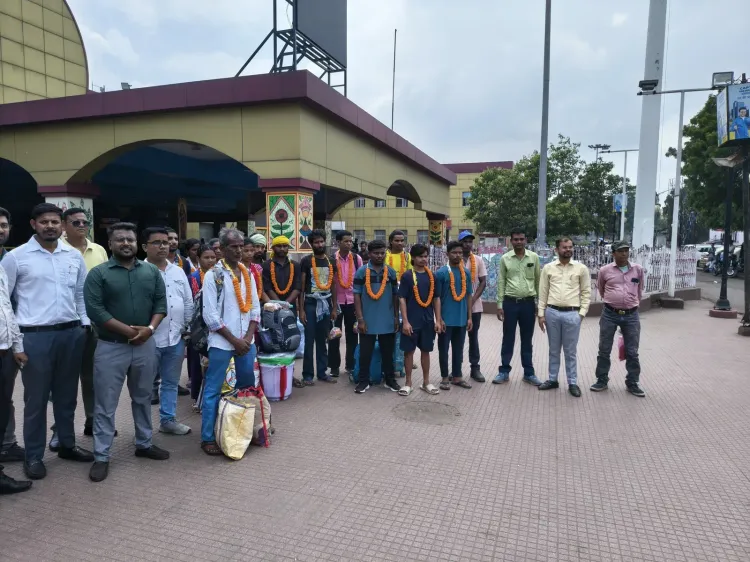
The Jharkhand CMO confirmed on 2 July 2026 that all 42 migrant workers from the state rescued after a Chennai gas leak have returned home safely, following directions from Chief Minister Hemant Soren and coordination by the state's Migrant Workers' Cell.
Key Takeaways
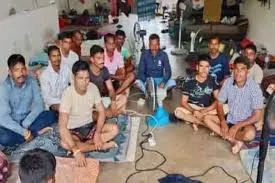
All 42 Jharkhand migrant workers rescued from a gas leak incident in Chennai, Tamil Nadu have safely returned home as of 2 July 2026 .
The repatriation was carried out on the directions of Chief Minister Hemant Soren of the Jharkhand Mukti Morcha.
The Jharkhand Migrant Workers' Cell (@migrantcell_JH) , established in 2020 , coordinated the rescue and return operation.
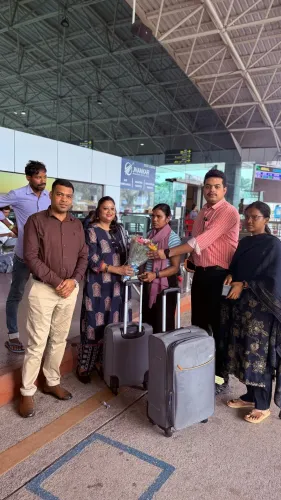
Returned workers publicly expressed gratitude to CM Hemant Soren for the prompt intervention.
The episode underscores the recurring vulnerability of inter-state migrant labourers from Jharkhand to industrial hazards in destination states.
India still lacks a comprehensive portable social-security framework for inter-state migrant workers, making state-level cells critical for emergency response.
The Chief Minister's Office of Jharkhand announced on 2 July 2026 that all 42 migrant workers from Jharkhand who were rescued following a gas leak incident in Chennai, Tamil Nadu, have safely returned to their homes, acting on the directions of Chief Minister Hemant Soren.
Context
A gas leak accident at an industrial site in Chennai had endangered dozens of labourers from Jharkhand who had migrated to the southern city for work. Following the incident, the Jharkhand government activated its rescue and repatriation machinery, coordinating with Tamil Nadu authorities to account for and bring back all affected workers. The CMO confirmed that all 42 workers have now reached their homes safely.
The workers, upon their return, expressed gratitude to Chief Minister Hemant Soren for the prompt intervention. The post stated: 'Shramikon ne surakshit ghar wapsi ke liye Mukhyamantri ke prati aabhar vyakt kiya' ('The workers expressed their gratitude to the Chief Minister for ensuring their safe return home').
Policy Backdrop
Jharkhand established a dedicated Migrant Workers' Cell — operating under the handle @migrantcell_JH — in 2020, initially to coordinate relief and repatriation of workers stranded during the COVID-19 lockdown. The cell has since served as the nodal mechanism for tracking, rescuing, and supporting out-migrant workers from the state in distress situations across the country.
Jharkhand is among India's high-migration states, with large numbers of workers travelling to factories and industrial units in Tamil Nadu, Gujarat, and Maharashtra. Chief Minister Hemant Soren, representing the Jharkhand Mukti Morcha, has consistently positioned migrant welfare as a priority of his administration since taking office.
Stakeholder Impact
The 42 workers rescued and repatriated represent families in Jharkhand's districts who depend on inter-state wage labour for their livelihoods. Industrial accidents in destination states leave such workers particularly vulnerable, often without access to local legal recourse, health support, or emergency funds. The Jharkhand government's intervention ensured these workers did not face prolonged displacement or financial hardship far from home.
The incident also highlights a broader structural gap: India currently lacks a comprehensive, portable social-security framework for inter-state migrant labourers, leaving their protection largely dependent on ad hoc coordination between state governments. States such as Jharkhand and Bihar have had to build their own emergency-response protocols to fill this vacuum.
What's Next
Attention will now turn to Tamil Nadu's response to the Chennai gas leak — including safety audits of the chemical or industrial units involved and any accountability measures for the affected facility. On the Jharkhand side, the incident is likely to reinforce calls for strengthening migrant registration systems and expanding the Migrant Workers' Cell's capacity for real-time tracking of workers in hazard-prone industries. A national framework for inter-state migrant social security remains a long-pending policy demand that incidents like this periodically bring back into focus.
Point of View
Allowing the Jharkhand government to project itself as a proactive protector of the state's large and economically vulnerable migrant workforce. The activation of the Migrant Workers' Cell — a COVID-era institution — for an industrial accident response signals that Jharkhand is attempting to institutionalise migrant welfare beyond crisis-by-crisis improvisation. However, the incident also exposes the persistent absence of a national inter-state migrant portability framework, a gap that has remained unaddressed despite repeated advocacy by high-migration states. Until such a framework exists, the burden of emergency response will continue to fall unevenly on origin-state governments.
NationPress
1 Oct 2026
Frequently Asked Questions
What happened to Jharkhand workers in Chennai?
A gas leak accident at an industrial site in Chennai, Tamil Nadu, endangered 42 migrant workers from Jharkhand who were working there. The Jharkhand government coordinated their rescue and safe return home.
How many Jharkhand workers were rescued from the Chennai gas leak?
All 42 Jharkhand migrant workers affected by the Chennai gas leak were rescued and have since returned safely to their homes in Jharkhand.
What is the Jharkhand Migrant Workers' Cell?
The Jharkhand Migrant Workers' Cell is a state government unit established in 2020 to track, rescue, and support Jharkhand workers who face distress while working in other states. It coordinated the repatriation of the Chennai gas leak survivors.
What did CM Hemant Soren do for the Chennai gas leak victims?
Chief Minister Hemant Soren directed the Jharkhand government machinery, including the Migrant Workers' Cell, to coordinate the rescue and repatriation of all 42 affected Jharkhand workers from Chennai back to their homes.
Why do so many Jharkhand workers migrate to Tamil Nadu?
Jharkhand is a high out-migration state, and many of its workers travel to industrial hubs in Tamil Nadu, Gujarat, and Maharashtra in search of wage employment. This exposes them to occupational hazards in factories and chemical units far from home.