CM Hemant Soren eyes green energy hub status for Jharkhand
Synopsis
The Chief Minister's Office of Jharkhand declared on 2 July 2026 that the Hemant Soren government is committed to making the coal-rich state a green and clean energy hub, signalling a strategic shift toward renewables in line with India's Paris Agreement commitments.
Key Takeaways
The Jharkhand CMO posted on 2 July 2026 that the Hemant Soren government is committed to making Jharkhand a green and clean energy hub.
Jharkhand holds some of India's largest coal reserves but is now being positioned for a renewable energy transition by the ruling JMM government.
India's Paris Agreement commitments require significant expansion of non-fossil fuel energy capacity, creating policy pressure on resource-rich states.
Key stakeholders include coal mining communities and renewable energy investors , whose interests must be balanced in any transition plan.
Concrete indicators to watch include state budget allocations for renewables and new MoUs with central PSUs or private developers.
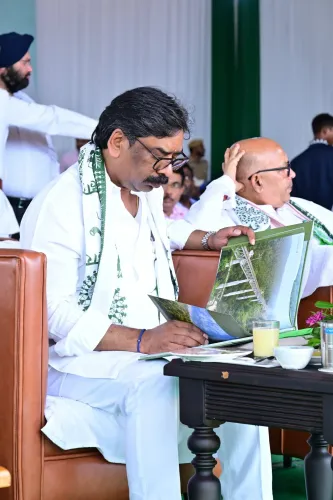
The Chief Minister's Office of Jharkhand reaffirmed on Thursday, 2 July 2026, that the Hemant Soren-led government is committed to transforming the state into a green and clean energy hub, signalling a strategic pivot for one of India's most mineral-rich states.
The official post, shared from the CMO's verified account, stated in Hindi: 'Jharkhand ko green aur clean energy hub banane ke liye Hemant Soren sarkar pratibaddh hai' — meaning, 'The Hemant Soren government is committed to making Jharkhand a green and clean energy hub.'
Context
Jharkhand sits atop some of the largest coal reserves in India, making it a cornerstone of the country's conventional energy supply for decades. Yet this dependence on fossil fuels has also left the state grappling with environmental degradation and displacement of mining-affected communities. Chief Minister Hemant Soren, who also leads the Jharkhand Mukti Morcha (JMM), has increasingly positioned the state as a candidate for India's renewable energy transition.
Policy Backdrop
India has committed under its Nationally Determined Contributions to the Paris Agreement to significantly expand its non-fossil fuel energy capacity and reduce the carbon intensity of its economy. Resource-rich states like Jharkhand are seen as critical to this transition — capable of hosting large-scale solar, wind, and green hydrogen projects on land that may be repurposed or newly developed. The central government has also pushed state utilities and public sector undertakings to partner with state governments on renewable capacity addition. Watchers will look to Jharkhand's state budget allocations and any new memoranda of understanding with central PSUs or private developers as concrete indicators of how this commitment translates into policy.
Stakeholders and Impact
Coal mining communities in districts such as Dhanbad, Bokaro, and Ramgarh stand at the centre of any energy transition debate in Jharkhand — a shift away from coal carries both the promise of cleaner livelihoods and the risk of employment disruption. Simultaneously, renewable energy investors have shown growing interest in eastern India, where land availability and improving grid infrastructure are opening new corridors for investment. The JMM government's public commitment is likely to be read as a signal to both groups: that the state intends to manage the transition, not sidestep it.
What's Next
The Soren administration's green energy ambition will be tested by the specifics — project announcements, land allocation frameworks, and inter-ministerial coordination with New Delhi will determine whether the pledge moves from rhetoric to megawatts. Analysts and industry observers will watch for formal policy instruments, including state renewable energy policies, incentive structures for investors, and rehabilitation frameworks for coal-dependent workers. A state that successfully balances its fossil fuel legacy with a credible renewables roadmap could become a model for other mineral-rich states navigating India's energy transition.
Point of View
The declaration signals intent to get ahead of a structural shift that will arrive regardless of political will. The real test, however, lies in translating the pledge into measurable targets, investor commitments, and worker transition frameworks. Until those specifics emerge, the announcement remains a directional signal rather than a deliverable roadmap.
NationPress
30 Sept 2026
Frequently Asked Questions
What did the Jharkhand CMO announce on 2 July 2026?
The Jharkhand Chief Minister's Office announced that the Hemant Soren government is committed to making Jharkhand a green and clean energy hub, signalling a strategic focus on renewable energy for the state.
Why is Jharkhand's green energy push significant?
Jharkhand is one of India's most coal-rich states, so a commitment to green and clean energy represents a significant strategic pivot with implications for mining communities, investors, and India's broader climate goals.
What is Hemant Soren's political party?
Hemant Soren is the Chief Minister of Jharkhand and the national president of the Jharkhand Mukti Morcha (JMM), a regional party focused on tribal rights and state development.
How does Jharkhand's green energy plan connect to India's climate commitments?
India has pledged under the Paris Agreement to expand non-fossil fuel energy capacity. Jharkhand, with its land resources and mineral wealth, is seen as a key state for hosting solar, wind, and green hydrogen projects as part of this national effort.
What should we watch for next on Jharkhand's clean energy plans?
Key developments to track include state budget allocations for renewable energy, new memoranda of understanding with central public sector undertakings or private developers, and any formal state renewable energy policy announcements.